

Hallmarked Silver Jewellery
Hallmarked silver jewellery brings together centuries of British assay office marks with wearable ornaments and dressing table boxes.
Hallmarked Silver Jewellery
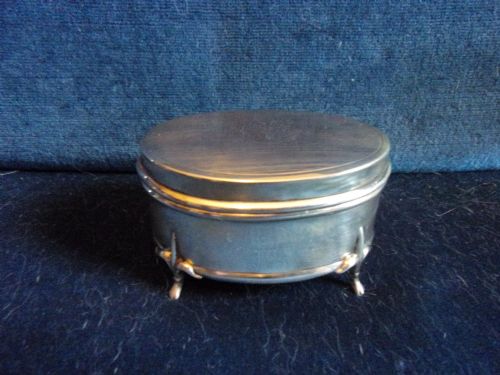
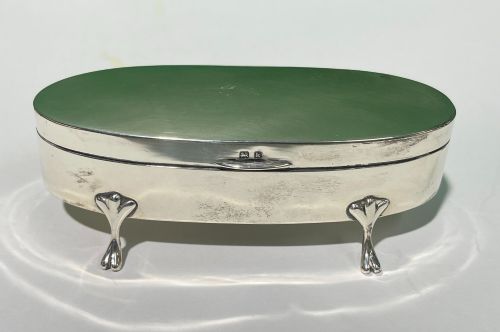
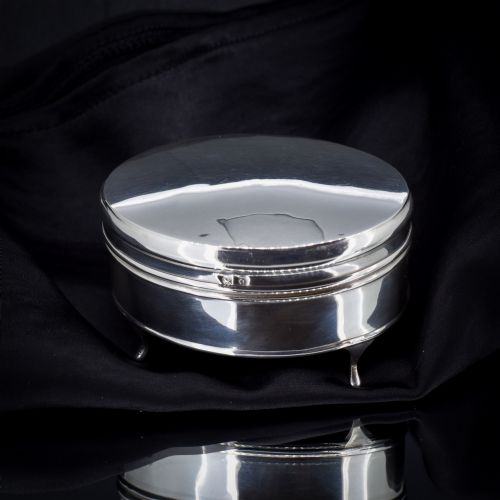
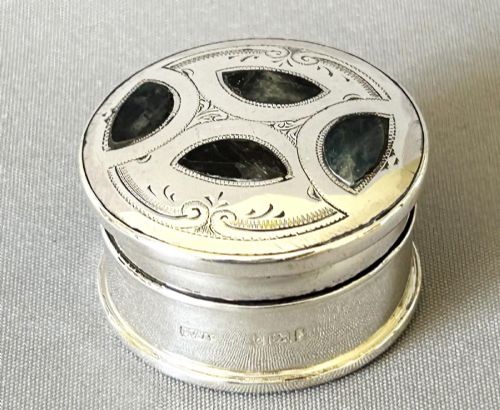
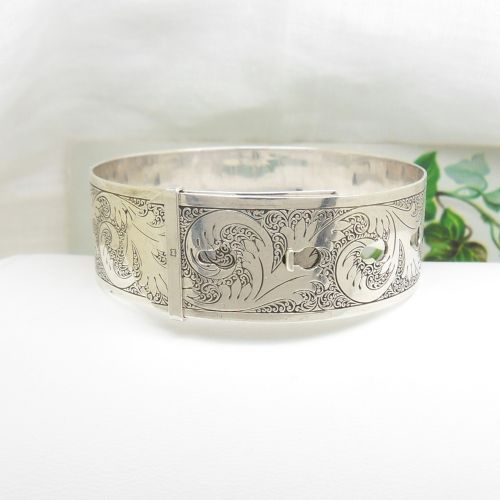
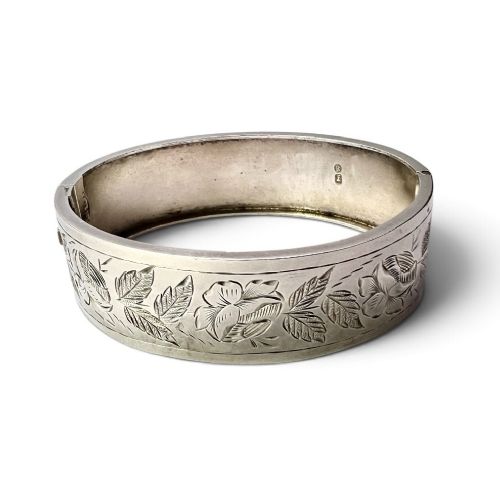
When you search for hallmarked silver jewellery, you encounter a diverse array of wearable items and dressing table accessories spanning the Victorian, Edwardian, and mid-century periods. The selection on this page relies heavily on sterling silver trinket boxes, jewellery caskets, bangles, and watch chains bearing official assay office stamps.
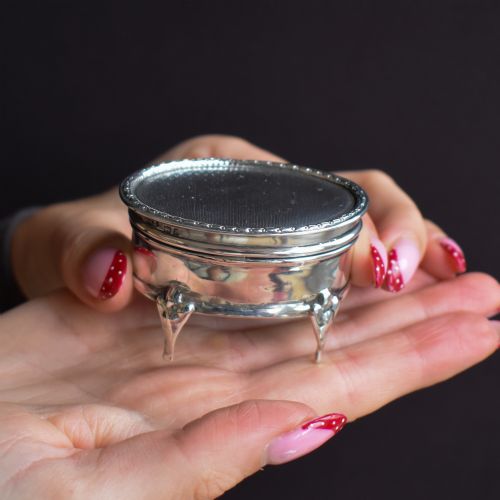
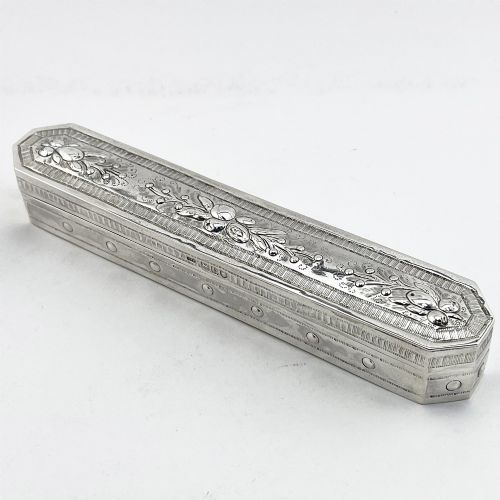
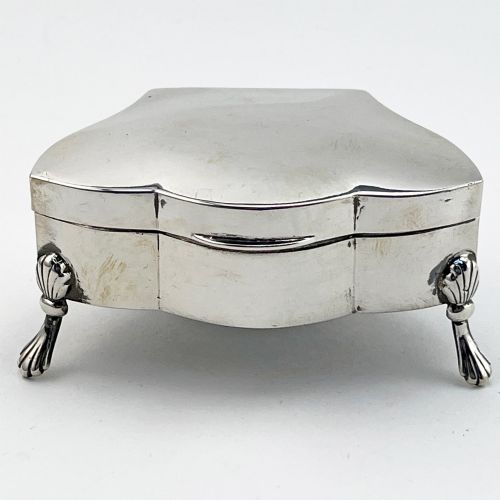
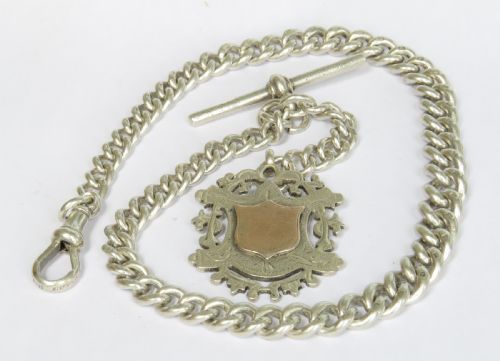
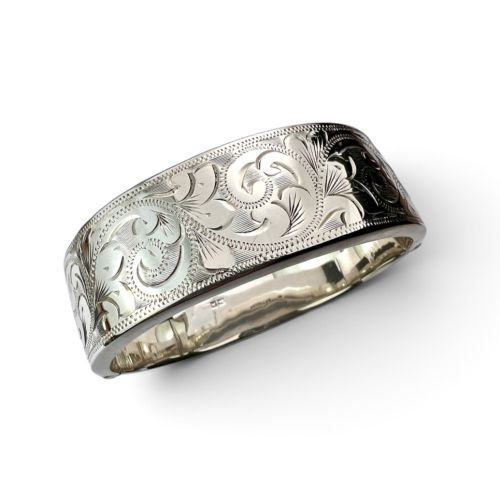
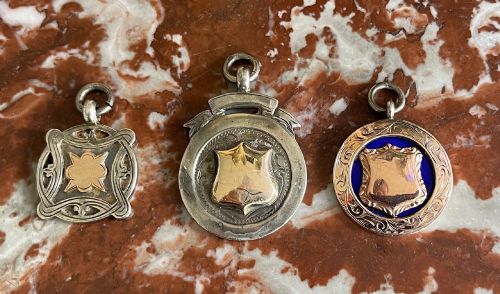
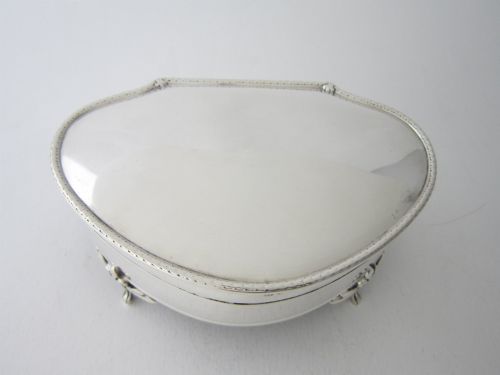
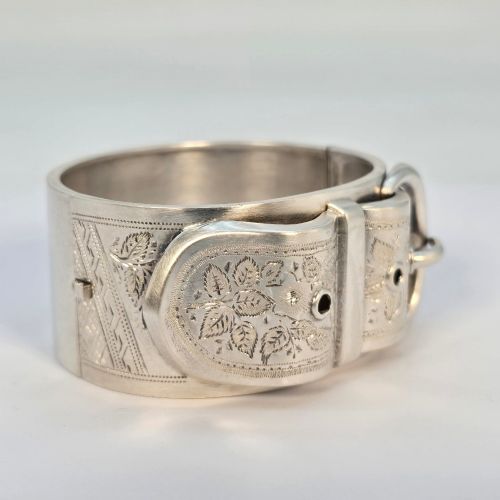
Wearable pieces range from engraved hinged bangles and buckle bracelets to pocket watch albert chains, pendants, brooches, and rings. Storage items take the form of velvet-lined ring boxes and lidded caskets, often decorated with floral repoussé work or smooth panels.
Origins stretch across British assay towns including Birmingham, Chester, London, and Sheffield, alongside Scandinavian workshops. Pieces reflect distinct design movements from Victorian Rococo Revival and Art Nouveau to Arts and Crafts spot-hammered work and Mid-Century Modernism.
How they were made
Silversmiths constructed boxes and vessels using sterling silver sheet metal, shaping bodies through hammering, pressing, and soldering before adding interior linings of velvet, silk, or gilt washes. Wearable ornaments such as bangles, watch chains, and belt buckles utilise cast links, hand-engraved surfaces, and robust mechanical catches.
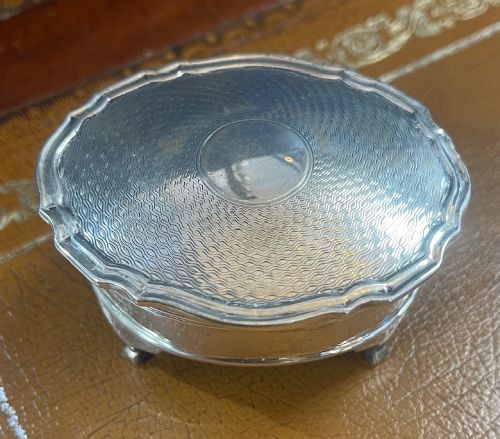
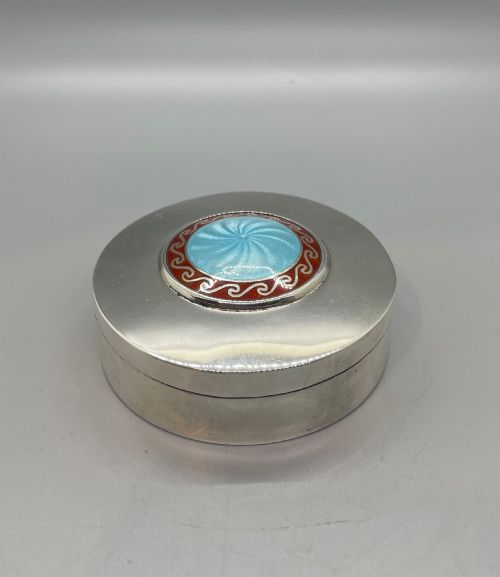
Decorative elements involve vitreous enamel, guilloché work, and tortoiseshell inlays secured directly to silver mounts. Master craftsmen employed chasing and repoussé techniques to push floral motifs from the reverse, while Arts and Crafts examples display deliberate spot-hammered textures across the metal.
Hallmarked Silver Jewellery Retail Price Guide 2026
Typical asking prices for hallmarked silver jewellery among the pieces listed under this phrase on Sellingantiques today, from the lower quarter to the upper quarter. They describe what is for sale here now, not the wider market.
Listings feature items from the Victorian, Edwardian, and mid-century eras, incorporating materials such as tortoiseshell, enamel, and rose gold.
What varies in quality
Quality rests upon the gauge of the silver sheet and the crispness of the maker's stamp and town marks. Heavier gauge metal resists dents and maintains structural integrity in hinges and clasps over decades of handling.
The refinement of hand-engraving and the preservation of delicate materials like guilloché enamel or fitted tortoiseshell elevate finer pieces above standard production. Intricate cast mounts and well-fitted box lids that close flush demonstrate superior workshop execution.
Mappin & Webb·Georg Jensen·Walker & Hall·Henry Matthews·Nathan & Hayes·William Neale & Sons·Henry Williamson Ltd·William Comyns & Sons
The Hallmarked Silver Jewellery Glossary
- Hallmark
- An official stamp applied by an assay office to guarantee the fineness of precious metal content, alongside date letters and maker's marks. These punches provide the definitive documentary evidence for a piece's age and origin.
- Guilloché
- A decorative technique where a precise, intricate pattern is mechanically engraved into metal beneath a translucent layer of enamel. This method produces shimmering geometric waves that catch the light.
- Repoussé
- A metalworking method in which the artisan hammers the reverse of a sheet to form raised designs in relief on the front. It defines much of the ornate floral ornamentation seen on Victorian silver boxes.
- Albert Chain
- A type of watch chain designed to secure a pocket watch to a waistcoat, usually featuring a T-bar at one end and dog clips at the other. Collectors prize these for their substantial links and integrated fobs.
- Gilt
- A thin layer of gold applied to the interior surface of a silver box or vessel through electroplating or fire gilding. This technique protects the silver from tarnishing when in contact with cosmetics or coins.
Hallmarked Silver Jewellery: Frequently Asked Questions
How do I read a silver hallmark?
British hallmarks typically combine a maker's mark, a standard fineness mark such as the lion passant for sterling, an assay office town mark, and a date letter.
Matching the letter punch against published assay office tables reveals the exact year the item was tested and passed for sale.
Were pocket watch chains meant to be worn as necklaces?
Victorian albert chains were originally designed to anchor pocket watches across waistcoats using integrated T-bars and dog clips.
Modern wearers frequently adapt these substantial silver chains to serve as necklaces or bracelets.
How should I clean antique silver jewellery?
Light dusting with a soft microfibre cloth removes daily residue without wearing down hand-engraved details or thin silver plate.
Harsh chemical dips should be avoided, particularly on pieces featuring enamel, tortoiseshell, or fabric linings.
What is the difference between a trinket box and a jewellery casket?
Trinket boxes are generally smaller containers intended for pins, cufflinks, or loose coins on a dressing table.
Jewellery caskets describe larger, more heavily ornamented storage pieces designed to hold rings, necklaces, and precious keepsakes.