





Hallmarked Silver Jar
When you search for a hallmarked silver jar, you are looking at containers spanning the Victorian, Edwardian, and Art Deco eras, prized for their metalwork and glass bodies.
Hallmarked Silver Jar
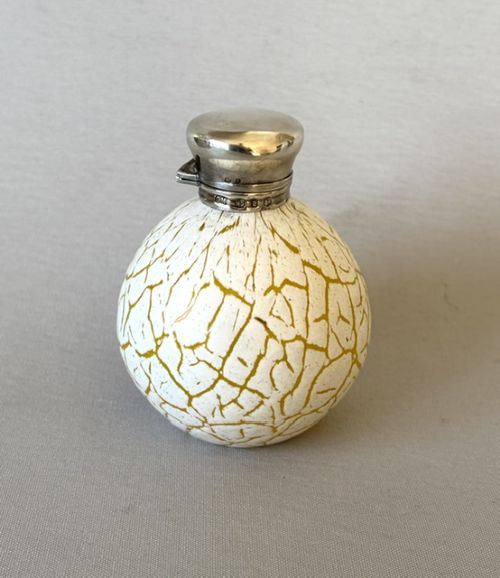
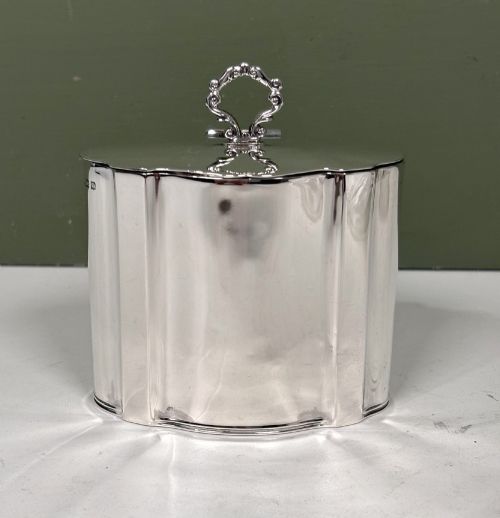
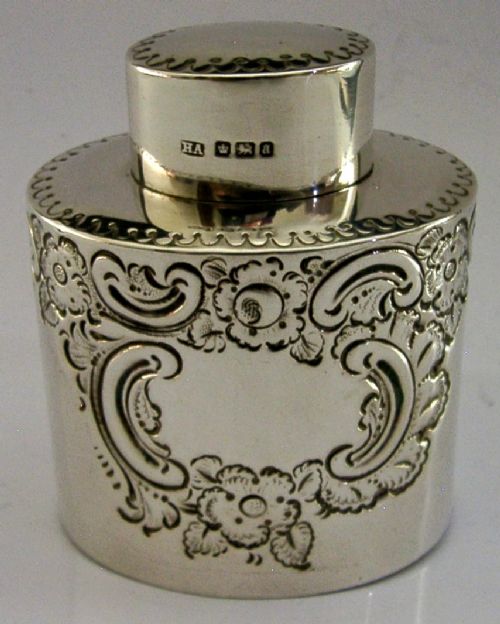
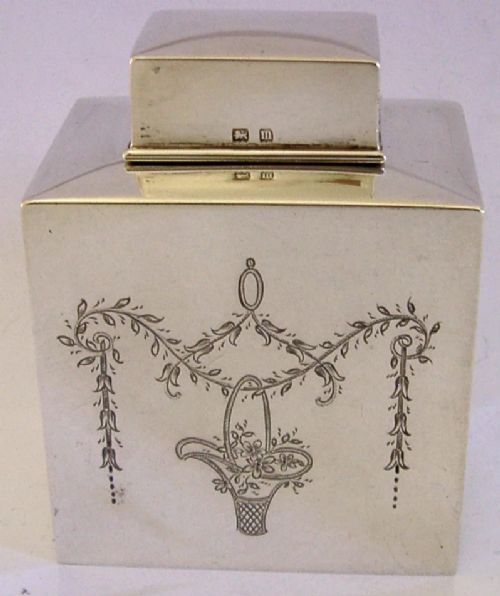
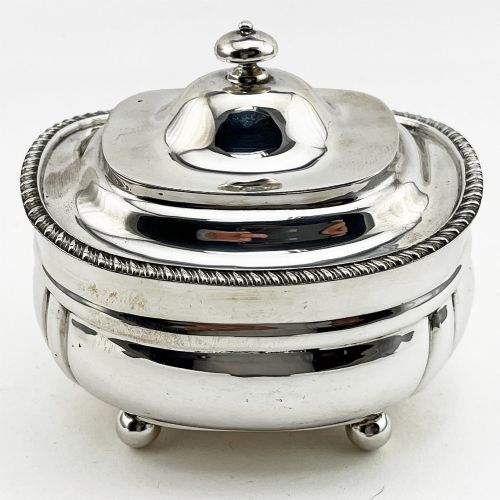
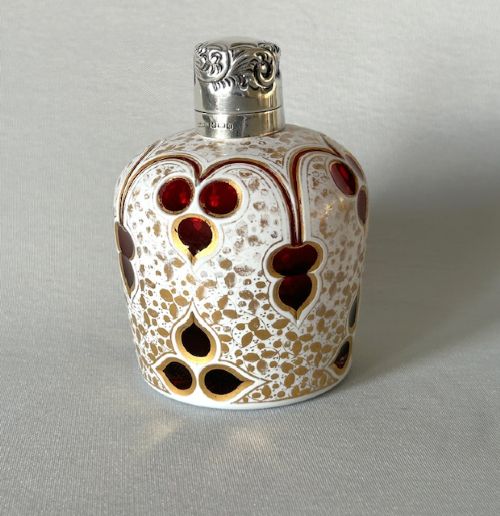
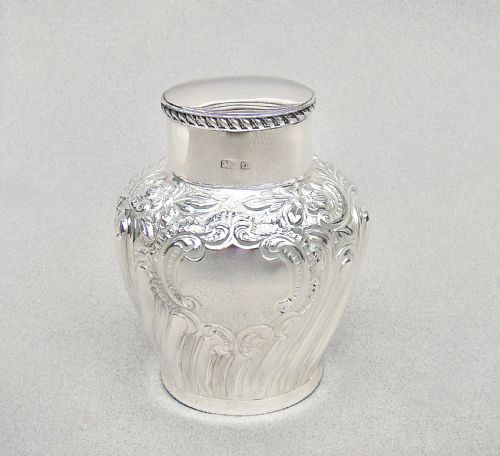
A hallmarked silver jar encompasses a diverse array of containers designed for domestic use, including tea caddies, scent bottles, trinket boxes, mustard pots, and condiment jars. These items frequently combine sterling silver mounts, lids, or entire bodies with cut glass, crystal, enamel, tortoiseshell, or ebony.
The most common examples on this page date from the late nineteenth century through the interwar decades, taking forms such as cylindrical tea caddies, oval boxes, and glass perfume bottles with silver screw or pull-off lids. Pieces range from plain solid silver vessels to elaborately cut glass jars fitted with heavy silver rims and matching spoons.
Origins span English provincial assay offices like Birmingham, Chester, and Sheffield, alongside London hallmarks, with occasional continental European pieces such as Dutch silver biscuit boxes appearing in the selection.
What varies in quality
Quality rests upon the weight and thickness of the sterling silver components, the crispness of hand-wrought details like repoussé work and spot-hammering, and the depth of the cut crystal or glass body. Maker attribution heavily influences standing, with pieces originating from notable firms commanding greater attention.
The harmony between differing materials dictates overall success, observed in how securely a silver mount fits a glass body or the preservation of delicate tortoiseshell and enamel panels without loss or stress cracks.
Hallmarked Silver Jar Retail Price Guide 2026
Typical asking prices for hallmarked silver jar among the pieces listed under this phrase on Sellingantiques today, from the lower quarter to the upper quarter. They describe what is for sale here now, not the wider market.
Several Victorian jars double as storage for twine and string, proving that even heavy silver containers once had humble household chores.
Zimmermann·Thomas Hayes·Henry Perkins·Ernest Druiff and Co·Nathan and Hayes·Goldsmiths and Silversmiths Co·James Dixon and Sons·George Betjemann and Sons
The Hallmarked Silver Jar Glossary
- Hallmark
- Official stamps applied to precious metals indicating the purity standard, the assay office of origin, and the date letter.
- Repoussé
- A metalworking technique where the silver is hammered from the reverse side to form a raised design in relief.
- Caddy
- A small container originally made for storing tea leaves, often fitted with a secure lid.
- Sterling silver
- An alloy of silver containing 92.5 percent pure silver and 7.5 percent other metals, usually copper.
- Cut glass
- Glass decorated by cutting facets or patterns into the surface using a rotating wheel.
Hallmarked Silver Jar: Frequently Asked Questions
What were silver jars used for?
These vessels served various domestic functions on dressing tables, dining tables, and in drawing rooms. Tea caddies stored loose leaves, while scent bottles held perfumes, and trinket boxes kept small personal valuables secure.
Other variants functioned as mustard pots, preserve jars, and condiment containers for the dining table. Their materials protected contents while adding decorative elegance to daily rituals.
How do I date a silver jar?
Dating relies primarily on the official hallmarks stamped into the silver mounts or lids. These marks include a specific date letter that corresponds to the assay office records of the year.
Stylistic indicators also help narrow the period, such as the elaborate ornamentation of Victorian pieces, the lighter neoclassical motifs of the Edwardian era, or the geometric lines of Art Deco design.
How should I clean silver and glass jars?
Silver components require gentle cleaning with a soft cloth and a specialised silver polish to remove tarnish without wearing away the underlying metal. Care must be taken to avoid getting polish on adjacent glass, enamel, or tortoiseshell.
Glass bodies can be washed in warm, soapy water and dried thoroughly. Organic elements like tortoiseshell should only be wiped with a damp cloth and kept away from excessive moisture.
Can I use these antique jars daily?
Many of these containers remain robust enough for regular use, particularly solid silver tea caddies and glass condiment jars with sturdy metal mounts. Gentle handling ensures the longevity of hinges and lids.
Pieces incorporating delicate materials like enamel, thin glass, or aged tortoiseshell benefit from cautious treatment and are often best suited for display or light occasional service.