
Hallmarked Gold Band
A hallmarked gold band carries official assay office marks that confirm its metal purity and age.
Hallmarked Gold Band
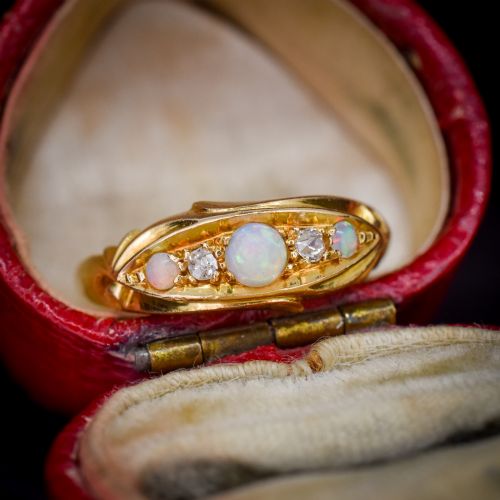
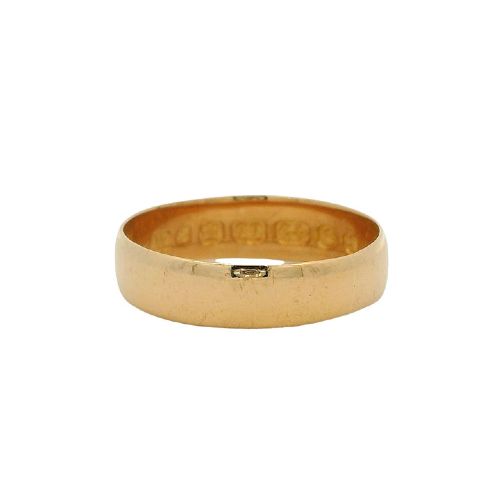
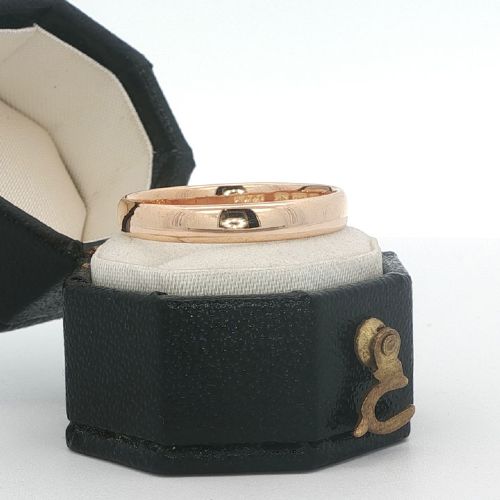
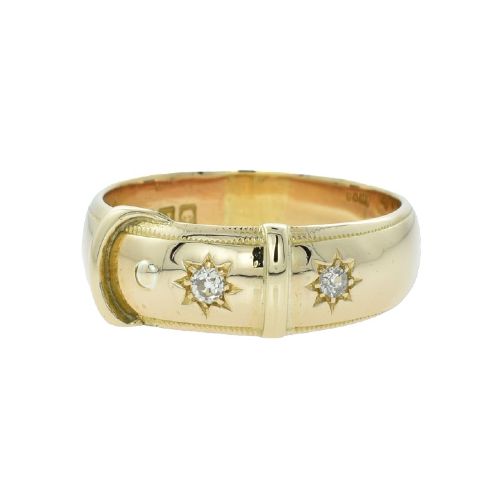
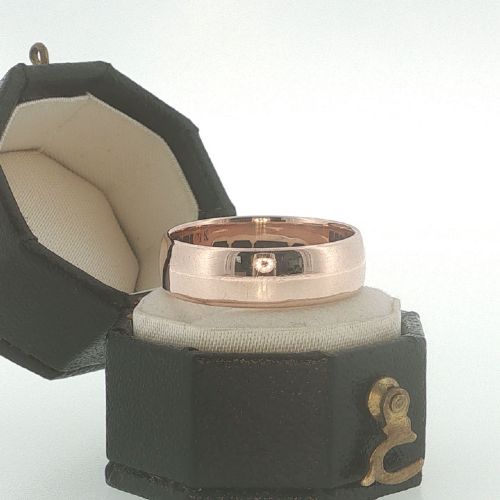
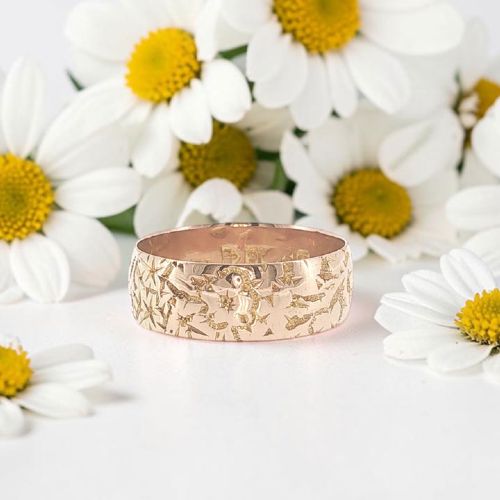
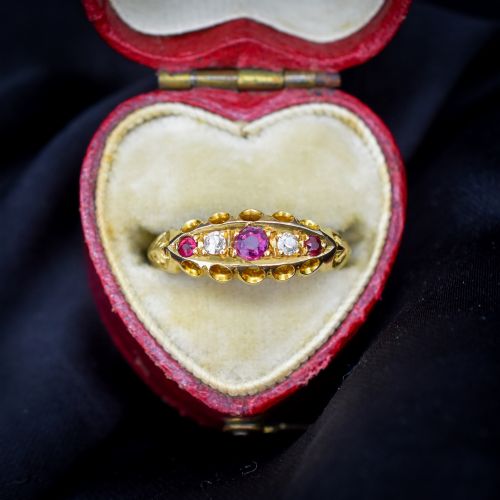
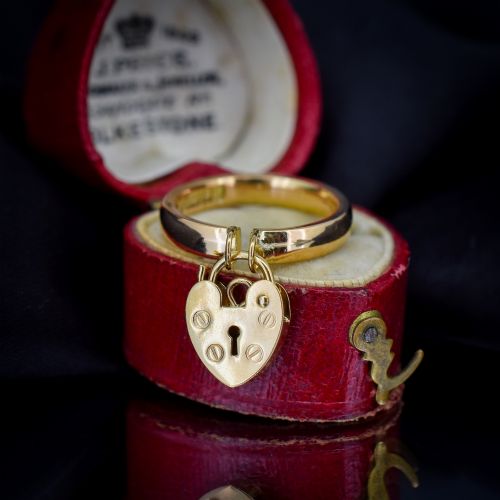
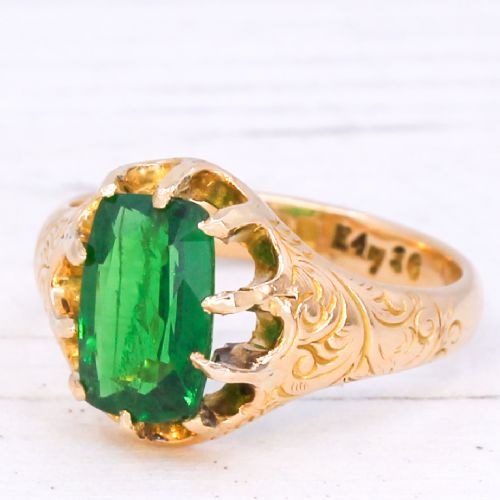
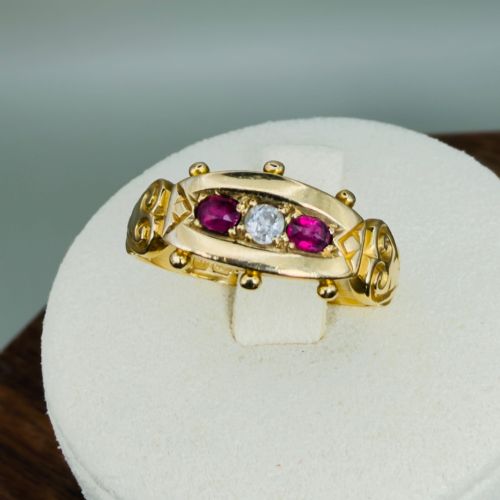
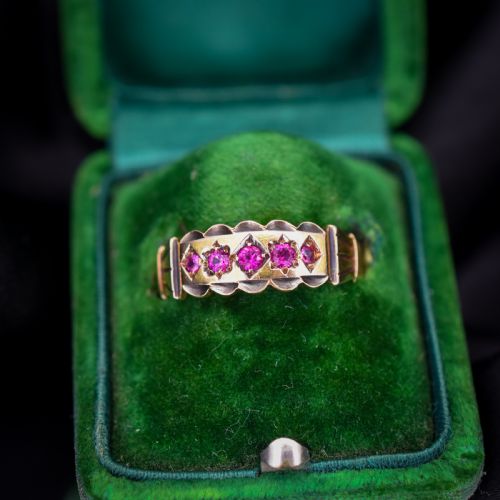
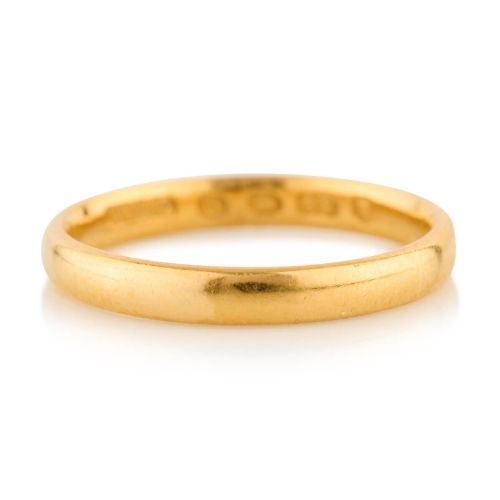
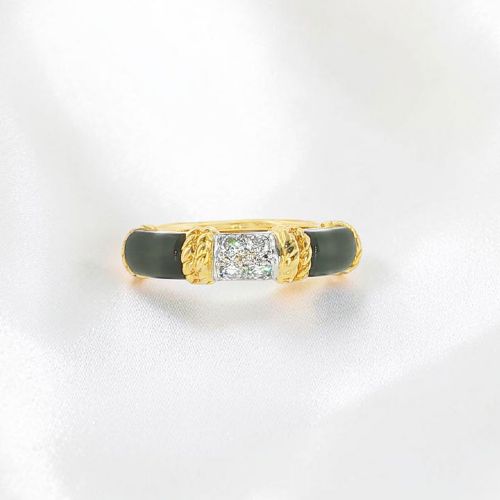
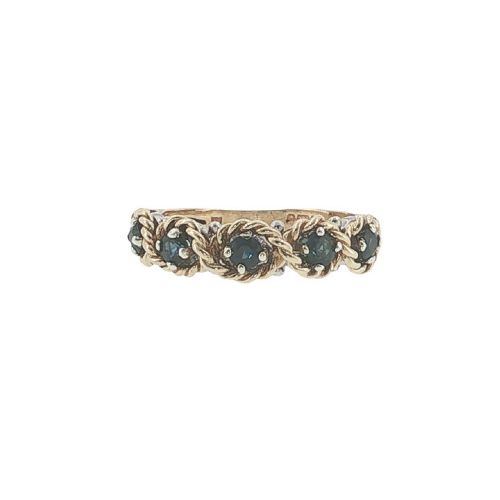
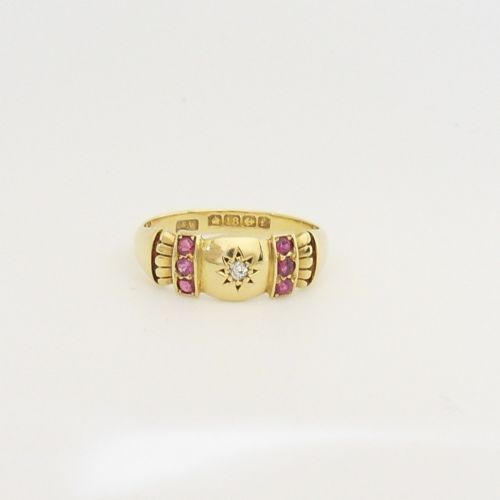
A hallmarked gold band encompasses plain wedding rings, patterned bands, and gem-set rings spanning the Victorian, Edwardian, and mid-century periods. The selections frequently include heavyweight 22ct yellow gold wedding bands alongside 9ct and 18ct gold rings featuring rubies, sapphires, and diamonds.
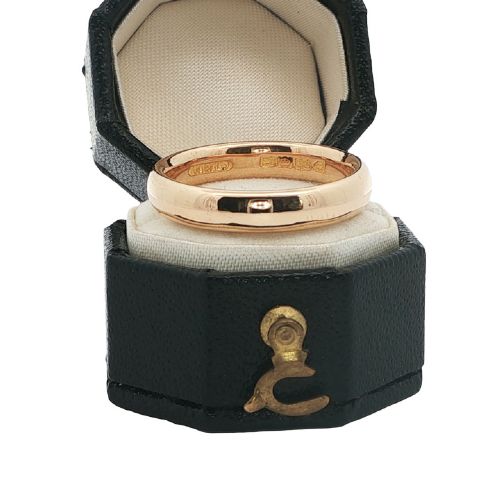
Buyers seeking a hallmarked gold band will regularly encounter traditional plain wedding rings stamped by assay offices in Chester, Birmingham, and London. Beyond plain bands, the category embraces decorative styles such as buckle rings, mizan rings, and multi-stone settings.
How they were made
Jewellers shaped high-purity yellow gold, rose gold, and 18ct alloys into solid bands using traditional forging and casting techniques. Gemstones including old-cut diamonds, rubies, and sapphires were then hand-set into starburst, gypsy, or boat mountings.
Official validation relied on the punch of the assay office stamp, which imprinted the metal standard and year letter directly into the gold. These crisp hallmarks serve as an enduring record of British manufacture.
Hallmarked Gold Band Retail Price Guide 2026
Typical asking prices for hallmarked gold band among the pieces listed under this phrase on Sellingantiques today, from the lower quarter to the upper quarter. They describe what is for sale here now, not the wider market.
The listings span periods from the late nineteenth century through the Edwardian era and into mid-century modern design.
What varies in quality
The distinction in quality rests upon the crispness of the official hallmarks and the depth of any hand-engraved patterns or chasing. Sharp, legible assay stamps indicate that a ring has retained its original substance through decades of wear.
Another factor is the weight and gauge of the gold band itself, alongside the secure flush-fitting or claw-setting of feature gemstones. Substantial metal thickness ensures the structural integrity of the ring endures.
Kutchinsky
The Hallmarked Gold Band Glossary
- Hallmark
- An official stamp applied by an assay office to guarantee the purity of the precious metal. These marks typically include a sponsor's mark, standard mark, and a date letter.
- Boat ring
- A ring setting featuring a raised, boat-shaped platform holding multiple gemstones. This curved arrangement was particularly popular during the Georgian and Victorian eras.
- Gypsy ring
- A style where gemstones are flush-set directly into the thick, tapering gold band. The metal is hammered or pushed around the stone to secure it smoothly.
- Mizpah ring
- A sentimental piece of jewellery exchanged between friends or lovers, bearing a Hebrew inscription meaning watchtower. They often feature intertwined hands or floral motifs.
- Assay office
- An official body responsible for testing the purity of precious metals and stamping them with statutory marks. Major British offices include London, Birmingham, and Chester.
Hallmarked Gold Band: Frequently Asked Questions
How do I read gold hallmarks?
Gold hallmarks typically consist of a sequence of stamps indicating the maker, the metal purity, the assay office, and the year of testing. By cross-referencing the date letter with assay office tables, you can pinpoint the exact year of manufacture.
These tiny stamped symbols provide an unalterable historical record that protects buyers and confirms the authenticity of antique precious metals.
What is the difference between 9ct and 22ct gold?
The primary difference lies in the proportion of pure gold contained within the alloy, with 22ct comprising a much higher gold content than 9ct. This higher purity gives 22ct gold a richer, deeper yellow colour and a noticeably heavier feel.
Lower carat golds like 9ct incorporate more alloy metals for increased hardness, resulting in a paler yellow or distinct rose hue depending on the copper content.
How can I tell a Victorian band from a mid-century one?
Victorian and Edwardian bands often feature distinct stylistic cues such as gypsy settings, intricate chasing, or specific assay date letters from the nineteenth and early twentieth centuries. Mid-century rings tend to display simpler profiles or later London and Birmingham hallmarks from the nineteen-fifties and sixties.
Examining the shape of the internal band profile and the specific form of the date punch helps clarify the exact manufacturing era.