

Hall Tree with Umbrella Stand
A hall tree with umbrella stand is the definitive piece for an entrance hall, combining coat storage with stick holders to keep coats and canes tidy.
Hall Tree with Umbrella Stand
A hall tree with umbrella stand serves as a combined furniture piece for the entrance of a home. The pieces found here span the Victorian, Edwardian, and mid-twentieth century periods.
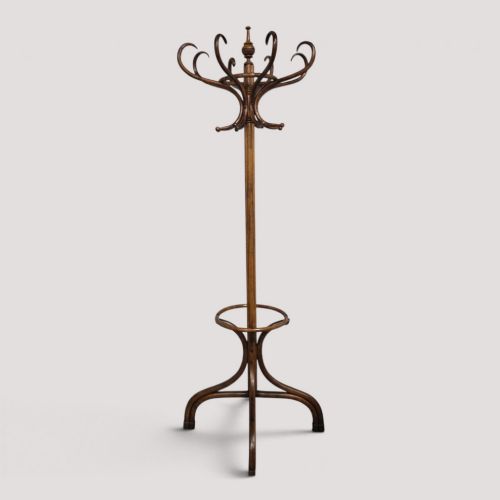
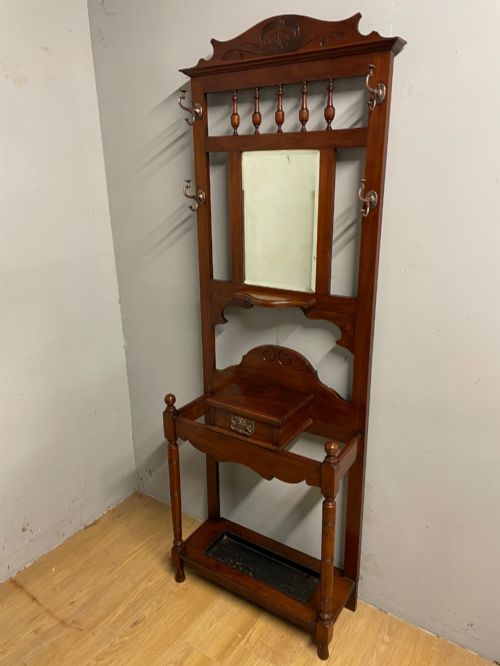
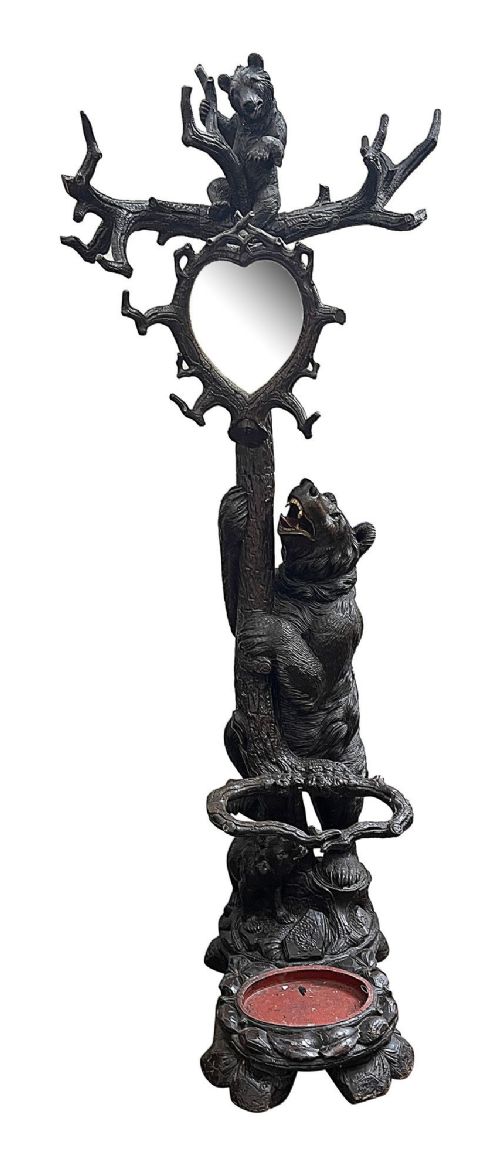
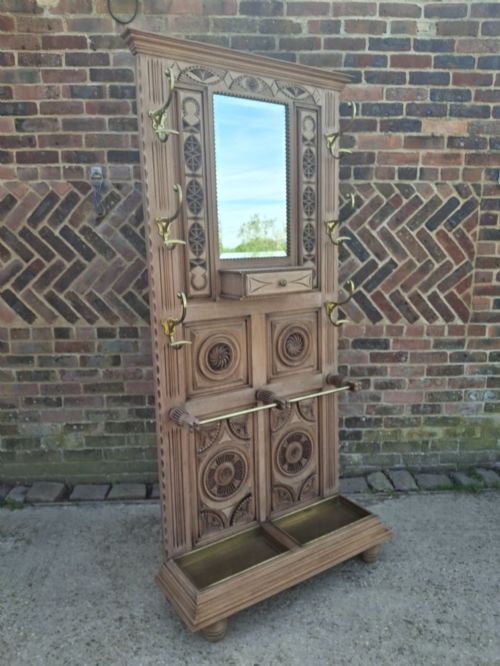
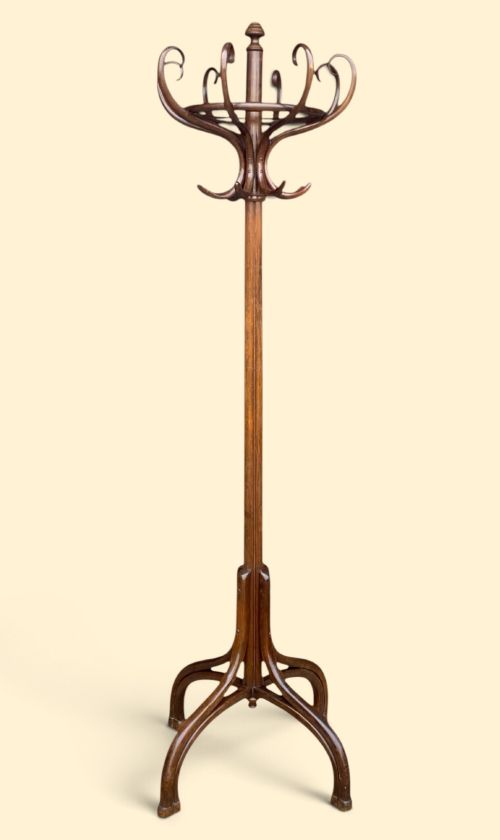
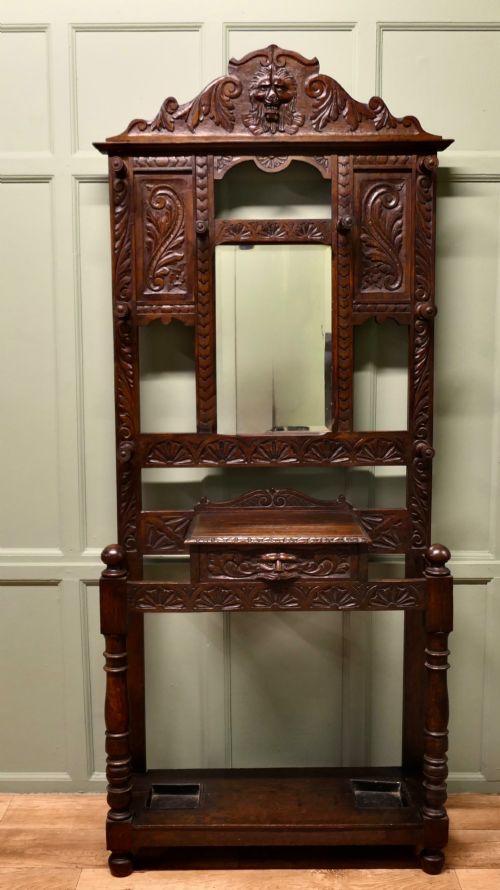
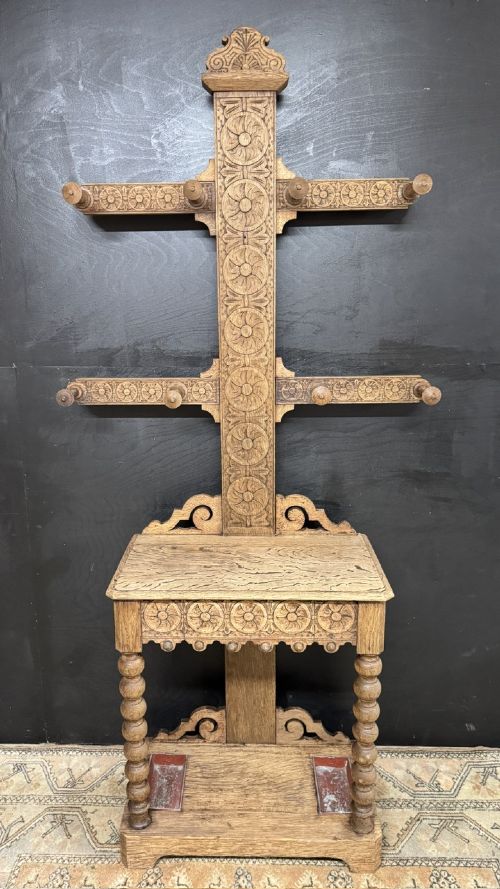
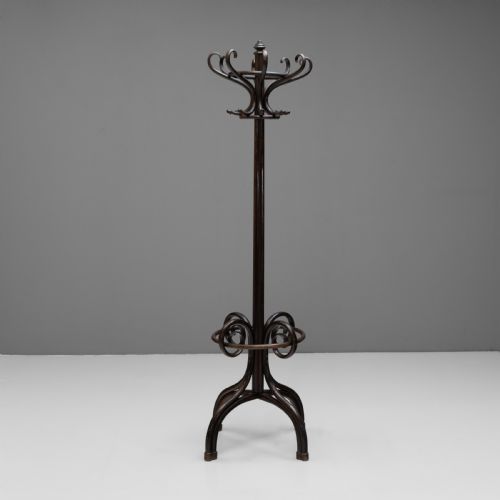
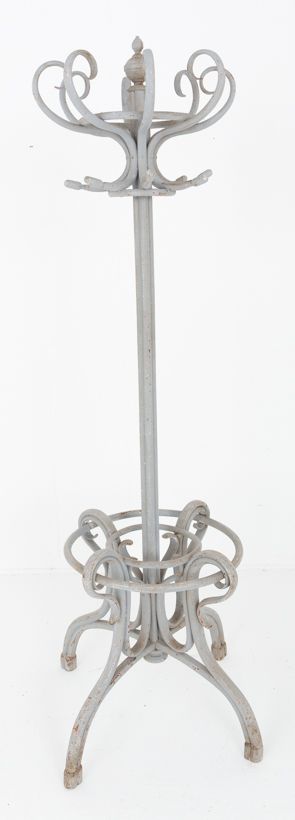
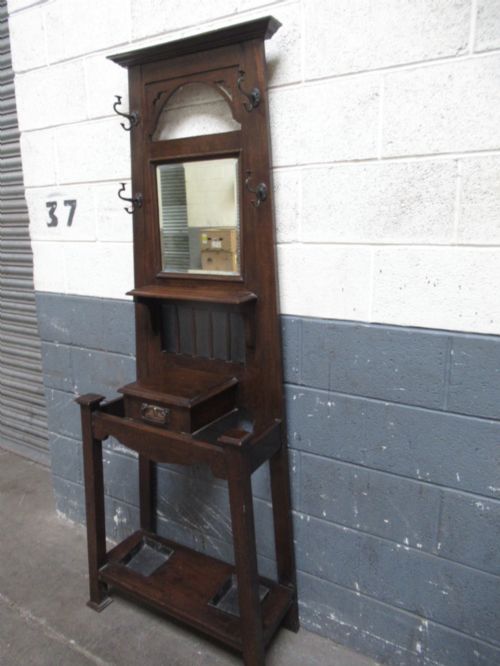
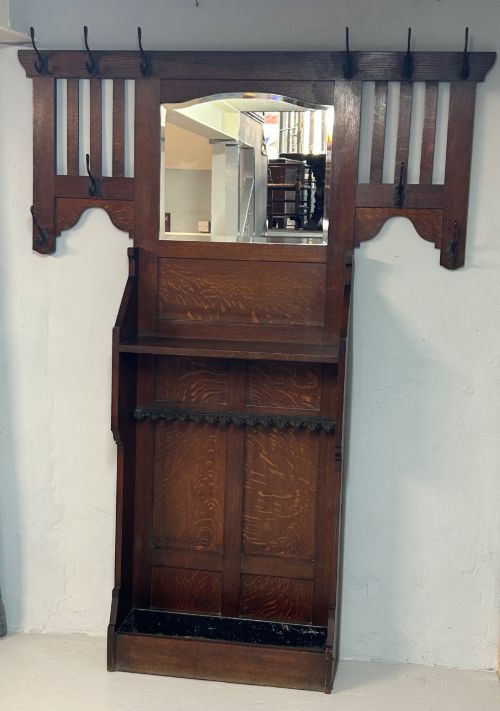
Most examples you encounter on this page are constructed from oak, mahogany, or bentwood, frequently incorporating a mirror and drip trays. Forms range from heavy carved oak to lighter bamboo and cast iron frames.
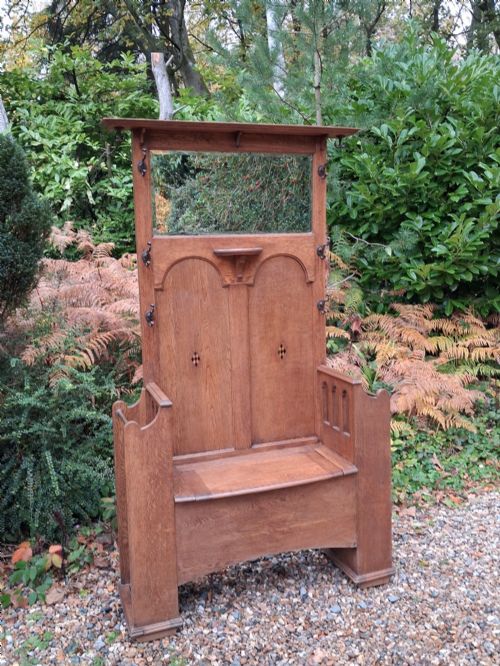
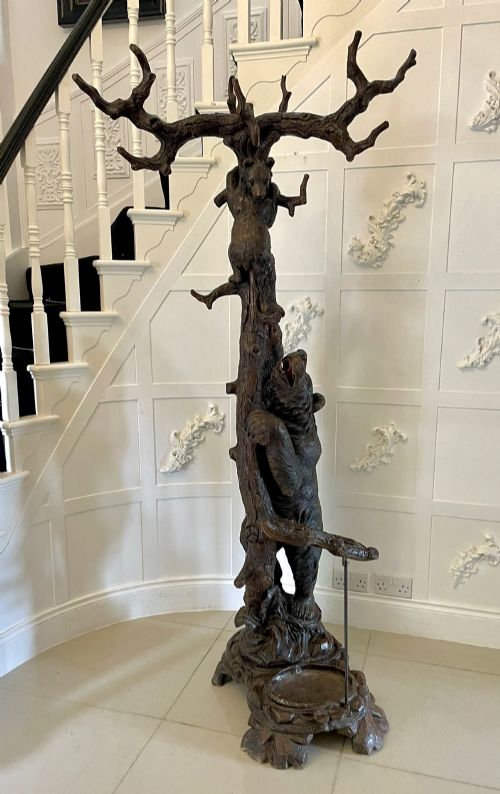
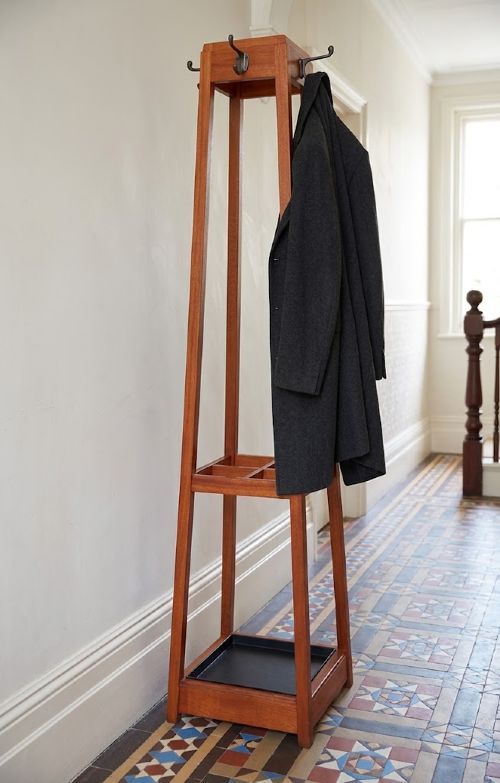
Makers utilised various regional styles, including Arts and Crafts, Art Nouveau, and Aesthetic Movement designs. You will also find industrial and bentwood variants dating to the twentieth century.
Materials and construction methods
Makers relied heavily on solid hardwoods like oak and mahogany, often shaping them with deep carving or geometric inlay. Bentwood constructions utilise steamed beech, while cast iron and wrought iron pieces employ intricate metal casting for openwork frames.
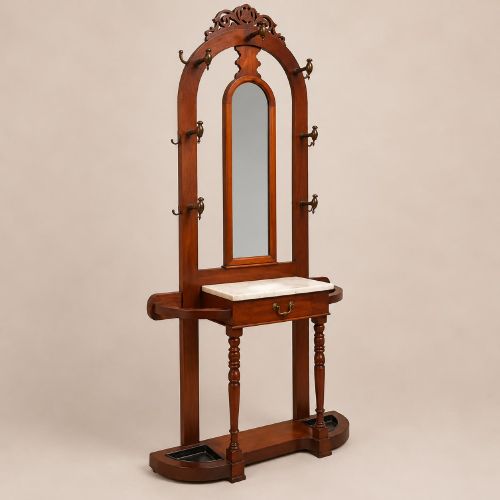
Functional elements such as brass double hooks, copper or metal drip trays, and inset marble shelves are integrated into the timber structures. Back panels frequently feature bevelled glass mirrors secured within carved frames.
Hall Tree with Umbrella Stand Retail Price Guide 2026
Typical asking prices for hall tree with umbrella stand among the pieces listed under this phrase on Sellingantiques today, from the lower quarter to the upper quarter. They describe what is for sale here now, not the wider market.
Some Victorian hall stands feature secret compartments behind the mirror for hiding calling cards.
Distinguishing quality in hall stands
Simpler industrial or mid-century oak variations focus purely on utility with straightforward umbrella holders, whereas Victorian and Edwardian examples concentrate ornamentation around the central mirror and panelled back.
Coalbrookdale·Thonet·Christopher Dresser
The Hall Tree with Umbrella Stand Glossary
- Drip tray
- A metal or ceramic tray placed at the base of the stand to catch water from wet umbrellas and walking sticks. It protects the surrounding timber floor from moisture damage.
- Bentwood
- Wood that has been heated with steam to make it pliable and then bent into curved shapes. This technique is prominent in lighter twentieth-century stands.
- Faux bamboo
- Wood that is carved, painted, or turned to imitate the appearance of natural bamboo. This finish appears frequently on aesthetic period and late nineteenth-century pieces.
- Green Man
- A sculptural motif consisting of a face made of, or surrounded by, leaves and vines. It appears as a decorative carving on Victorian oak furniture.
- Japonisme
- The influence of Japanese art on Western works, visible in specific maple and bamboo pieces from the late nineteenth century.
Hall Tree with Umbrella Stand: Frequently Asked Questions
What is a hall tree with umbrella stand?
A hall tree with umbrella stand is a combined piece of entrance furniture designed to hold coats, hats, and walking sticks. It typically includes hooks, a mirror, and built-in lower rings with drip trays.
These pieces were placed in the hallway of a home to receive outerwear immediately upon entry. They keep everyday items organised and accessible for departure.
How do I care for a wooden hall stand?
Maintenance involves dusting the carved timber regularly and treating the wood with appropriate wax or polish to preserve the finish. Avoid placing damp items directly onto unlined wood surfaces.
Check that metal drip trays are emptied and dried regularly to prevent rust or moisture transfer. This protects the lower framework from water marks.
How can I tell Victorian from Edwardian stands?
Victorian stands tend to feature heavier carved oak or mahogany, often with dark finishes, elaborate crests, and intricate Green Man or Gothic motifs. They are built for substantial country houses or large town residences.
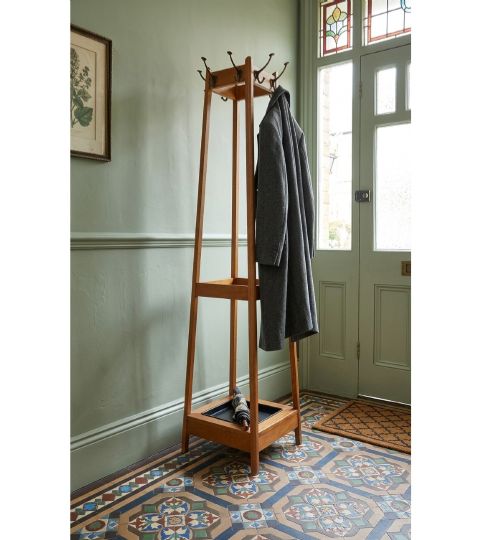
Edwardian and later pieces generally exhibit lighter oak, simpler lines, or Arts and Crafts influence. They reflect a shift towards brighter entrance halls and more understated domestic interiors.
Where were these stands used originally?
They stood in the entrance halls and vestibules of houses to receive guests and family members. The mirror allowed a final check of attire before stepping outside.
The lower umbrella holders and hooks managed wet weather gear and walking canes in busy households. They served as the primary storage point for outdoor apparel.