

Hall Tree Coat Rack
A hall tree coat rack organises hats, coats, and umbrellas while making a strong first impression in an entrance hall.
Hall Tree Coat Rack
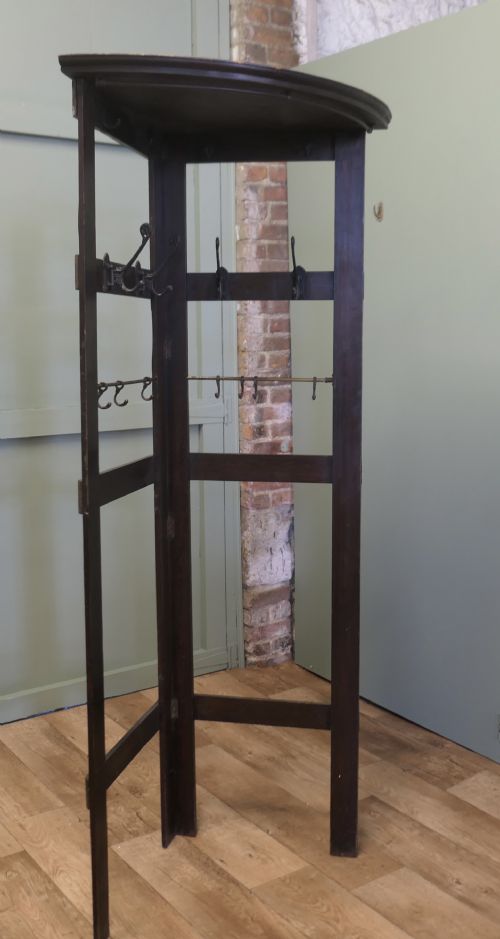
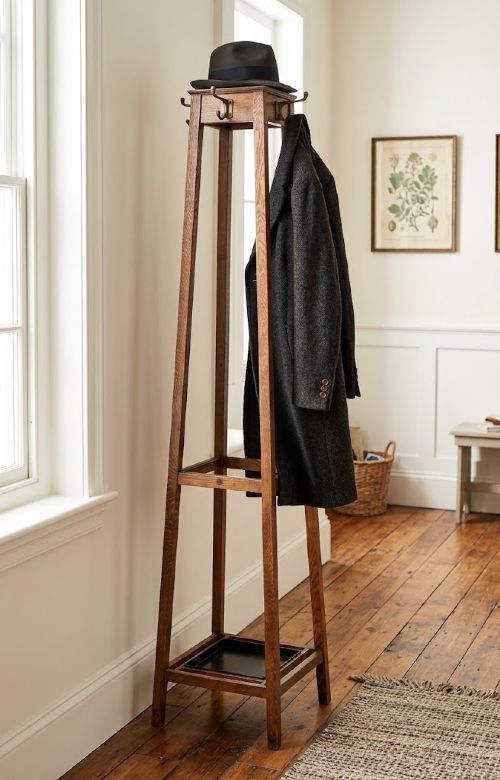
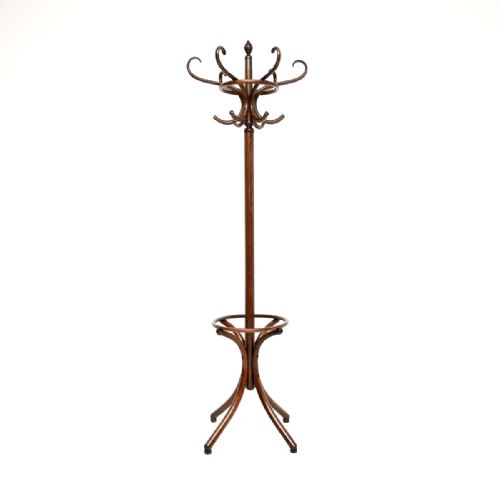
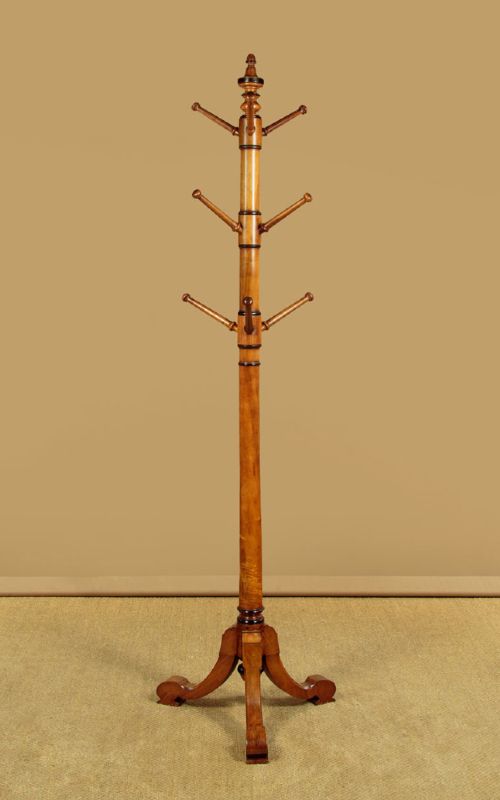
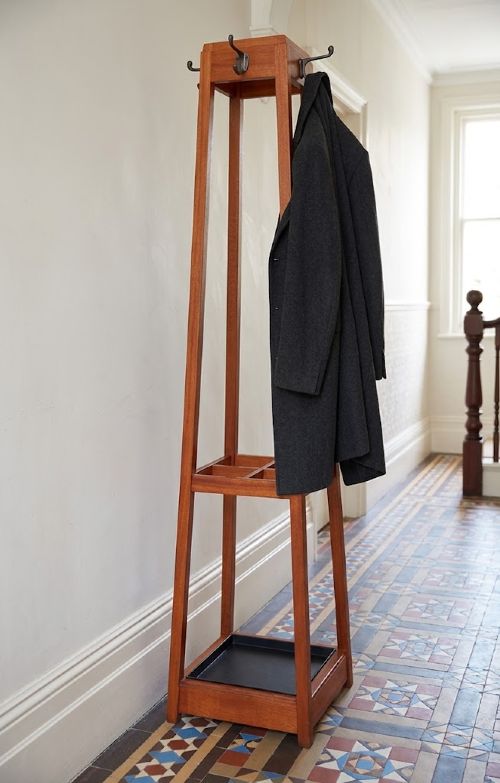
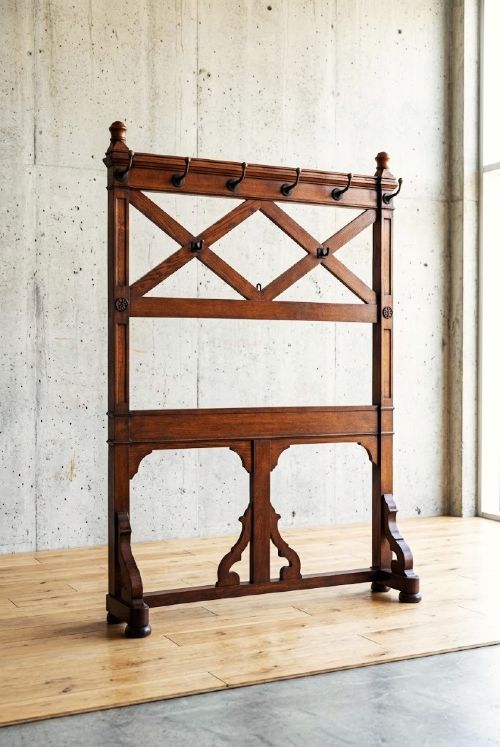
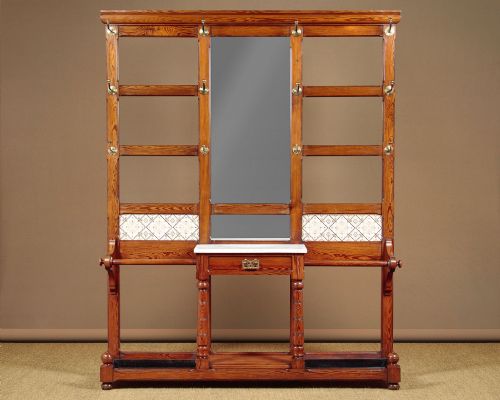
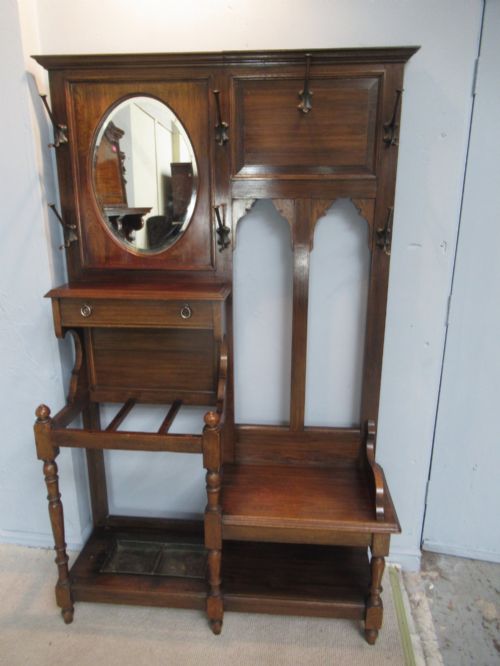
A hall tree coat rack combines storage for outerwear with structural framing in entranceways, appearing primarily in forms such as hall stands, coat stands, and wall-mounted coat racks.
The pieces on this page span the Victorian, Edwardian, and early twentieth-century periods, alongside styles like Arts and Crafts, Art Nouveau, and Aesthetic Movement.
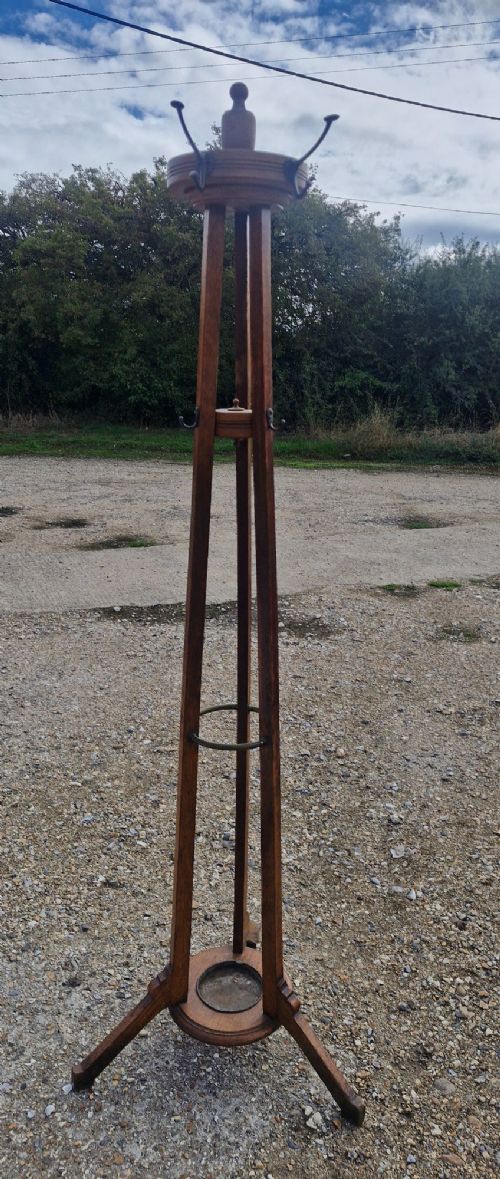
Makers utilised timber, bentwood, and metal to construct designs ranging from compact wall racks to large multi-functional hall seat stands with umbrella holders and drip trays.
Materials and Construction
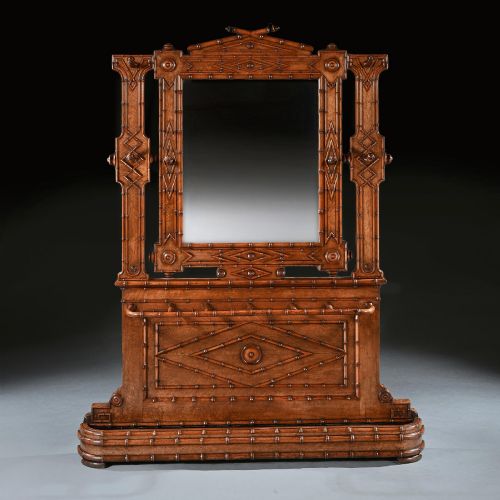
Makers constructed these pieces from solid hardwoods like oak, mahogany, walnut, and beech, alongside specialised materials such as cast iron, brass, glass, and faux bamboo.
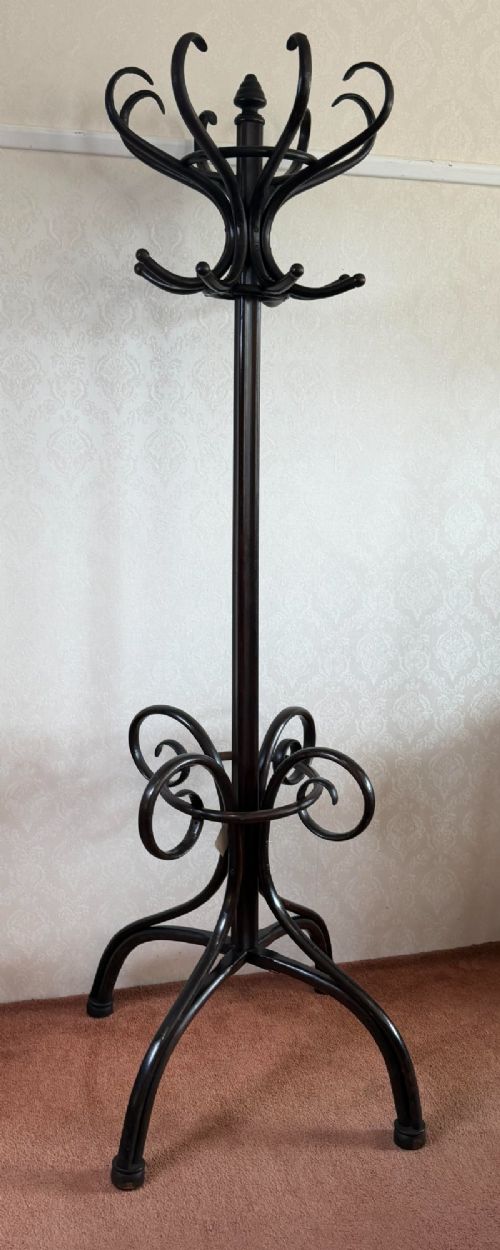
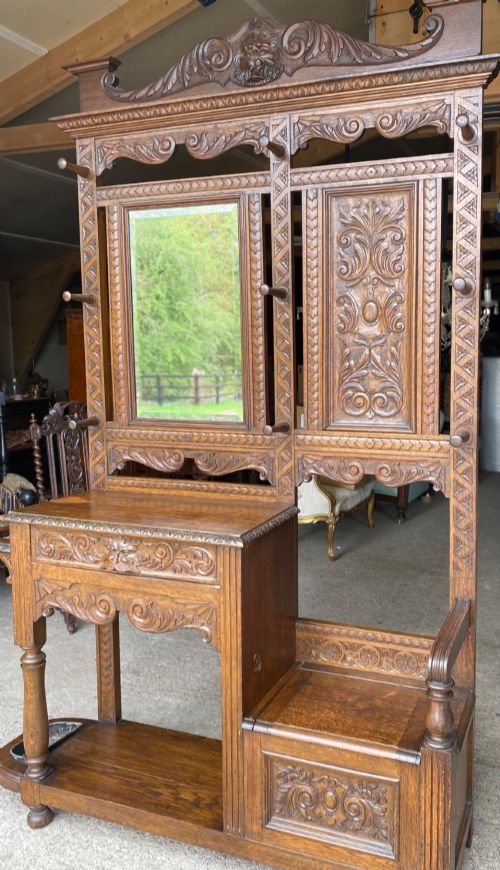
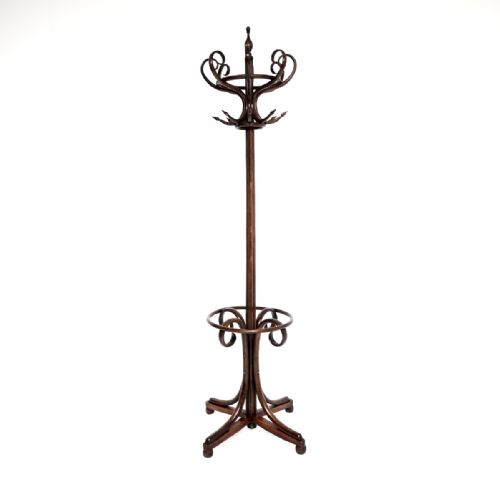
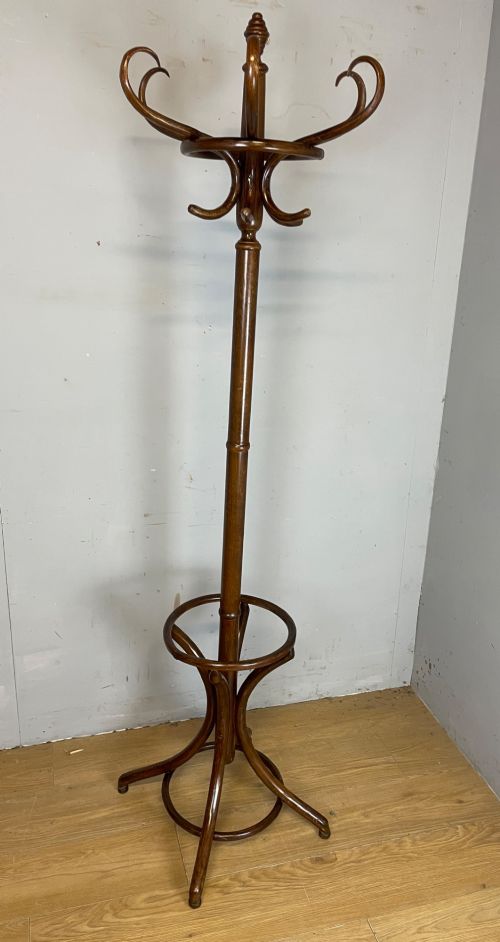
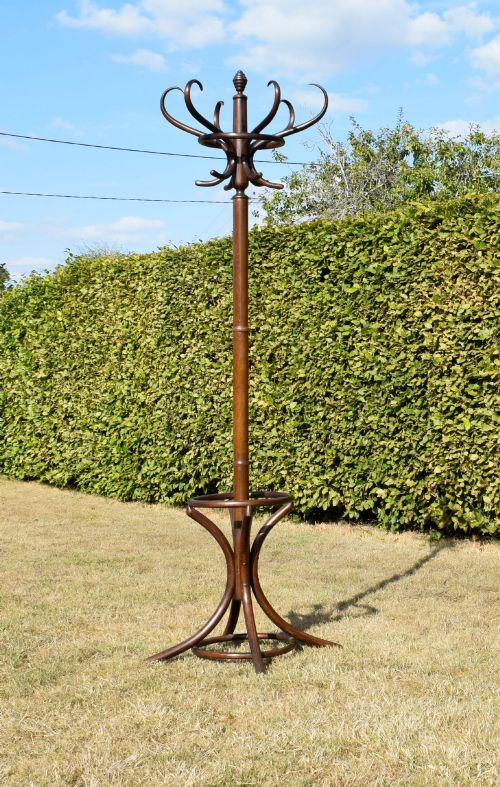
Steam-bending techniques shaped beech into smooth curves for bentwood coat and hat stands, whilst joiners carved oak and mahogany for substantial Victorian and Edwardian hallstands.
One exceptional nineteenth-century piece utilises genuine antlers for its coat hooks, bringing woodland architecture directly indoors.
Judging Quality
Construction methods dictate durability, distinguishing heavy carved oak frames joined with traditional techniques from lighter wall-mounted brass and wood variants.
Integrity of integrated elements like drip trays, umbrella holders, and mirror fittings separates standard production items from elaborate multi-functional hall seat stands.
Thonet·J Parker of Woodstock
The Hall Tree Coat Rack Glossary
- Bentwood
- Wood shaped by steaming to create curved forms. This technique produced lightweight, resilient coat stands popular through the nineteenth and twentieth centuries.
- Hallstand
- A piece of entrance hall furniture incorporating coat hooks, a mirror, and frequently a seat and umbrella stands. These large items served practical storage needs in traditional homes.
- Drip tray
- A metal or ceramic basin positioned at the base of a coat stand. This component collected water from wet umbrellas to protect wooden flooring.
- Aesthetic Movement
- A late nineteenth-century design style emphasising visual beauty over narrative content. Pieces from this movement often featured stylised motifs and Japonisme influences.
Hall Tree Coat Rack: Frequently Asked Questions
What is a hall tree coat rack?
A hall tree coat rack is a piece of furniture designed for entrance halls to hold hats, coats, and walking sticks.
Many examples also incorporate mirrors, small seats, and umbrella stands with metal drip trays.
How do I identify a Victorian hall stand?
Victorian hall stands typically feature dense timbers such as carved oak or mahogany, often combined with cast iron hooks.
They emphasise substantial scale and elaborate ornamentation compared to lighter Edwardian or bentwood designs.
Where should I place a coat stand?
Coat stands suit entrance halls, porches, or wide corridors where household members and visitors deposit outerwear.
Freestanding models require sufficient clearance around the base to accommodate hanging garments and umbrellas safely.
What materials are common in antique hall stands?
Solid woods like oak, mahogany, and walnut dominate heavier nineteenth-century examples, while beech appears frequently in bentwood pieces.
Metal components such as brass, cast iron, and zinc appear in hooks, rails, and umbrella drip trays.