


Hall Stand Umbrella Rack
When choosing a hall stand umbrella rack, you are selecting a practical entrance piece designed to hold coats, hats, and walking sticks.
Hall Stand Umbrella Rack
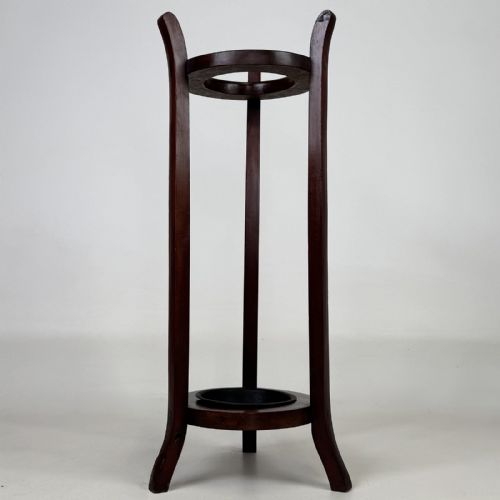
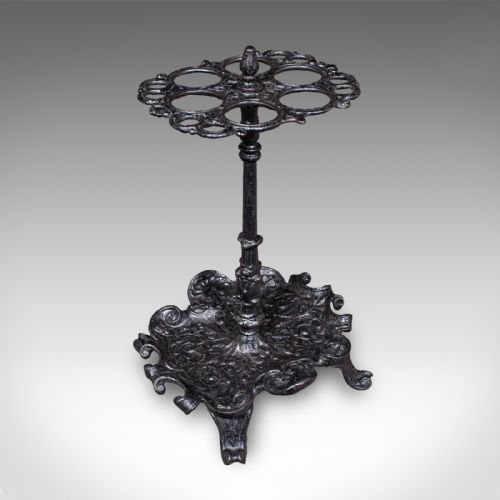
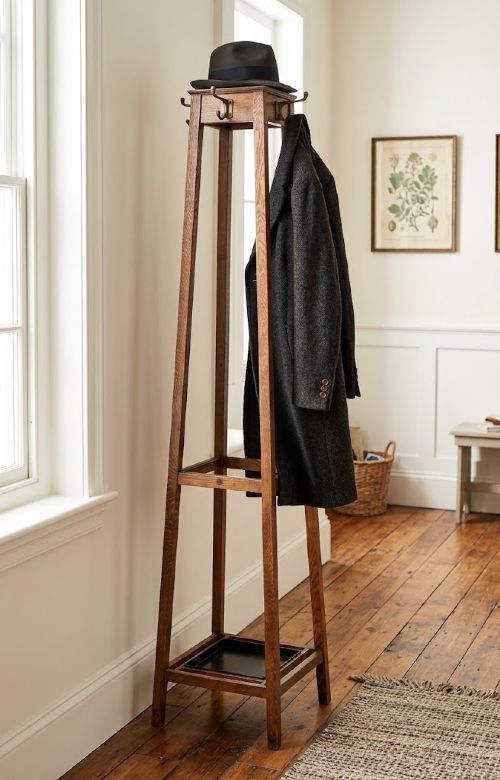
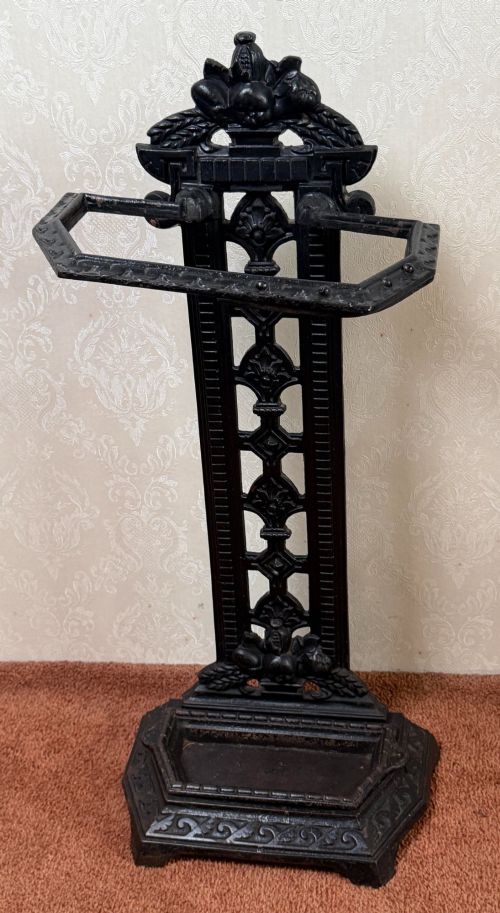
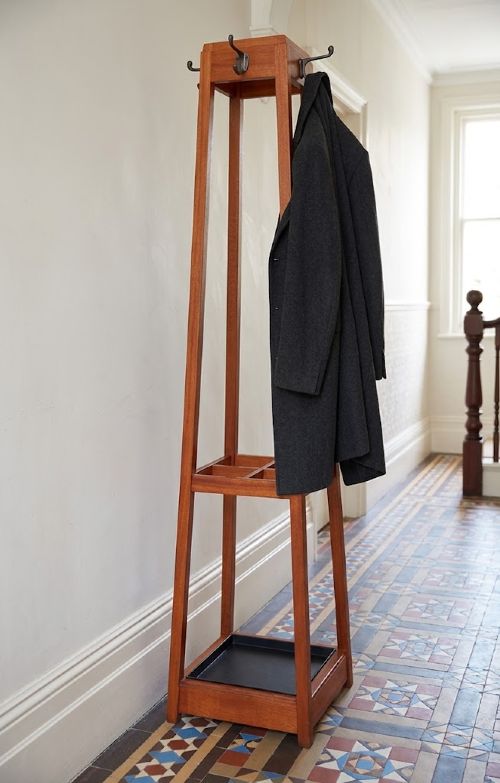
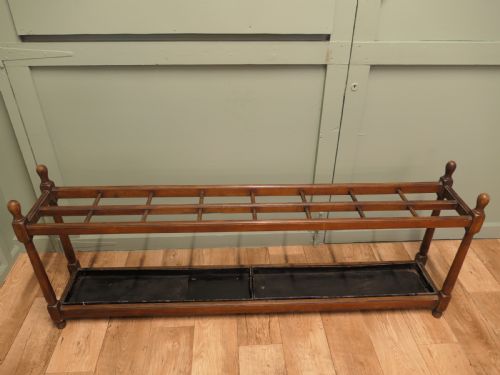
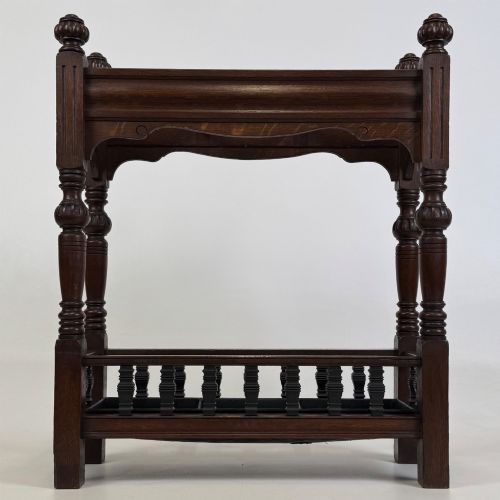
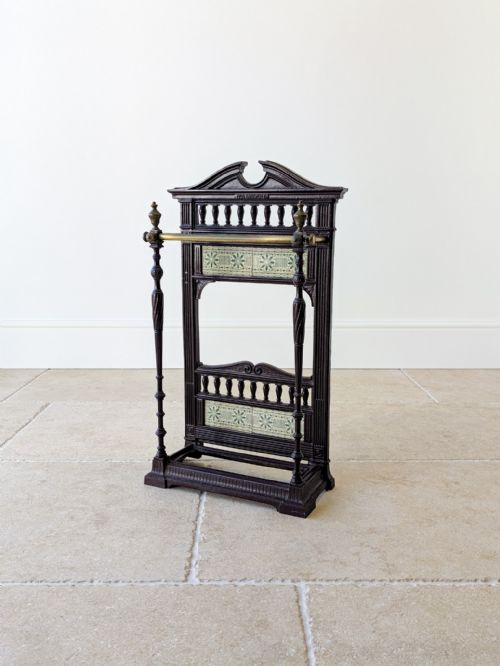
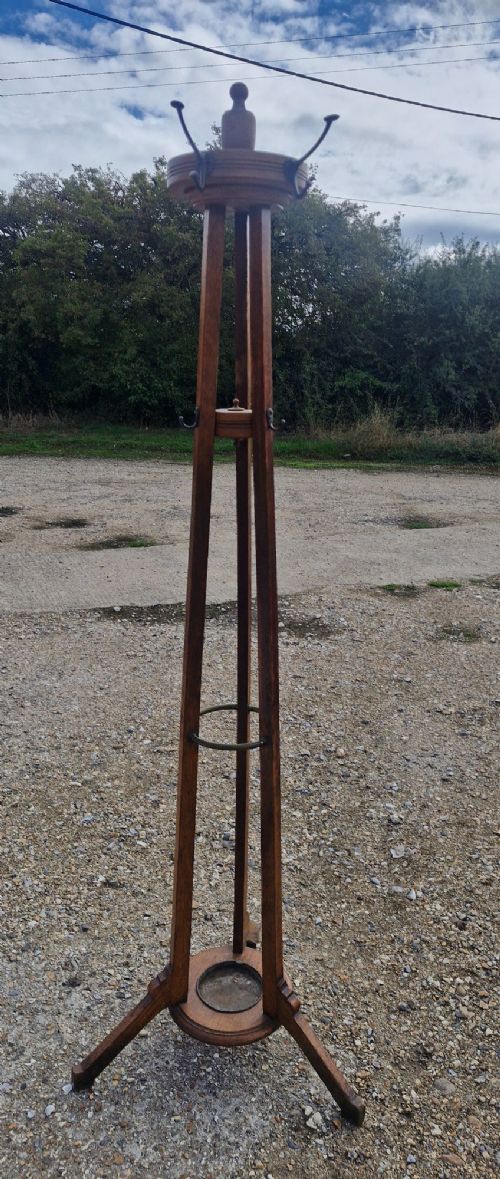
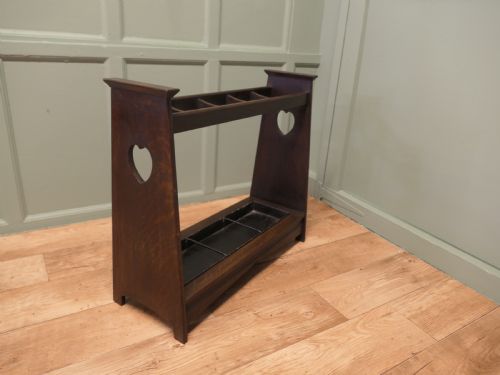
A hall stand umbrella rack combines coat hooks, hat storage, and dedicated umbrella holders into a single entranceway furnishing. When searching for a hall stand umbrella rack, buyers encounter variations spanning the Victorian, Edwardian, and Arts and Crafts periods. Most examples found on this page utilise timbers such as oak and beech, or metals including cast iron and brass.
The objects serve the functional purpose of keeping hallway clutter organised while greeting visitors at the front door. Forms range from compact cast iron stick stands to large multi-functional hall seat stands incorporating drip trays.
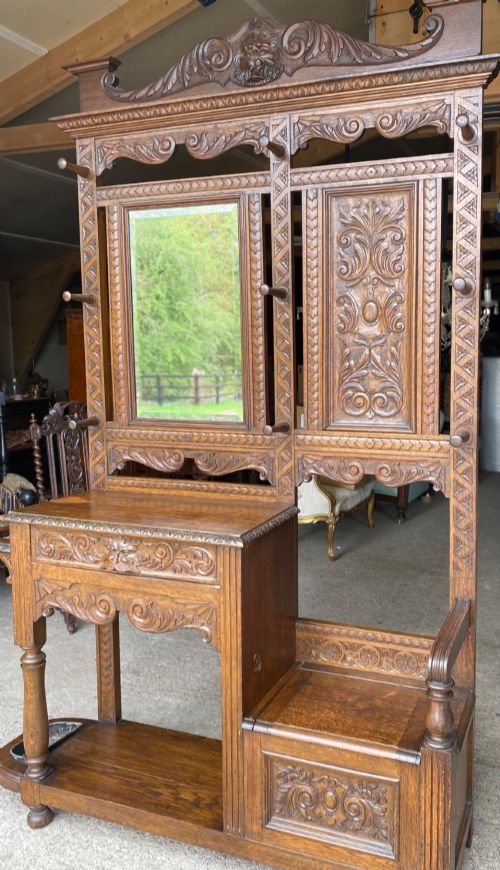
Makers and designers from the Aesthetic Movement and Art Nouveau periods contributed distinct stylistic interpretations to these hallway furnishings. Pieces frequently integrate mirrors, glove boxes, and compartmentalised bases designed to catch water from wet umbrellas.
How They Were Made
Makers utilised solid timbers like oak, mahogany, and pine for sturdy structural frameworks, often employing bentwood techniques with beech for curved hat and coat racks. Metal components relied on cast iron, brass, and nickel plating, frequently shaped into intricate decorative patterns or compartmentalised divisions for walking sticks.
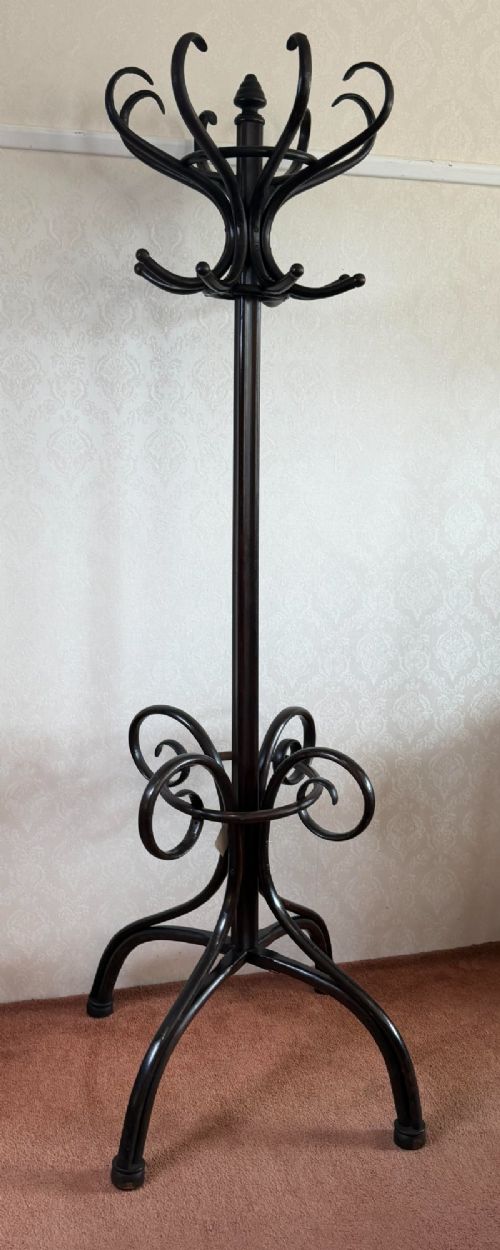
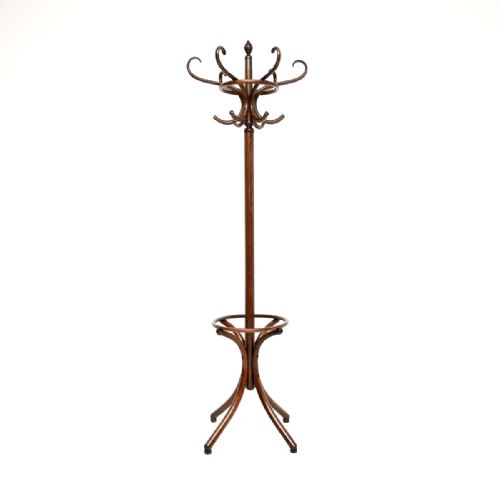
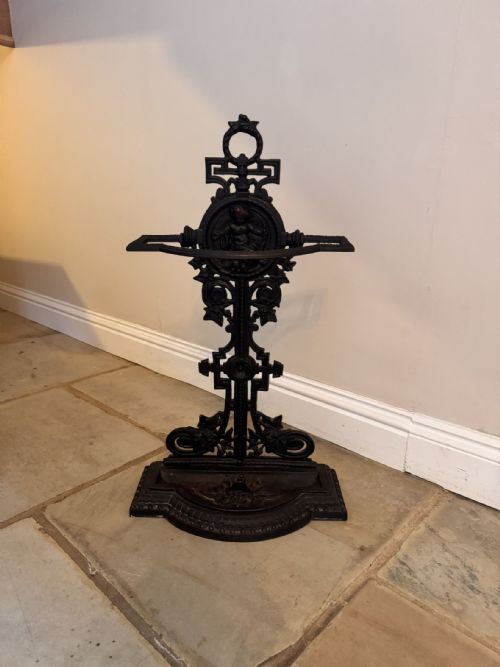
Techniques such as steam-bending allowed manufacturers to produce fluid, curved forms seen in Thonet-style hall stands. Cast iron models utilised foundry moulding to create openwork motifs, figural designs, and integrated drip trays.
Certain Victorian hall stands incorporate actual red deer antler horns for hanging coats and hats.
What Varies In Quality
The calibre of a hall stand umbrella rack is determined by the integrity of its construction and the precision of its joinery. Superior examples maintain stability across multi-functional elements like coat hooks, mirror frames, and umbrella compartments without structural wobble.
Material selection dictates longevity, with dense hardwoods and heavy cast iron bases distinguishing better items from lighter, utilitarian alternatives. Original hardware, intact drip trays, and uncompromised surface finishes further elevate the standing of a piece.
Coalbrookdale·Liberty·Thonet
The Hall Stand Umbrella Rack Glossary
- Bentwood
- Wood that has been heated with steam to make it pliable and shaped into curved forms. This technique was widely utilised in the production of lightweight hat and coat stands.
- Drip tray
- A metal or ceramic pan positioned at the base of stick holders to catch rainwater from wet umbrellas. These trays protect hallway floors from moisture damage.
- Demi-lune
- A half-moon shape characteristic of tables and umbrella stands designed to sit flush against a wall. This profile maximises floor space in narrow hallways.
- Japonisme
- The influence of Japanese art on Western design during the late nineteenth century. It appears in specific aesthetic period hall stands through stylized natural motifs.
- Coat and hat stand
- A vertical furnishing featuring multiple upward-curving hooks for garments and headwear. Many include integrated ring holders for canes and umbrellas at the base.
Hall Stand Umbrella Rack: Frequently Asked Questions
What is a hall stand umbrella rack?
A hall stand umbrella rack is a combined hallway furnishing designed to hold outdoor garments, hats, and wet walking sticks or umbrellas in one dedicated footprint.
These pieces typically feature vertical panels with coat hooks, a central mirror or glove compartment, and a compartmentalised base equipped with a metal drip tray.
How were these stands used historically?
In period homes, they functioned as the primary drop-off point for family members and visitors arriving from the outdoors.
Wet umbrellas and walking sticks were placed in the lower rings, hats and coats hung from the hooks, and visiting cards were often left on the central shelf.
How do I tell Victorian from Edwardian stands?
Victorian stands tend to feature heavier, more ornate cast ironwork, darker carved mahogany timbers, and dense decorative carving.
Edwardian and later pieces frequently display lighter golden oak construction, simpler geometric Arts and Crafts lines, or streamlined bentwood curves.
How do I care for wooden hall stands?
Wooden hall stands require protection from excessive moisture and direct heat sources that can dry out the timber or crack the finish.
Regular dusting and occasional application of appropriate furniture wax help maintain the lustre of oak, mahogany, and beech surfaces.