

Hall Stand Coat Rack
A hall stand coat rack organises an entrance hall with hooks and umbrella storage, uniting daily practicality with period design.
Hall Stand Coat Rack
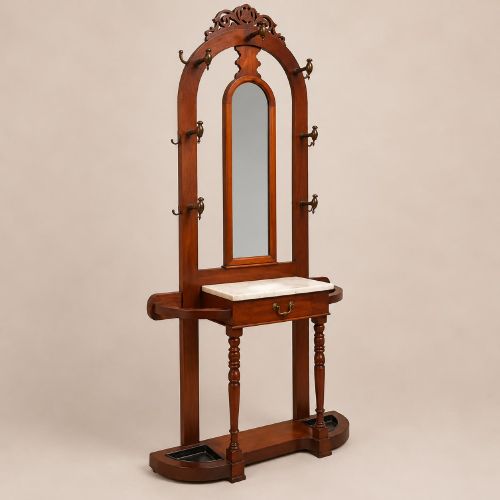
A hall stand coat rack serves as an entrance piece designed to hold coats, hats, and umbrellas while welcoming visitors to a home. These furnishings span periods from the Victorian era through Edwardian times and into the early twentieth century.
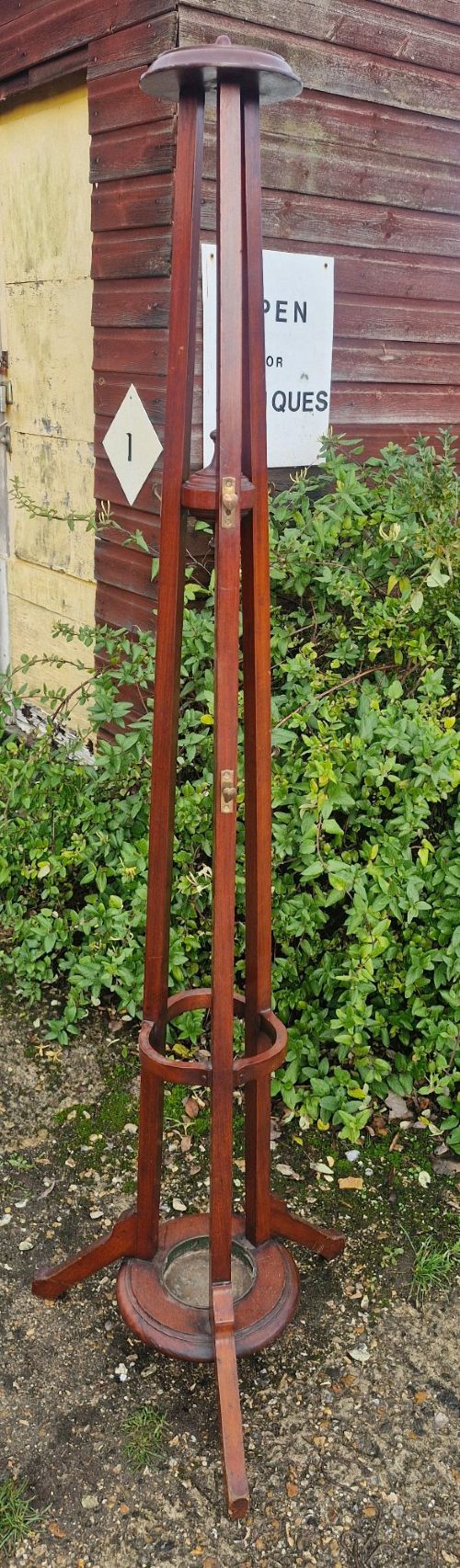
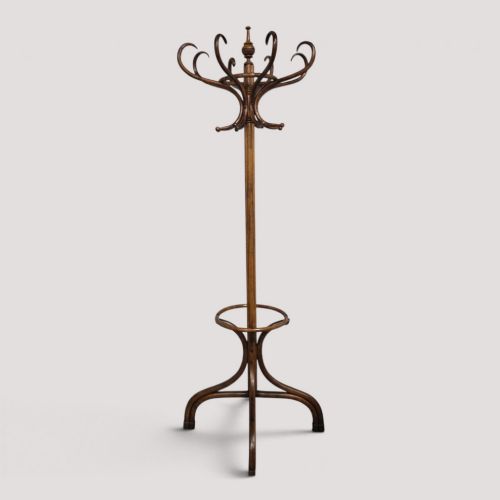
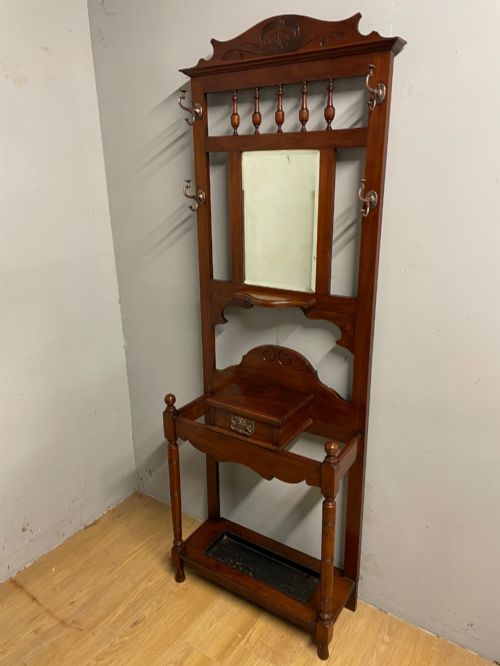
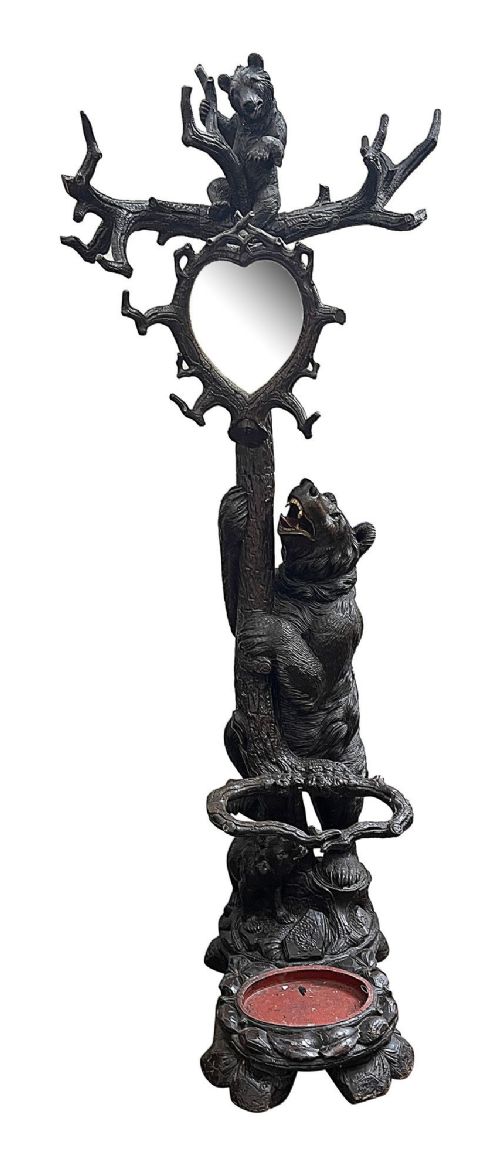
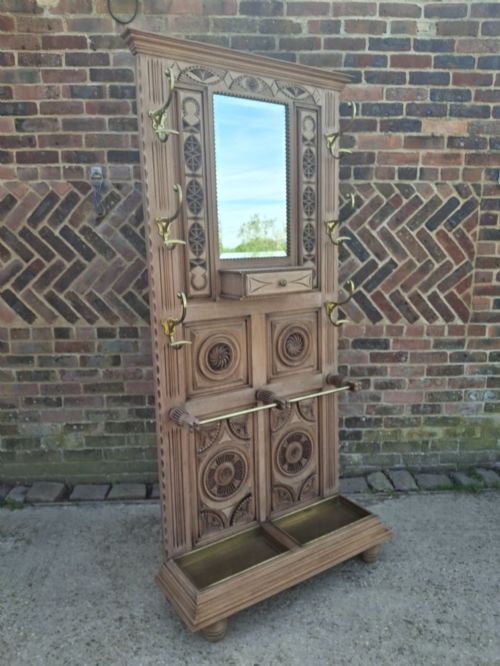
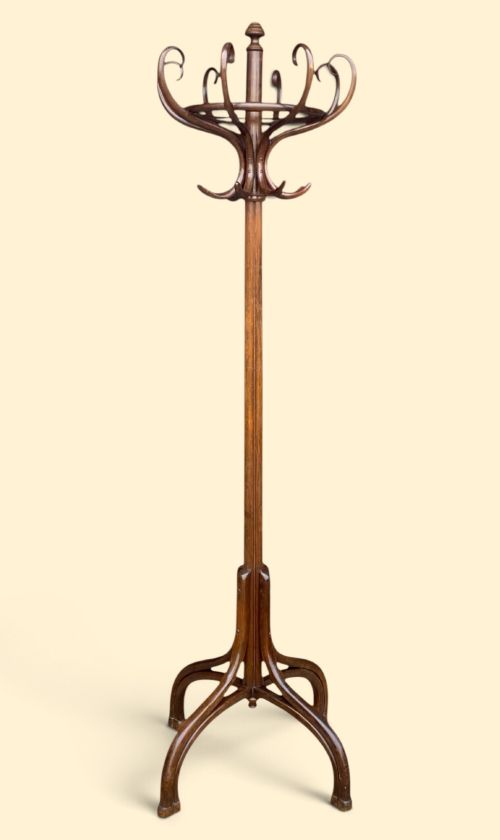
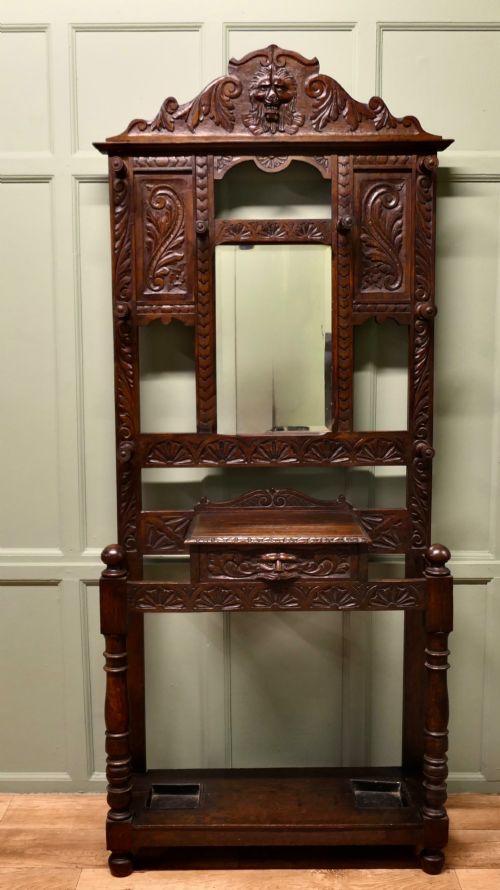
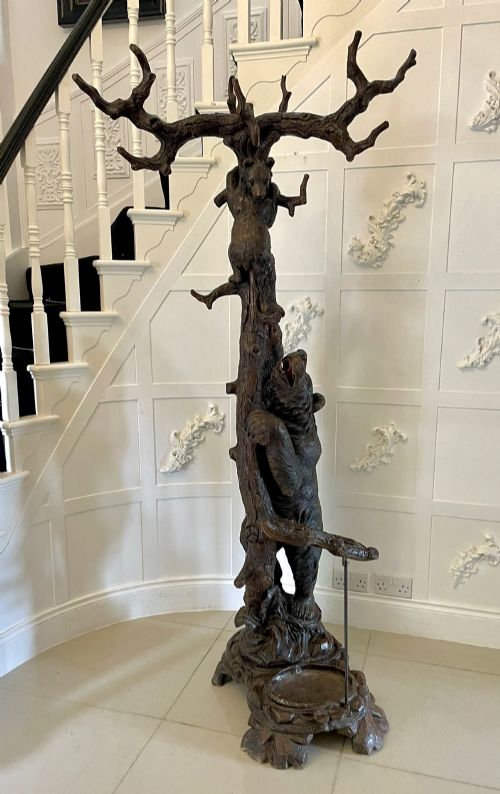
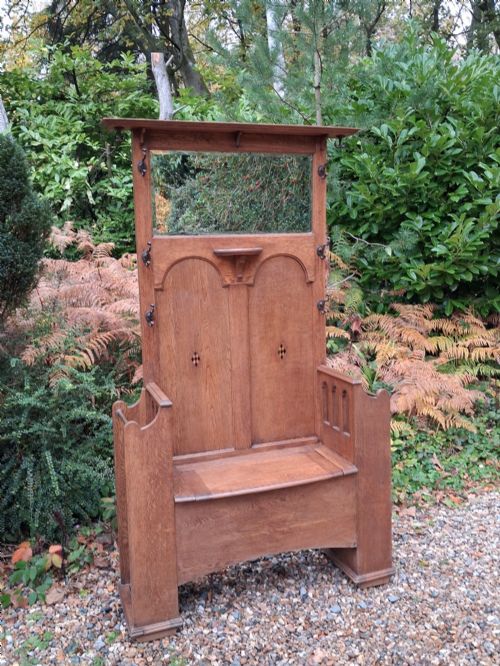
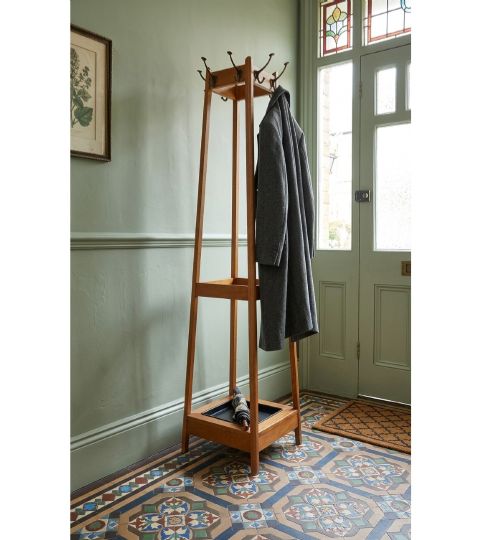
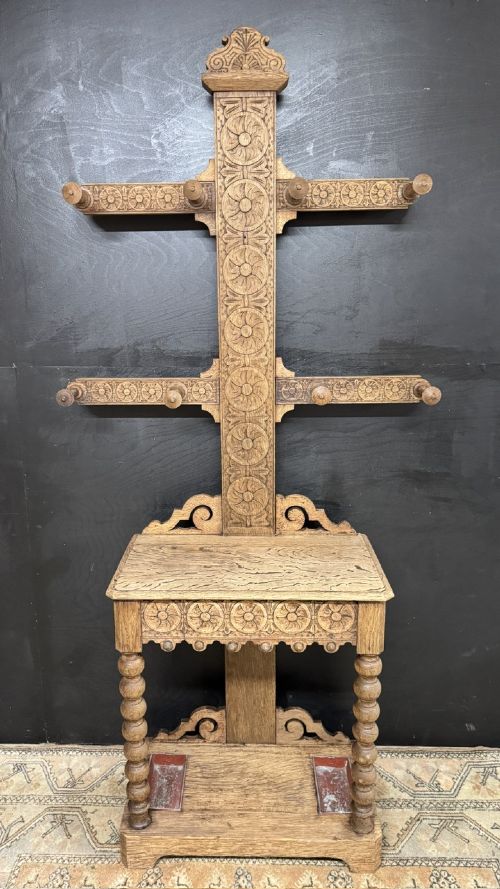
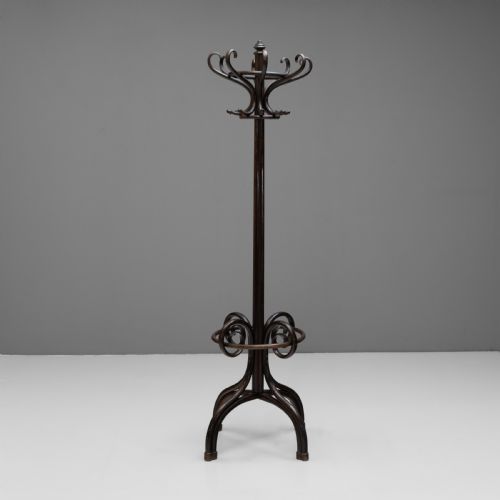
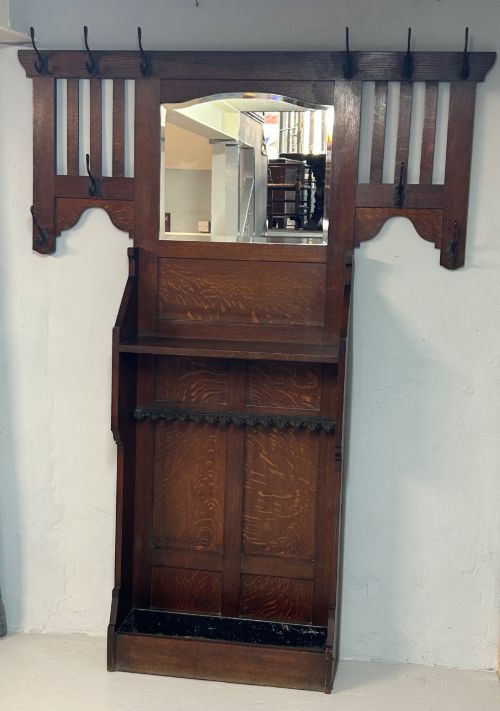
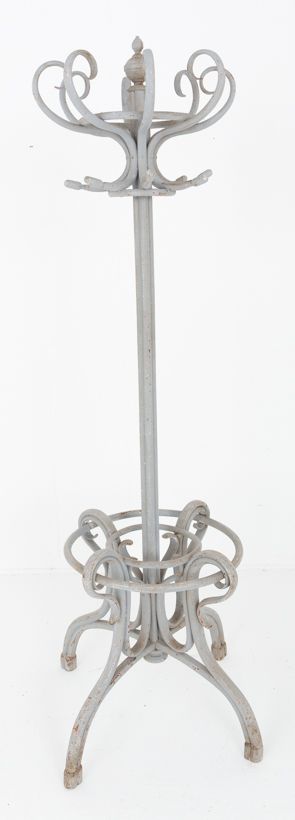
The most common formats on this page include freestanding oak and mahogany hall stands, wall-mounted wooden plaques with brass hooks, and steam-bent beech bentwood designs. Many examples combine hooks for garments with integrated umbrella holders and drip trays.
Origins range from British country houses and town dwellings to continental workshops, utilising solid timbers, cast iron, and animal antler alongside specialised fittings.
How they were made
Construction relies heavily on native and imported hardwoods like oak, mahogany, walnut, and beech, often shaped through traditional joinery or steam-bent techniques for curved forms. Metal elements appear as cast iron frames or brass hooks, sometimes paired with mirrored panels and ceramic tile inserts.
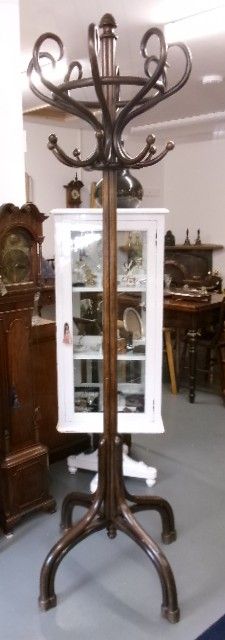
Bentwood examples utilise steamed beech rods forced into continuous curves to create lightweight yet sturdy standing frames. Wall-mounted racks employ shaped timber plaques secured with heavy metal hooks, whilst larger hall seats incorporate panelled backs and fitted umbrella wells.
Hall Stand Coat Rack Retail Price Guide 2026
Typical asking prices for hall stand coat rack among the pieces listed under this phrase on Sellingantiques today, from the lower quarter to the upper quarter. They describe what is for sale here now, not the wider market.
Listings span multiple decades from the nineteenth century into the mid-twentieth century, featuring oak, mahogany, bentwood, and cast iron materials.
What varies in quality
Quality rests upon the selection of timber, the weight of metal hardware, and the integrity of structural joinery. Dense solid oak or figured walnut demonstrates superior material choice compared to simpler pine or secondary woods.
Execution of detail separates standard utility pieces from finer items, seen in carved decorative elements, original brass or antler fittings, and the clean execution of steam-bent curves. The retention of original drip trays and mirrors further distinguishes the better examples.
Thonet
The Hall Stand Coat Rack Glossary
- Bentwood
- Furniture formed by steaming strips of wood until pliable and bending them into curved shapes. This technique creates lightweight and resilient umbrella and coat stands.
- Hall tree
- An alternative term for a freestanding hall stand that incorporates coat hooks, a mirror, and a seat. These multifunctional pieces dominate entrance hallways.
- Drip tray
- A metal or ceramic basin positioned at the base of a stand to catch water from wet umbrellas. It protects the surrounding wooden floorboards from moisture damage.
- Japonisme
- A nineteenth-century style reflecting Japanese artistic influence, seen in specific exotic wood treatments and bamboo-turned decoration. It appears on select continental hall stands.
- Gothic Revival
- An architectural and decorative style inspired by medieval design, characterised by pointed arches and heavy carved oak. This aesthetic influences certain nineteenth-century hall stands.
Hall Stand Coat Rack: Frequently Asked Questions
Where should I place a hall stand coat rack?
Position the piece immediately inside your main entrance or hallway to handle incoming coats, hats, and bags upon arrival.
Ensure there is sufficient clearance around the stand for doors to open and for users to access the hooks and umbrella wells comfortably.
How do I maintain wooden hall furniture?
Dust the timber regularly with a soft cloth and apply a quality beeswax periodically to nourish the grain and protect the finish.
Keep wooden stands away from direct heat sources and radiators to prevent the timber from drying out and splitting.
What is the difference between wall-mounted and freestanding stands?
Wall-mounted racks fix directly to the wall surface, saving valuable floor space in narrow corridors or smaller porch areas.
Freestanding hall stands provide a heavier architectural presence, often incorporating umbrella trays, mirrors, and seats without requiring wall fixings.
How do I identify the period of a hall stand?
Examine the timber species, construction methods, and decorative motifs, such as heavy Victorian carving or lighter Edwardian inlay.
Hardware styles, including brass hook designs and cast iron brackets, offer further clues to the manufacturing date.