

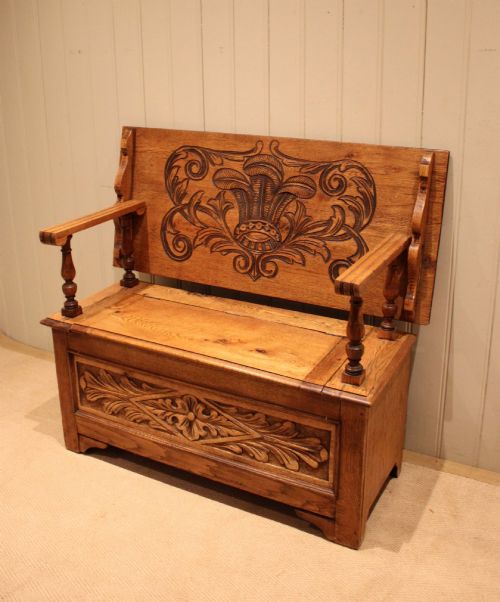
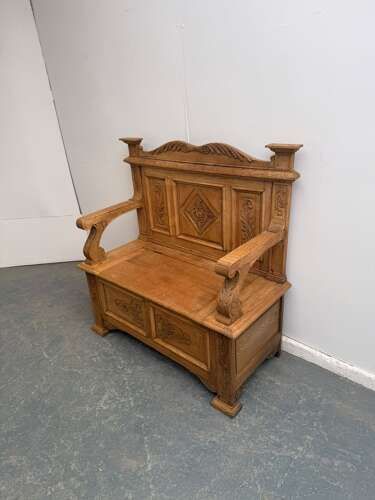
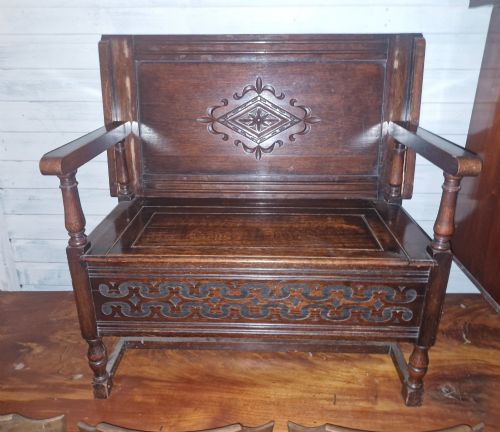
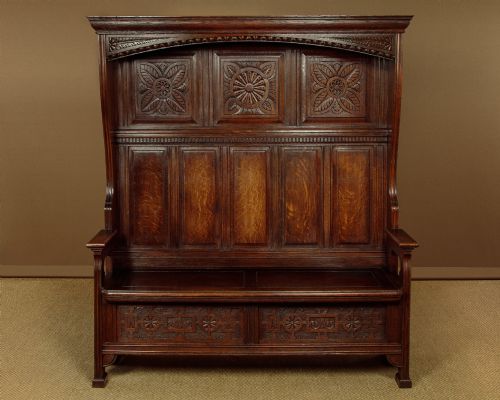
Hall Box Bench
A hall box bench combines seating with heavy storage, offering a robust piece that handles entranceway demands.
Hall Box Bench
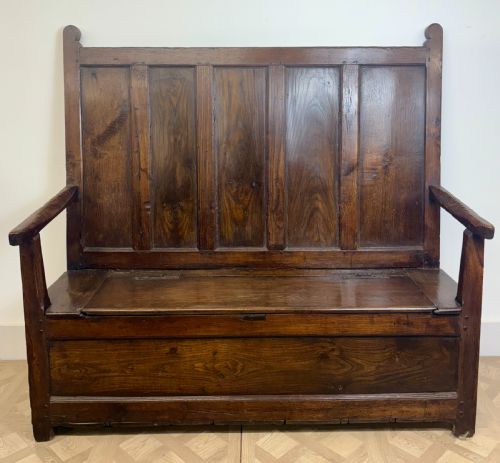
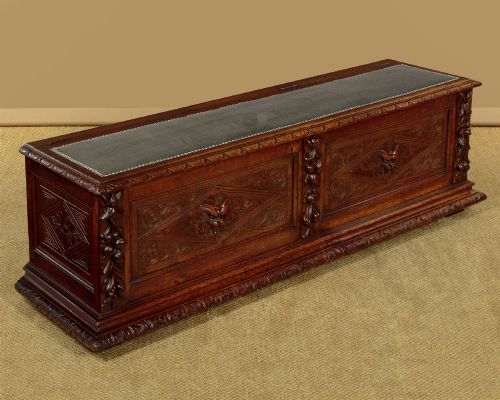
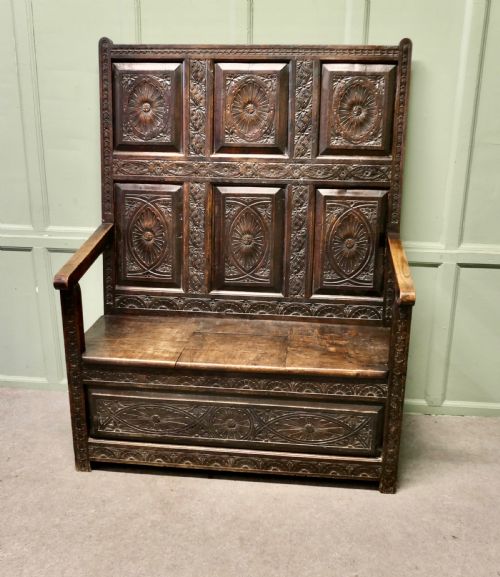
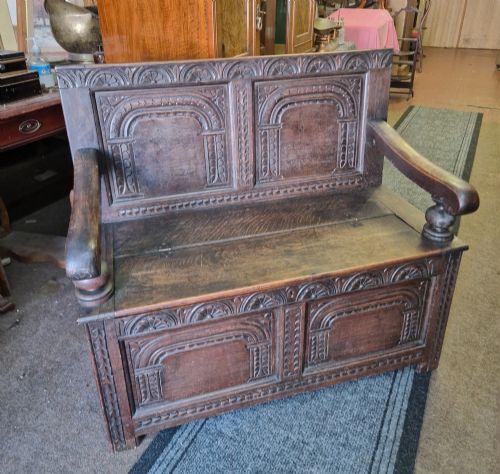
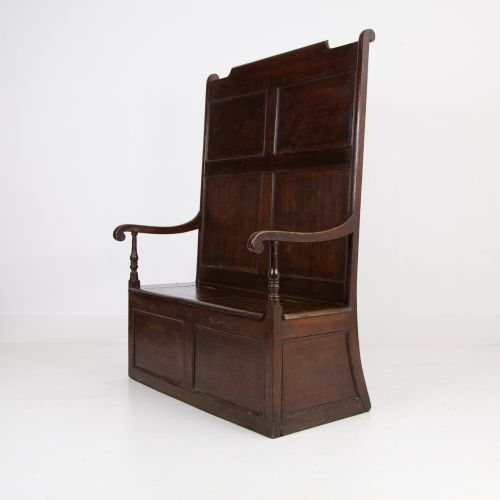
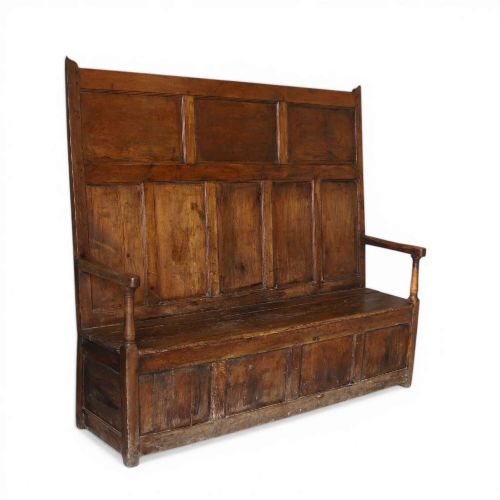
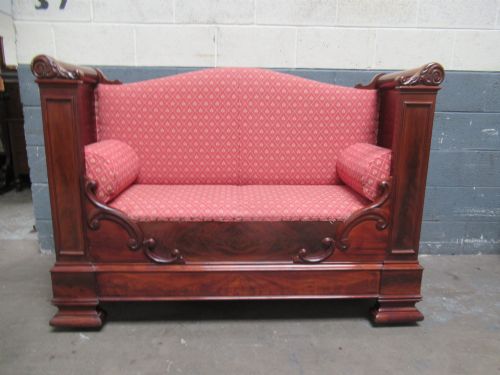
A hall box bench serves as an entrance seat with a compartment beneath for boots and winter garments. The listings here encompass traditional settles, monk benches, and hall seats from various eras.
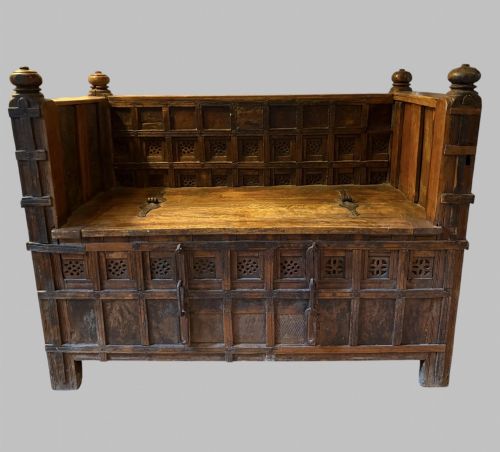
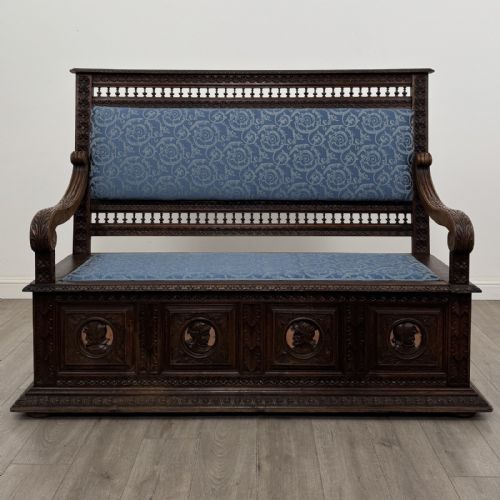
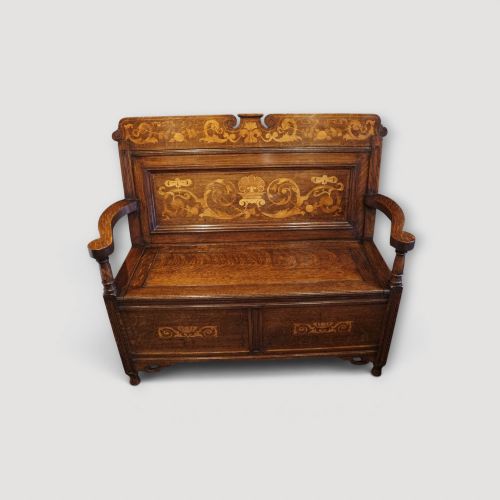
The pieces appearing most frequently take the form of oak box settles and pine benches originating from the eighteenth and nineteenth centuries. These items range from compact hall seats to large high-back designs.
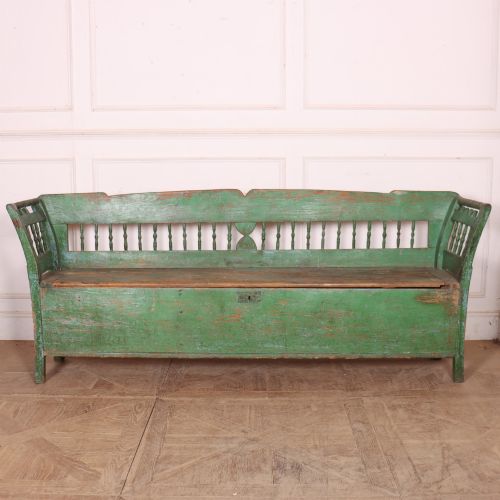
Regional variations span British country workshops as well as continental traditions such as Hungarian folk art and Scandinavian country styles. Buyers encounter both waxed natural timbers and original painted surfaces.
How they were made
Construction relies heavily on solid hardwoods like oak, walnut, and ash, alongside softer timbers including pine and birch. Cabinetmakers employed panel-back construction and sturdy box frames to withstand daily seating use.
Surface treatments vary from traditional wax finishes that preserve the grain to historic layers of paint in grey, cream, green, or black. Iron and brass hinges, locks, and hooks frequently secure the storage lids and anchor the structure.
Hall Box Bench Retail Price Guide 2026
Typical asking prices for hall box bench among the pieces listed under this phrase on Sellingantiques today, from the lower quarter to the upper quarter. They describe what is for sale here now, not the wider market.
Some nineteenth-century examples hide compartment lids so well that unsuspecting visitors attempt to sit on a sloping book rest.
What varies in quality
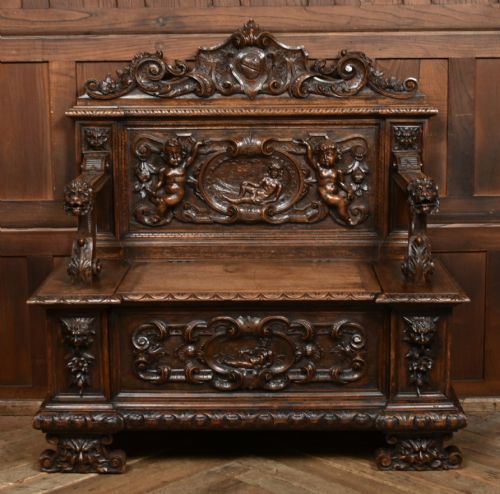
The standard of a hall box bench depends on the integrity of its timber and the preservation of its original structure. Intricately carved panels and substantial proportions distinguish finer workshop pieces from simpler provincial examples.
Survival of original surface treatments, whether aged wax or early paint finishes, alters the character of the piece. The smoothness of the lid mechanism and the tightness of historical joinery also separate ordinary items from superior examples.
James Shoolbred & Co.
The Hall Box Bench Glossary
- Box settle
- A wooden bench featuring a high back and a concealed storage compartment beneath the seat. This form protected occupants from draughts in older hallways and domestic rooms.
- Monks bench
- A convertible seat featuring a hinged back that folds down to form a table surface. It combines dual-purpose utility with integrated box seating.
- Cassapanca
- An Italian chest bench featuring a backrest and armrests, often constructed from walnut. It represents a more formal continental relative of the British box settle.
- Panel-back
- A method of construction where the rear of the bench utilises fitted wooden panels within a frame. This technique accommodates seasonal wood movement while providing structural rigidity.
- Waxed finish
- A traditional protective coating applied to timber to nourish the grain and impart a soft sheen. It is common on period oak and pine furniture.
Hall Box Bench: Frequently Asked Questions
What is a hall box bench?
A hall box bench is a dual-purpose seating item featuring an enclosed storage chest beneath the seat. Historically placed in entranceways, it provided a place to sit while removing footwear alongside space to store garments.
Most examples utilise solid timber construction with hinged lids. The design combines the utility of a chest with the comfort of a high-backed or low-backed bench.
How do I date an old box settle?
Dating relies on examining construction techniques, timber species, and tool marks visible on the underside or interior. Eighteenth-century examples often display hand-planed surfaces and pegged mortise and tenon joints.
Later Victorian and Edwardian pieces frequently incorporate machine-sawn timber and different hardware styles. Stylistic details such as carved panels or Art Nouveau motifs also point to specific periods.
Where should I place a hall box bench?
These benches suit entrance halls, boot rooms, and large corridors where their storage compartment can accommodate shoes and blankets. Their solid backs also function well against open-plan living room walls.
Ensure adequate clearance for the seat lid to open fully without striking walls or surrounding furniture. Measuring the depth of the box ensures the piece fits comfortably in narrower passageways.
Are painted finishes original?
Many pine and country pieces retain historic layers of paint applied decades or centuries ago. Colours such as grey, cream, and green appear across continental vernacular furniture.
Examining the paint surface under natural light reveals wear patterns and age craquelure that distinguish historic finishes from modern applications. Waxed surfaces, by contrast, highlight the natural grain of oak and walnut.