



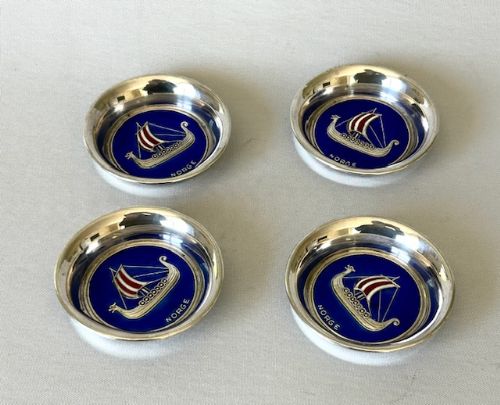


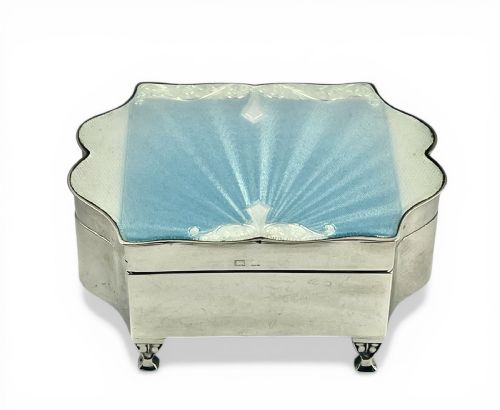

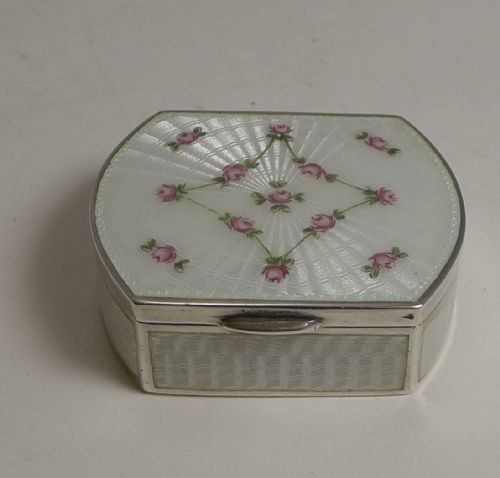


Guilloche Enamel Trinket
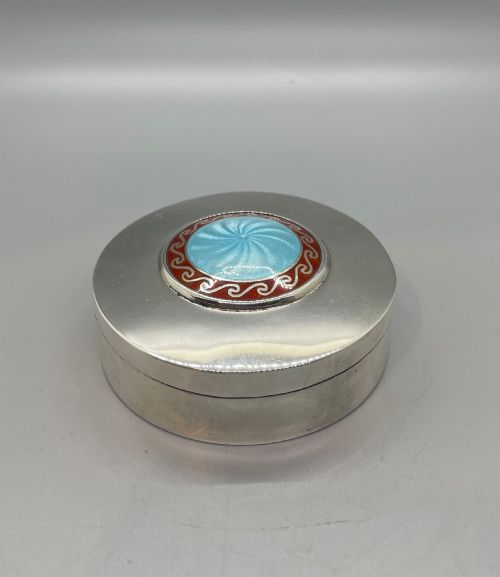
These guilloche enamel trinket pieces combine engine-turned metalwork with translucent colour, offering compact containers for dressing tables and pockets.
Guilloche Enamel Trinket
A guilloche enamel trinket covers small personal containers found across several decades, most frequently appearing in dressing table jars, pill boxes, and compacts. The selection relies heavily on twentieth-century examples, spanning Edwardian pieces through to mid-century modern designs.
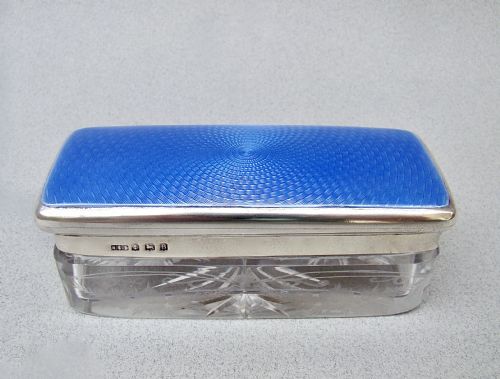
Buyers encounter forms ranging from simple silver-lidded glass jars to small circular pill boxes and rectangular jewellery boxes. The origins stretch from English provincial workshops to continental centres such as Austria, France, and Norway.
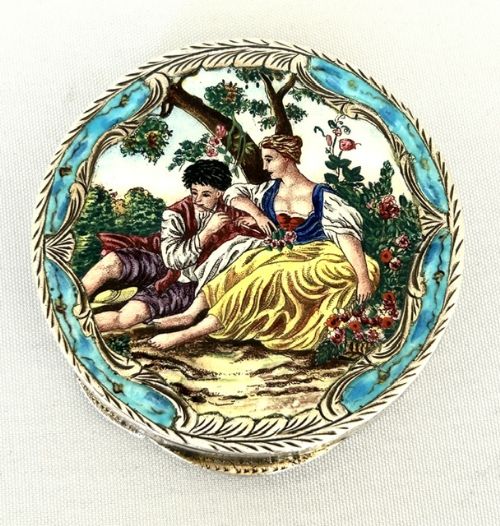
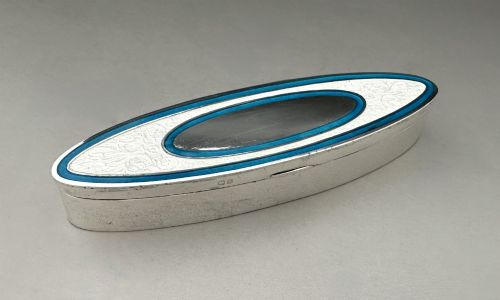
The style shifts perceptibly across the periods represented, moving from ornate Edwardian flourishes to clean geometric lines in Art Deco items and minimalist Scandinavian forms.
How they were made
The construction pairs sterling silver or gold foundations with vitreous enamel applied over engine-turned metal. Artisans cut repeating geometric patterns into the metal substrate before fusing coloured glass paste to the surface.
Many containers incorporate cut or etched glass bodies paired with heavy silver lids. Other pieces utilise agate or feature bi-colour enamel work alongside traditional metal mounts.
Guilloche Enamel Trinket Retail Price Guide 2026
Typical asking prices for guilloche enamel trinket among the pieces listed under this phrase on Sellingantiques today, from the lower quarter to the upper quarter. They describe what is for sale here now, not the wider market.
Swiss gold vinaigrettes from the eighteenth century tucked aromatic vinegar into pockets, keeping historical owners safe from unpleasant street odours.
What varies in quality
Quality rests in the precision of the underlying engine-turned engraving and the clarity of the translucent enamel layer above it. Deeper, crisper machine patterns catch the light differently than flatter, simpler stampings.
The sophistication of the form and the weight of the silver mounts distinguish standard production items from finer regional or maker-attributed pieces.
Henry Clifford Davis
The Guilloche Enamel Trinket Glossary
- Guilloche enamel
- A decorative technique where a precise geometric pattern is mechanically engraved into metal before a translucent enamel coating is applied.
- Vitreous enamel
- Glass fused to a metal surface at high temperatures to create a durable, glossy coloured finish.
- Vinaigrette
- A small ornamental box featuring an internal pierced grille, historically used to hold a sponge soaked in aromatic vinegar.
- Dressing table jar
- A glass or silver container designed to sit on a vanity table for holding cosmetics, pins, or small trinkets.
Guilloche Enamel Trinket: Frequently Asked Questions
What were guilloche enamel trinket boxes used for?
These small containers held personal items such as powder, rouge, pills, or pins on dressing tables and in pockets.
Wealthy owners utilised them daily for grooming accessories or carried them as elegant pocket requisites.
How do I date a silver and enamel box?
Assay office hallmarks stamped on the silver components provide the exact year of manufacture and the city of testing.
Stylistic cues, such as Edwardian flourishes or Art Deco geometric layouts, help narrow down the period when hallmarks are absent.
Are these items made of solid silver?
Many containers combine sterling silver lids and mounts with glass bodies, while others utilise silver throughout the entire structure.
Gold is occasionally found on eighteenth-century or continental European items.
How should I clean my enamel dressing table jar?
Warm soapy water and a soft cloth suit the glass and metal components without risking the delicate surface.
Harsh chemical dips and abrasive polishes should be avoided to protect the glass coating from damage.