

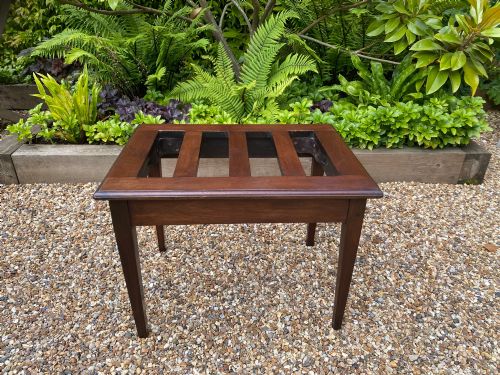


Guest Room Rack
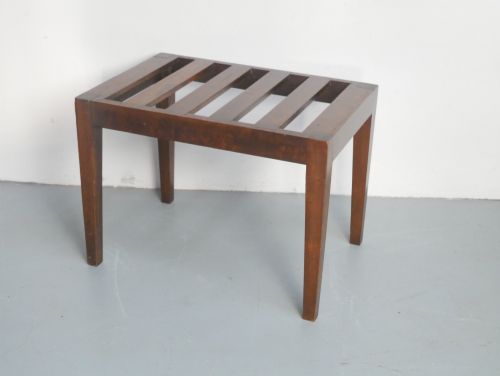
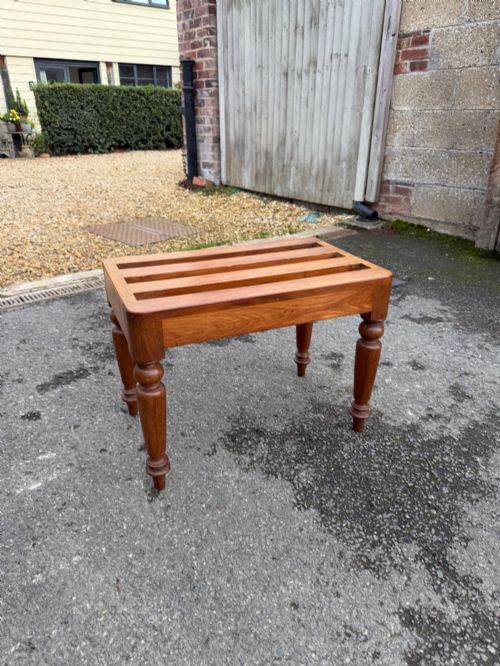
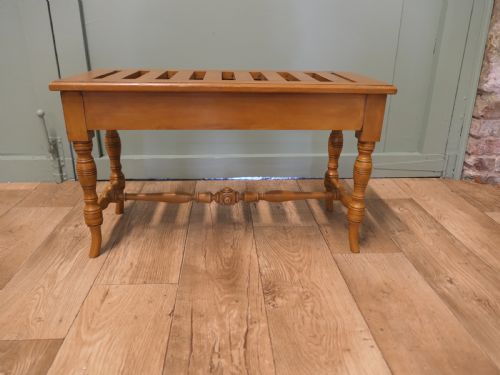
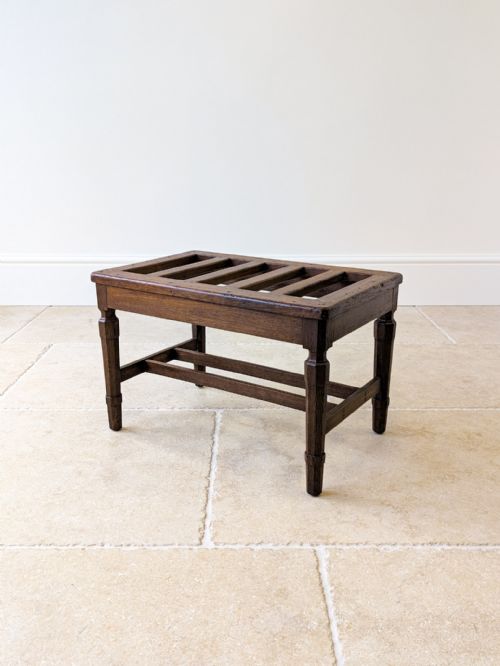
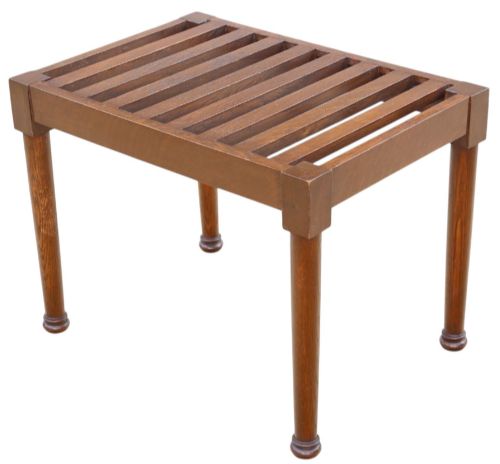
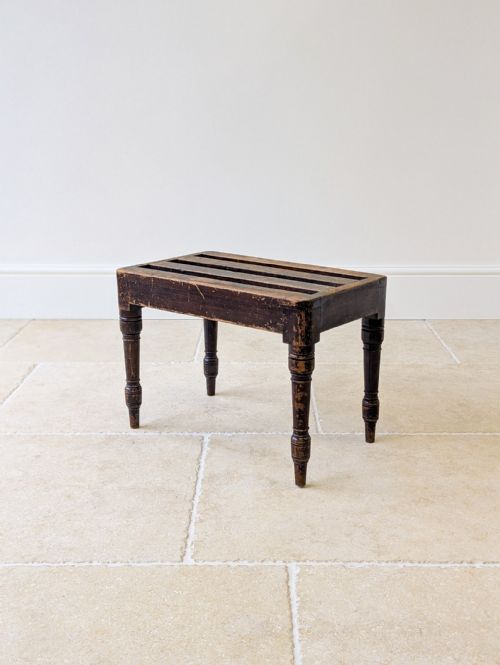
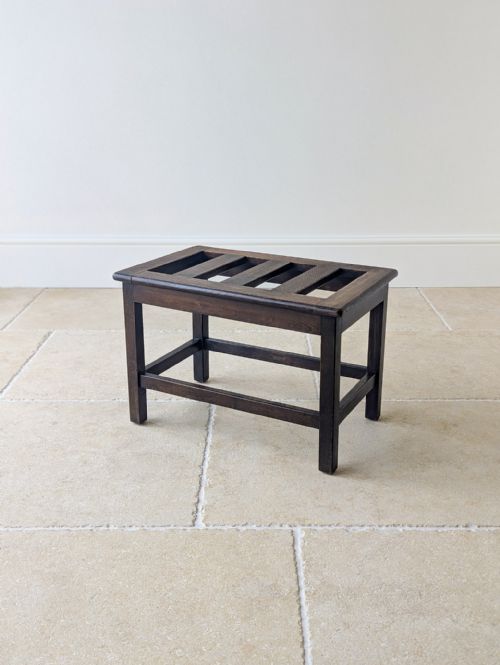
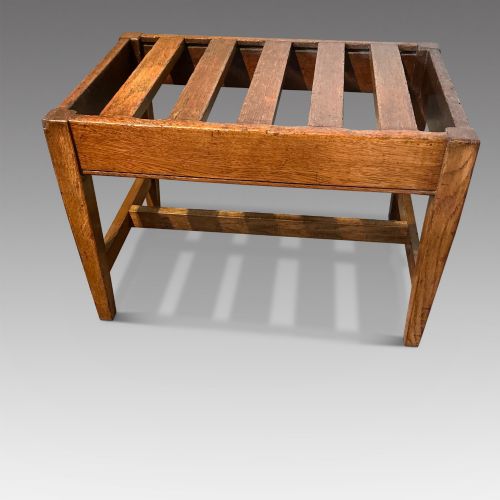
A guest room rack keeps a suitcase off the floor and at a convenient height, offering folding timber stands in oak, mahogany, and walnut.
Guest Room Rack
A guest room rack is a functional piece designed to hold luggage in bedrooms, taking the form of a folding stand or luggage rack. These items appear across several periods including the Victorian and Edwardian eras, as well as the early twentieth century.
The versions most commonly met on this page are constructed from timbers like oak and mahogany, often featuring folding legs and webbing straps. Makers from these past periods produced them to fold flat when not in use.
Examples range from standard folding oak stands to pieces executed in walnut, beech, yew wood, and painted pine. Styles stretch from Arts and Crafts models to English Country and Victorian designs.
How they were made
Construction relies primarily on hardwoods such as oak, mahogany, walnut, and beech shaped into sturdy folding frames. Joinery typically involves traditional methods suited to items subjected to the weight of luggage.
Surfaces receive various finishes including polished wood, stain, and paint, whilst supporting surfaces utilise webbing or matching timber slats. Workshops selected these materials for durability and strength during the nineteenth and early twentieth centuries.
Guest Room Rack Retail Price Guide 2026
Typical asking prices for guest room rack among the pieces listed under this phrase on Sellingantiques today, from the lower quarter to the upper quarter. They describe what is for sale here now, not the wider market.
Current listings feature pieces spanning the nineteenth century up to the 1920s, constructed in oak, mahogany, walnut, beech, and yew wood.
What varies in quality
Quality rests in the selection of timber and the precision of the folding mechanism, distinguishing standard utility items from finer workshop productions. The choice of woods like yew or figured mahogany marks out superior pieces.
The integrity of the frame joints and the condition of the original straps or slats dictate the overall standard. Robust construction ensures the stand bears the weight of heavy suitcases securely.
Brown & Lamont
The Guest Room Rack Glossary
- Luggage stand
- A folding piece of furniture designed to support a suitcase off the floor. These items are typically deployed in spare bedrooms for visiting guests.
- Arts and Crafts
- A design movement valuing honest construction and visible craftsmanship. Pieces from this style often display straightforward timber framing without excessive ornamentation.
- Victorian
- Pertaining to the reign of Queen Victoria, spanning the nineteenth century. Furniture from this period employs solid timbers and traditional joinery techniques.
- Edwardian
- Dating from the early twentieth century, characterised by lighter proportions and refined domestic utility. Items from this era reflect changing domestic comforts.
Guest Room Rack: Frequently Asked Questions
What is a guest room rack used for?
A guest room rack serves to hold a suitcase at a convenient height for packing or unpacking. It keeps luggage off the floor and folds away when not required.
These stands provide a practical amenity in spare bedrooms, reflecting traditional hospitality standards from the nineteenth and early twentieth centuries.
How do I identify a Victorian luggage stand?
Victorian examples are generally constructed from dense timbers such as oak, mahogany, or walnut. They exhibit traditional joinery and robust folding frames characteristic of nineteenth-century production.
Stylistic cues align with Victorian furniture design, often featuring turned legs or simple rectilinear supports built for durability.
What woods were used for luggage racks?
Maker workshops utilised a variety of hardwoods including oak, mahogany, walnut, beech, and yew wood. Some utilitarian examples were also produced in painted pine.
The choice of timber typically reflects the period of manufacture and the intended quality of the piece, ranging from standard oak to figured mahogany.
How do Edwardian racks differ from Victorian ones?
Edwardian luggage racks generally present slightly lighter proportions compared to their nineteenth-century predecessors. They fit into the domestic interior style of the early twentieth century.
Both periods focused on practical folding functionality, though Edwardian pieces often display the cleaner lines associated with the period.