

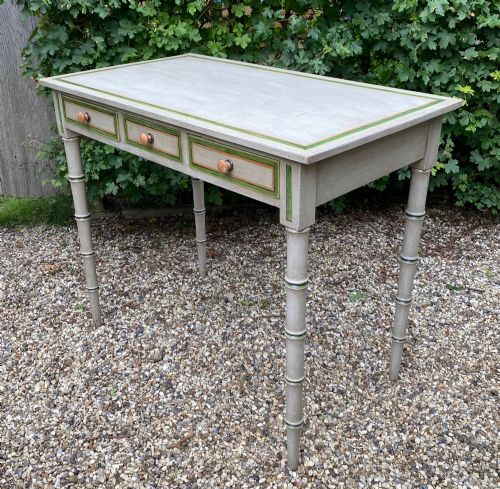

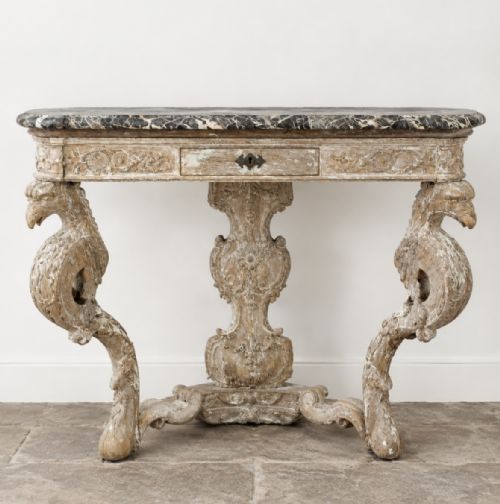
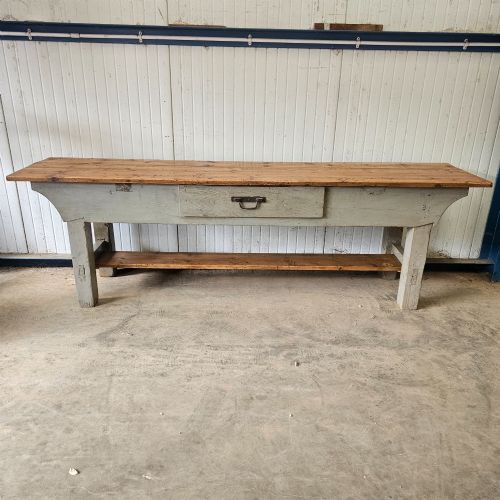
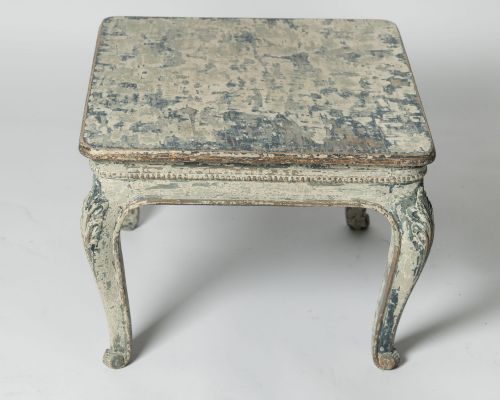


Grey Wooden Side Table
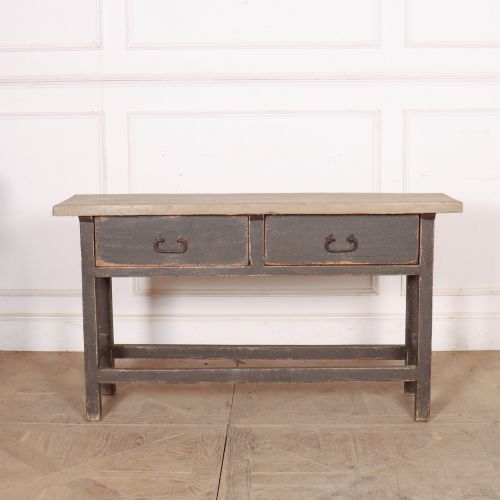
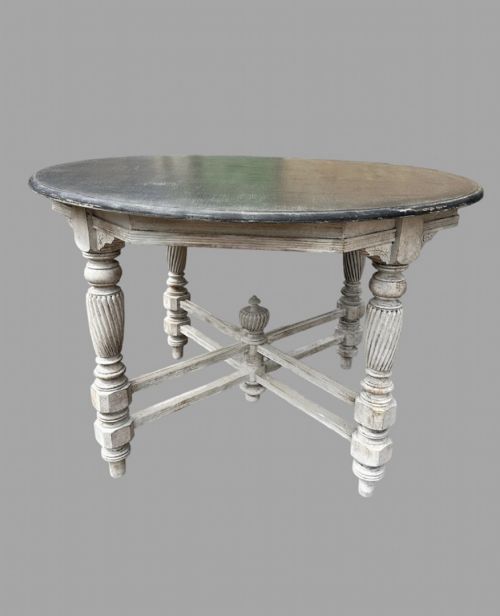
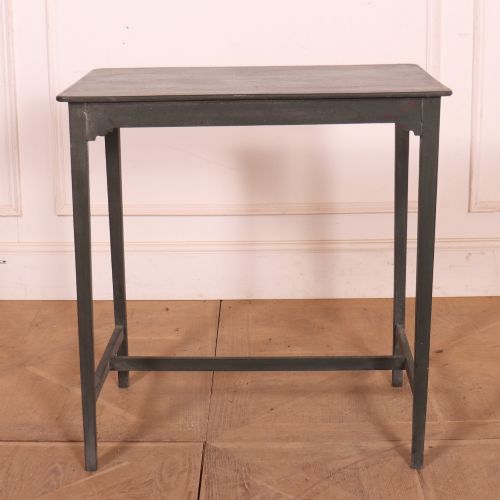
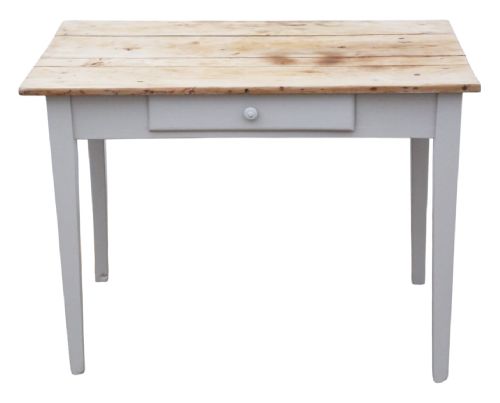
A grey wooden side table brings understated character to a room, offering surface space and period charm through painted timber and rustic finishes.
Grey Wooden Side Table
Most items emerge from the nineteenth century, including specific dates around eighteen eighty and nineteen hundred, supplemented by eighteenth-century items and Edwardian pieces. Forms include lamp tables, cricket tables, console tables, and occasional tables.
Buyers encounter variations in silhouette, from simple trestle and potboard designs to carved walnut or marble-topped variants. The common thread remains a painted wooden construction suited to auxiliary placement in sitting rooms or hallways.
How they were made
Construction relies primarily on pine and oak timber carcasses, shaped into side tables, worktables, and servers using traditional joinery. Surfaces are treated with layered paint finishes, ranging from distressed painted wood to decorative French schemes.
Selected pieces incorporate contrasting natural elements, most notably Derbyshire Fossil marble and standard marble tops, alongside brass hardware. Workmanship spans utilitarian vernacular building to refined aesthetic movement and Regency design influences.
Grey Wooden Side Table Retail Price Guide 2026
Typical asking prices for grey wooden side table among the pieces listed under this phrase on Sellingantiques today, from the lower quarter to the upper quarter. They describe what is for sale here now, not the wider market.
Listings feature periods from the eighteenth century through to nineteen twenty, utilising pine, oak, walnut, brass, and marble.
What varies in quality
Quality separates through the integrity of the timber frame and the authenticity of the surface finish, whether original paint or period patination. Finer examples display thoughtful proportions and specialised materials such as fossil marble inserts.
Construction details like scrub-tops, potboards, and carved walnut elements distinguish standard utilitarian items from decorative commission pieces. The harmony between the painted exterior and the underlying structural timber dictates the lasting appeal.
Gillows Design
The Grey Wooden Side Table Glossary
- Cricket table
- A small, lightweight occasional table typically featuring three splayed legs and a round wooden top. It derives its name from traditional English vernacular furniture.
- Console table
- A table designed to stand against a wall, frequently fixed or supported by brackets and legs. These often feature decorative painted surfaces or marble tops.
- Potboard
- A lower open shelf built into the base of a table or dresser, historically used for storing pots and kitchen utensils. It anchors the legs and adds structural stability.
- Scrub-top
- A solid wooden tabletop left unpainted and unfinished to facilitate regular scrubbing with water and sand. This treatment is common on kitchen tables and worktables.
- Server
- A long side table or serving piece used in dining spaces or hallways for placement of food or objects. They appear in painted pine and regional timbers.
Grey Wooden Side Table: Frequently Asked Questions
What is a grey wooden side table used for?
These tables function as practical surface areas in living rooms, hallways, and bedrooms, holding lamps, books, or decorative items.
They provide both storage and display utility while adding period character through painted timber finishes.
How do I identify an 19th-century table?
Nineteenth-century pieces often display hand-cut joinery, aged pine or oak timber, and traditional painted patination that develops over decades of use.
Examining the underside, fixings, and overall wear patterns helps distinguish these older constructions from modern reproductions.
Are marble tops original to these tables?
Certain pieces, particularly aesthetic movement or continental examples, were manufactured specifically to house marble or fossil marble inserts.
Checking the fit and edge finish of the stone relative to the wooden frame indicates whether the top belongs to the original design.
How do I care for painted wooden furniture?
Maintain painted surfaces by dusting with a soft, dry cloth and avoiding harsh chemical cleaners that might degrade the aged finish.
Keep the timber away from direct heat sources and extreme humidity fluctuations to protect the wood and paint layers.