




Grey Urban Landscape Painting
Grey urban landscape painting captures the grit and architecture of the city through muted tones and atmospheric brushwork.
Grey Urban Landscape Painting
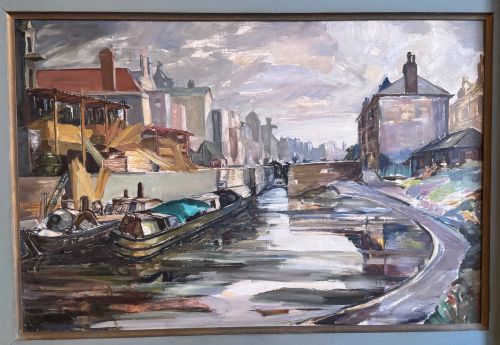
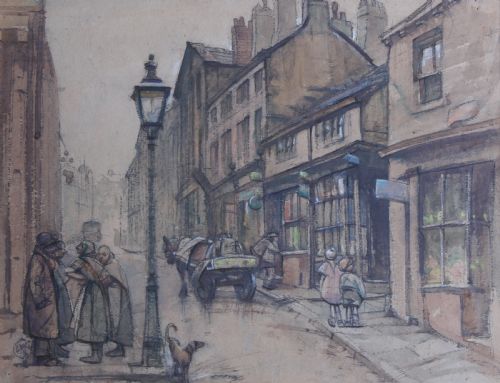
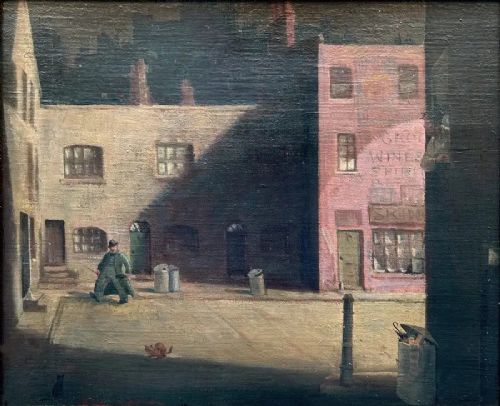
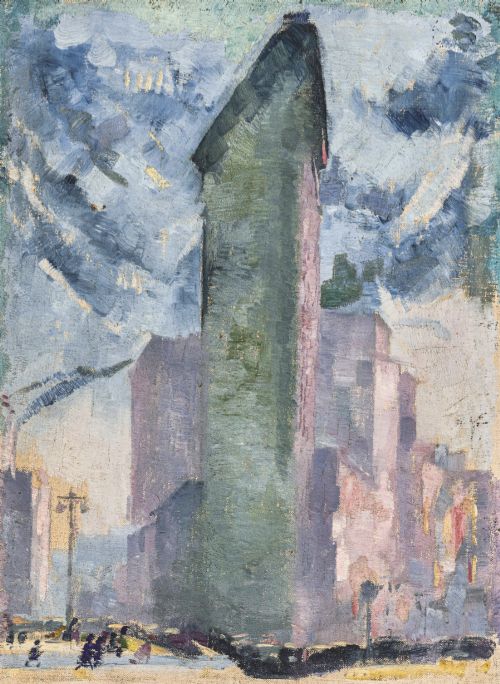
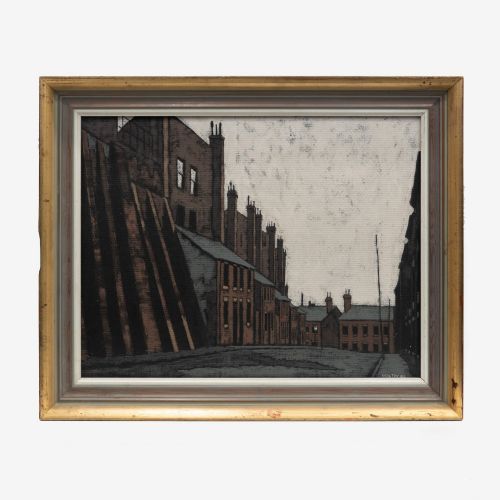
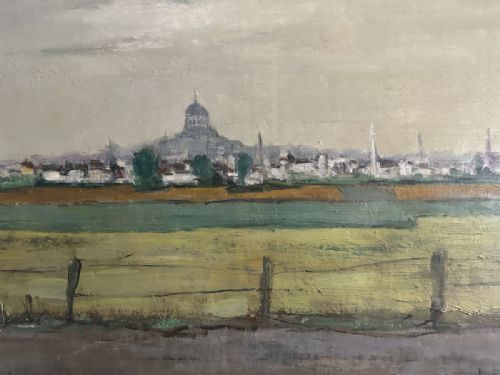
A grey urban landscape painting depicts cityscapes, canals, streets, and industrial buildings through muted palettes and atmospheric compositions. When searching for a grey urban landscape painting, collectors encounter townscapes, winter scenes, and architectural studies dating from the nineteenth century through the mid-twentieth century. These works capture specific urban locations, from London landmarks to northern industrial mills and canal sides.
The pieces on offer span several distinct movements, including British Impressionism, Post-Impressionism, British Realism, Northern Realism, and Expressionism. Formats vary from large-scale compositions to intimate sketches on paper and board. Buyers frequently encounter watercolours and oil paintings housed in wood frames that complement the industrial subject matter.
Materials and Techniques
Artists working in this genre relied on oil paint on board or canvas to build textured, layered depictions of city buildings and rooftops. The application of oil allows for rich tonal gradations in capturing winter light, twilight, and overcast skies over urban environments.
Watercolour paint on paper was utilised for rapid townscape sketches and atmospheric street scenes, capturing the immediacy of urban life. Works are typically presented within wood frames that protect the delicate paper or rigid board supports.
Grey Urban Landscape Painting Retail Price Guide 2026
Typical asking prices for grey urban landscape painting among the pieces listed under this phrase on Sellingantiques today, from the lower quarter to the upper quarter. They describe what is for sale here now, not the wider market.
A solitary watercolour captures birds being fed near St Martin-in-the-Fields amidst the London chill.
Assessing Quality and Execution
Quality rests in the artist's ability to manipulate tone and texture to convey atmosphere rather than mere architectural documentation. Stronger examples demonstrate confident handling of paint or watercolour, where brushwork and ink lines define the geometry of the city without relying on rigid precision.
The relationship between the subject and the medium dictates the visual success of the piece, with works from the 1930s and 1950s showing distinct modernist influences. Finer pieces command attention through balanced composition and a sophisticated restraint in the grey and neutral palettes.
Evelyn Harris·Cuthbert Crossley·Francisco Sancha·Alfred Wolmark·Stuart Walton·Florence Hess·Rowland Henry Hill·Matthew Hale
The Grey Urban Landscape Painting Glossary
- Oil on Board
- A painting executed on a rigid wooden or composite board using pigment suspended in drying oil. This surface provides a sturdy ground that supports heavier impasto applications.
- Watercolour Paint
- A medium consisting of colour pigments suspended in a water-soluble vehicle, typically applied to paper. It allows for transparent washes that evoke winter light and atmospheric haze.
- British Impressionism
- An artistic movement focusing on light, everyday subjects, and loose brushwork adapted by British painters from French precedents. It values perceptual immediacy over academic finish.
- Expressionism
- A modernist style where the artist distorts visual reality to evoke emotional responses, often utilising heavy paint and stark contrasts to convey urban mood.
Grey Urban Landscape Painting: Frequently Asked Questions
What periods do these paintings cover?
The works span from the nineteenth century through the mid-twentieth century, encompassing periods such as the 1910s, 1930s, 1950s, and 1960s.
This broad chronological range reflects changing artistic approaches to urban environments, moving from traditional townscapes toward modernist realism and expressionism.
How were these cityscapes displayed?
Most works are housed in wood frames suited to the neutral tones and industrial subject matter of the urban scenes.
Framing choices typically protect the paper supports of watercolours or the rigid boards of oil paintings while complementing the minimalist aesthetic.
What subjects appear in these works?
Common subjects include canals, city streets, industrial mills, architectural landmarks, and winter rooftops.
Artists focused on specific locales such as London views and northern industrial towns, capturing everyday urban activity under overcast skies.
How do styles differ across the selection?
The selection includes movements like British Impressionism, Post-Impressionism, Northern Realism, and Expressionism.
These styles dictate whether a piece relies on delicate watercolour washes or bold, textured oil paint to render the city.