

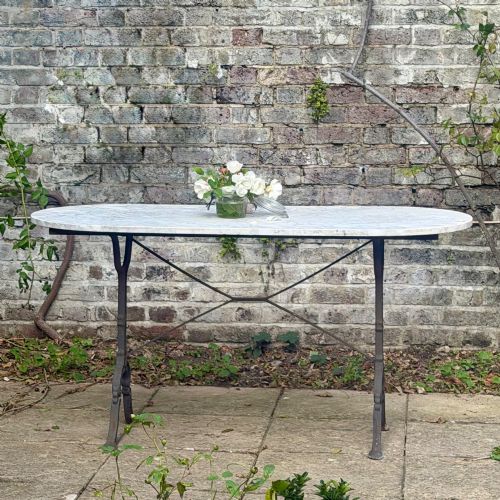
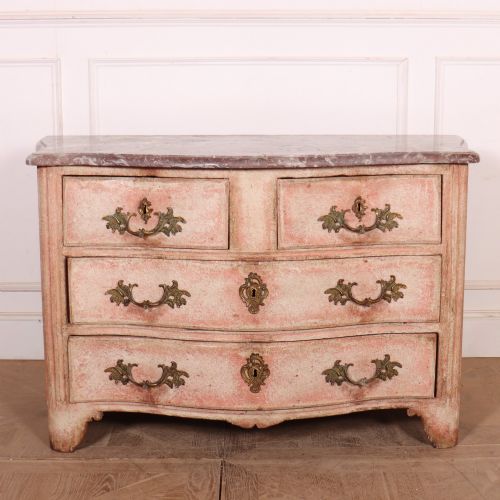
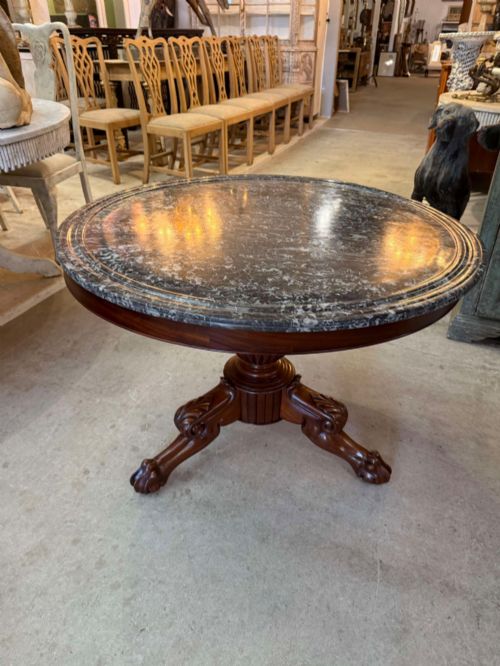
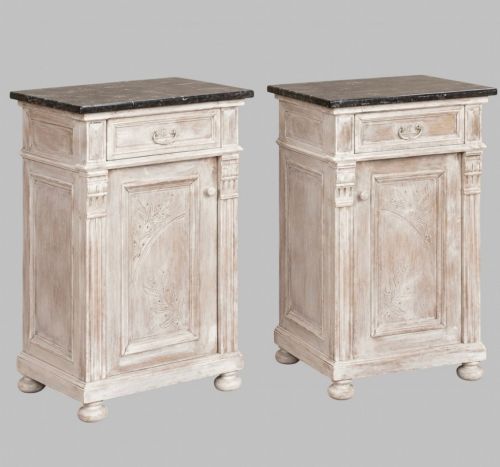
Grey Marble Top
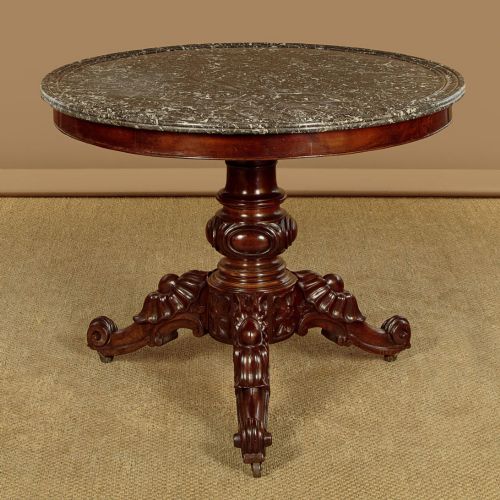
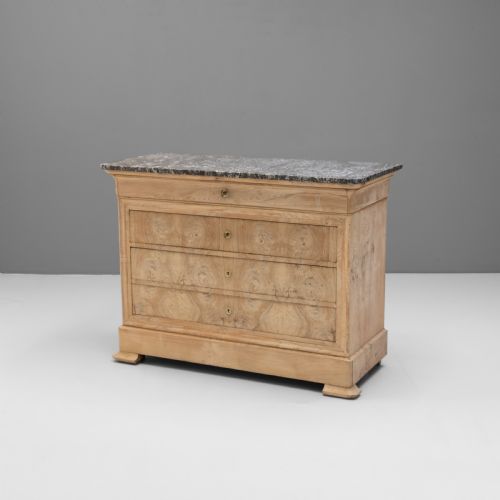
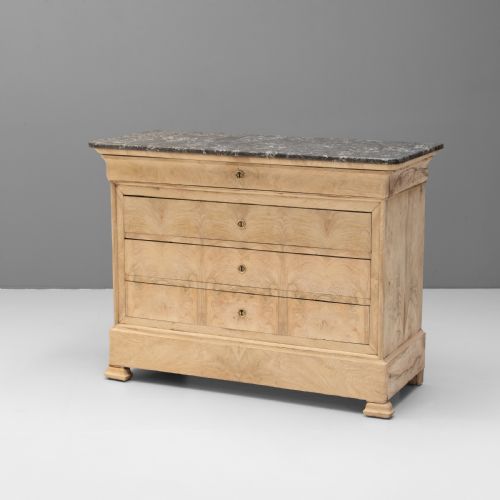
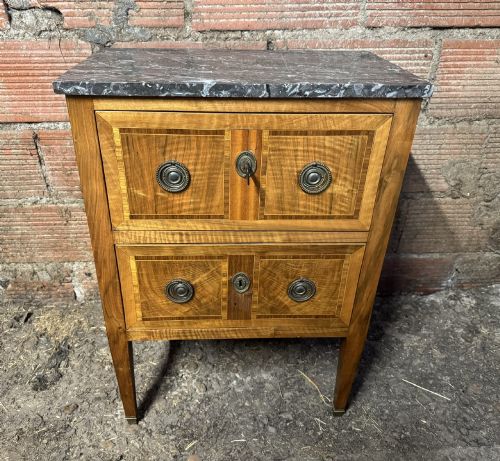
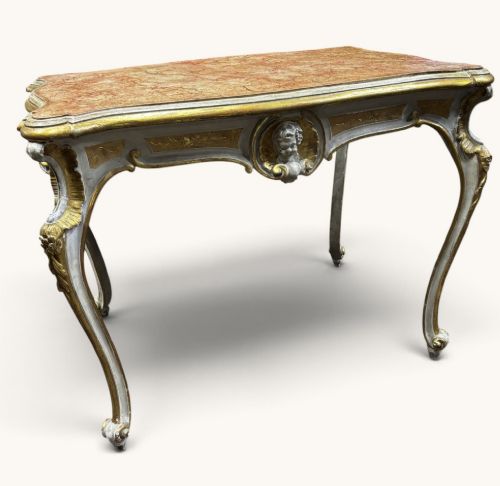
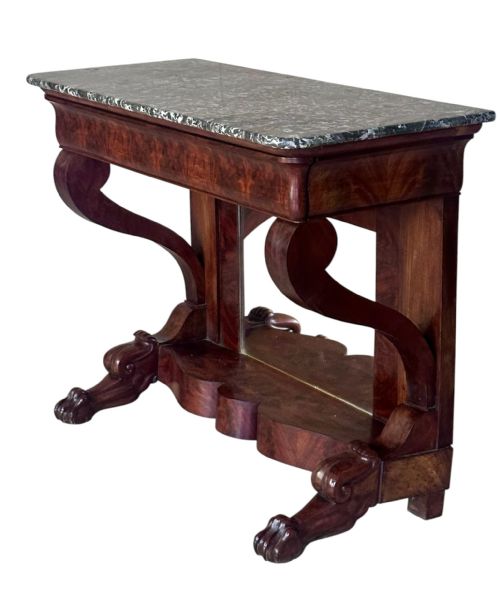
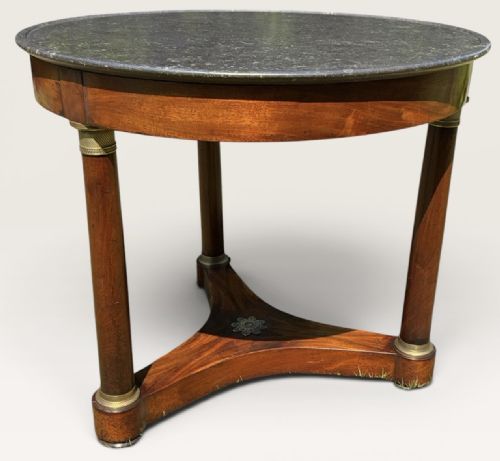
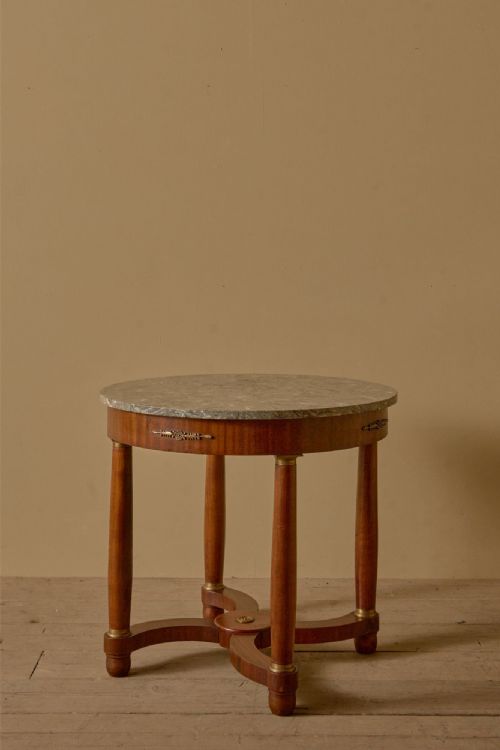
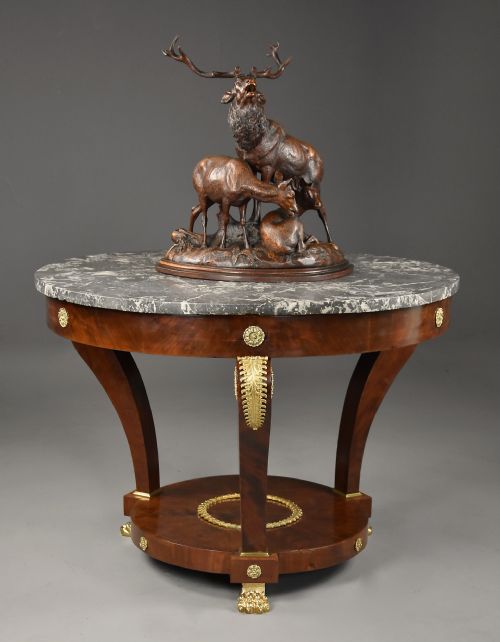
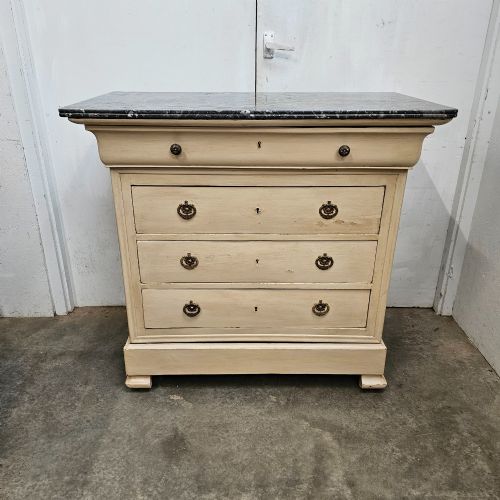
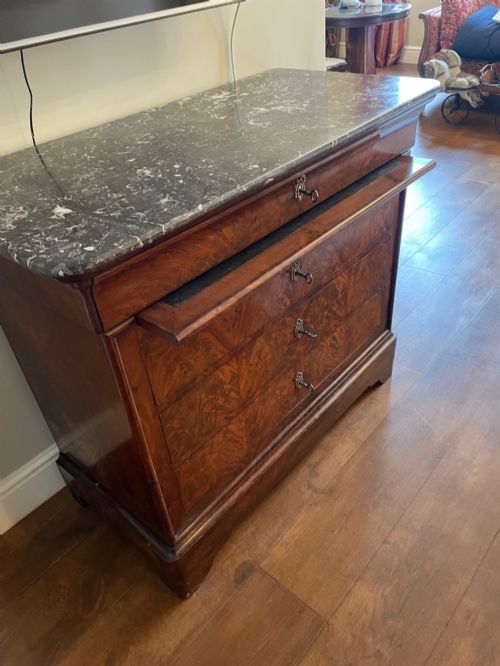
A grey marble top brings a cool, enduring stone surface to a mahogany commode, a walnut gueridon or a giltwood console.
Grey Marble Top
A grey marble top sits upon pieces ranging from eighteenth century commodes to nineteenth century gueridon and centre tables, uniting varied continental cabinetmaking traditions. These surfaces appear frequently on French commodes, chests of drawers, and side tables spanning the Louis periods, the Empire era, and the Victorian epoch.
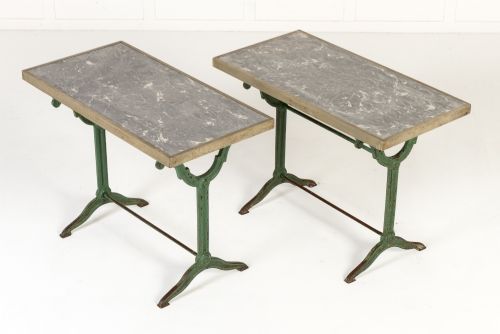
The buyer encounters these stone-topped forms across diverse domestic settings, from formal salon centre tables to practical bedside cabinets and bistro tables. Console tables and occasional pieces also carry the heavy stone slabs, often matching the specific regional walnut, mahogany, or painted finishes of their respective eras.
Materials and construction
Cabinetmakers paired dense grey marble slabs with structural timbers including mahogany, walnut, kingwood, rosewood, and painted wood, securing stability for the heavy stone. Carved giltwood, ormolu mounts, brass details, and wrought iron further support or frame the stone surfaces across console tables and commodes.
Stonemasons shaped and polished the marble to fit specific table frames and chest profiles, ranging from simple rectilinear cuts to complex bombe shapes and circular gueridon rims. Carpenters built substantial sub-frames and plinths to distribute the considerable weight of the stone evenly across the legs and bases.
Grey Marble Top Retail Price Guide 2026
Typical asking prices for grey marble top among the pieces listed under this phrase on Sellingantiques today, from the lower quarter to the upper quarter. They describe what is for sale here now, not the wider market.
A heavy stone slab ensured a steady surface for candlelight long before electricity reached the parlour table.
Evaluating the pieces
The harmony between the grey marble slab and its wooden or gilded base dictates the standard of the piece, reflecting the original maker's design intent. Superior examples display precise stone-cutting that follows the contours of the commode or table without overhang or awkward gaps.
The depth of figure in the timber, whether flame mahogany, burr walnut, or parquetry work, distinguishes finer pieces alongside the crispness of any giltwood carving or bronze ormolu mount. Originality of both the stone top and the supporting chassis elevates the integrity of the whole object.
Jacques Bircklé
The Grey Marble Top Glossary
- Gueridon
- A small circular table designed for a candle or lamp, frequently topped with marble and supported by a central pillar or three legs.
- Commode
- A low chest of drawers, often heavily ornamented with wood veneers or parquetry and finished with a stone slab top.
- Console table
- A wall-mounted or freestanding table designed to stand against a vertical surface, commonly topped with marble and heavily carved or gilded.
- Parquetry
- A geometric mosaic of wood veneer arranged in decorative patterns across the surface of furniture carcasses and drawer fronts.
- Ormolu
- Gilded bronze mounts and decorative accents applied to French furniture frames and table legs during the eighteenth and nineteenth centuries.
Grey Marble Top: Frequently Asked Questions
How do I clean a grey marble top?
Wipe the stone surface using a soft cloth dampened with warm water and mild, neutral soap. Avoid acidic cleaners, vinegar, or harsh detergents that can etch or dull the polished finish of the marble over time.
Dry the surface thoroughly with a clean cloth to prevent water spots. Applying a specialist stone wax periodically helps protect the marble from stains and everyday wear.
Are these marble tops original?
Many pieces retain their original heavy stone slabs, shaped specifically to fit the timber or gilded framework beneath. Checking the underside of the marble and the rebates of the table frame reveals how the stone rests upon the structure.
Slight variations in edge profiling and natural veining help connect the stone to the period of the base. Experienced makers fitted each slab precisely to its individual chassis.
Where should I place a console table?
Console tables suit entrance halls, living rooms, and dining areas where floor space is relatively narrow. Because many designs rest against a wall or require minimal clearance, they function well beneath mirrors or artwork.
Freestanding console and gueridon versions also stand effectively behind sofas or in the centre of larger rooms. The heavy stone surface provides a stable platform for lamps, vases, and decorative objects.
How do I date a marble-topped commode?
Examine the secondary timbers inside the drawer linings and the construction methods used for the carcass joints. Eighteenth-century pieces often display hand-cut dovetails and regional fruitwood or oak frames, whereas nineteenth-century examples utilise different internal woods and machine-assisted uniformity.
The style of the carved mounts, the geometry of the parquetry, and the shape of the marble profile all point toward specific eras such as Louis XVI or the Victorian period.