

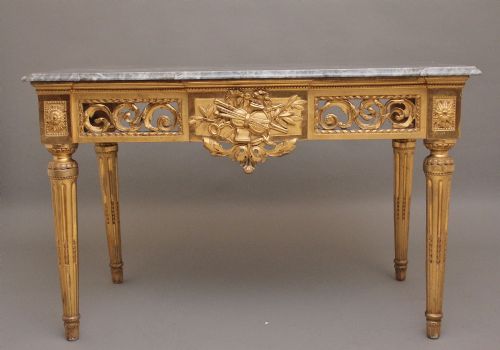
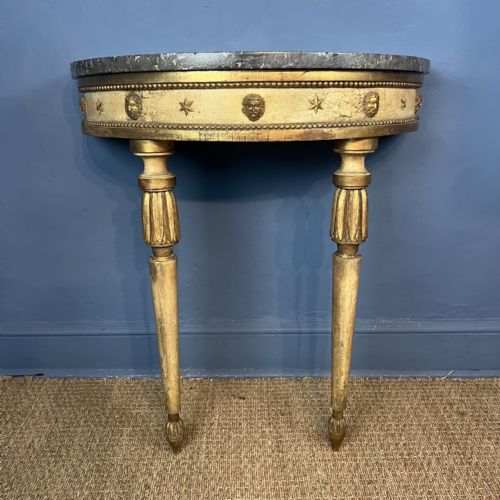

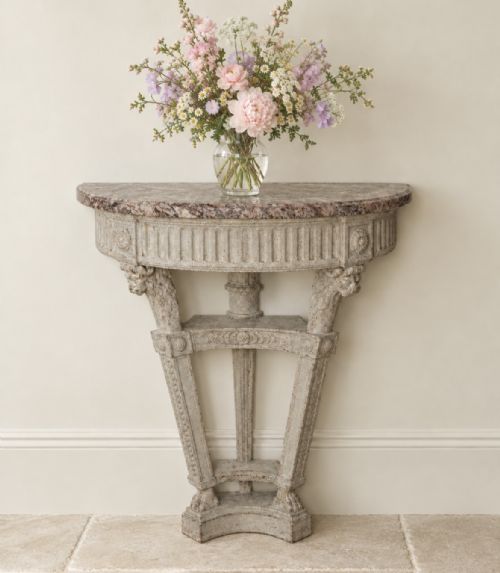


Grey Marble Console
A grey marble console brings a heavy, veined stone top and formal weight to a hall, sitting room or drawing room.
Grey Marble Console
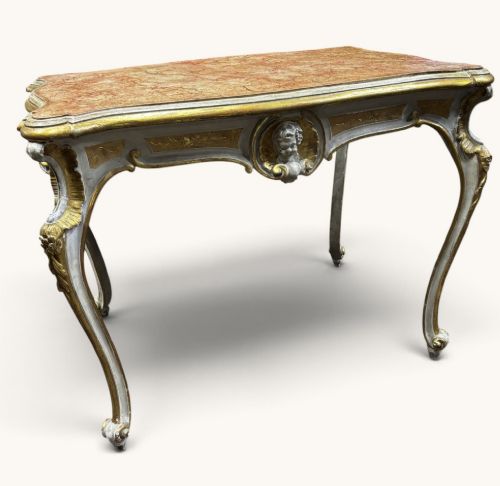
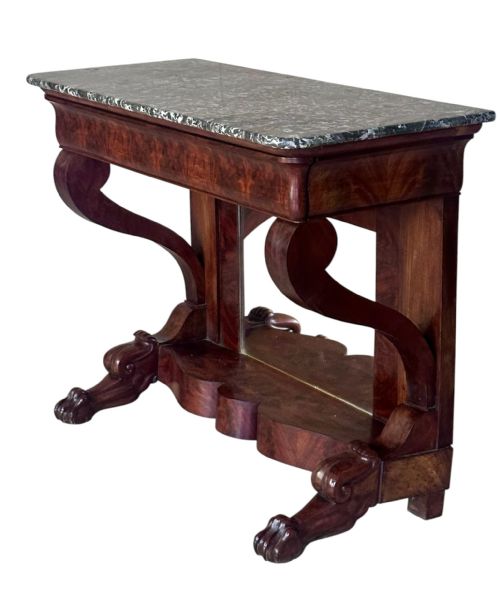
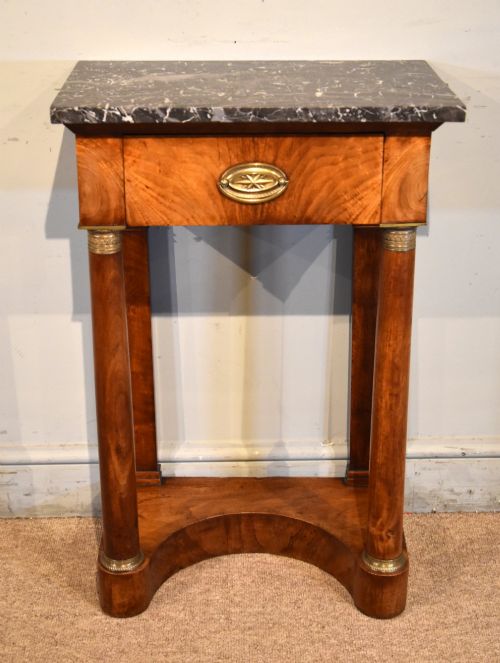
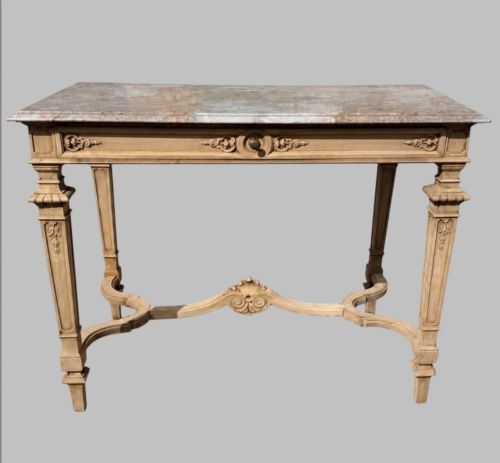
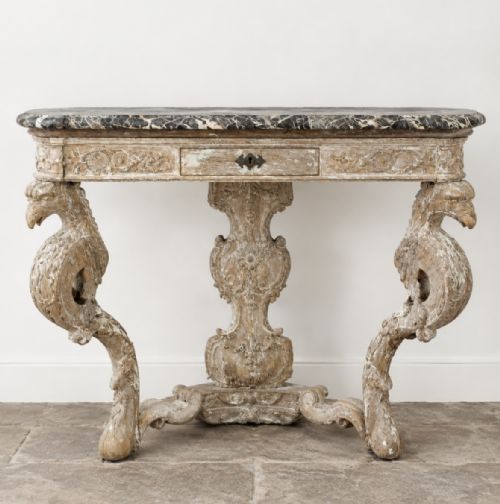
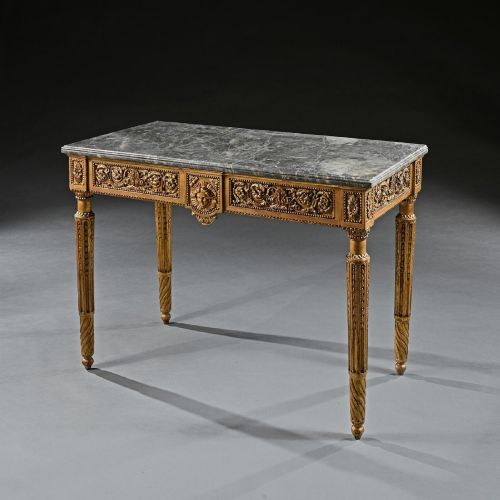
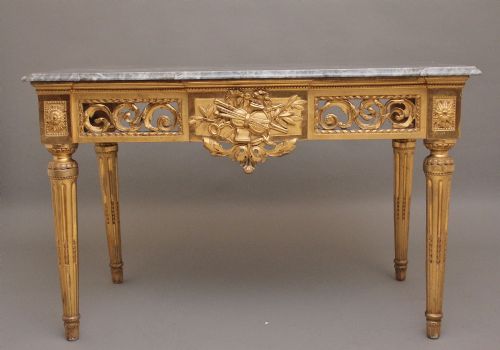
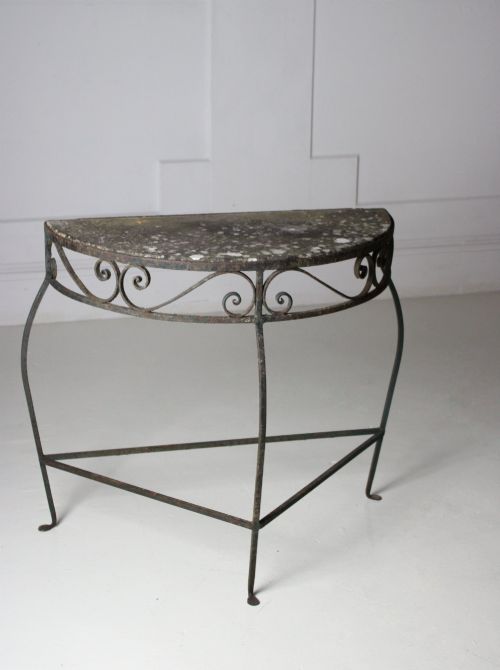
When you search for a grey marble console, you encounter substantial tables designed to sit flush against a wall or fill a tight perimeter space. These pieces span the eighteenth and nineteenth centuries, taking forms such as console tables, side tables, washstands and wall brackets.
The materials vary across the selection, pairing the heavy stone slabs with bases of painted wood, giltwood, mahogany, walnut, carved wood, cast iron, wrought iron and brass. Stylistically, the tables draw on neoclassical, French Rococo, Italian neoclassical, French Chateau, French Provincial, French Empire, Louis XVI Revival and Kentian traditions.
The most frequent examples on this page are eighteenth-century and nineteenth-century French and Italian pieces, alongside English mahogany and walnut versions. They appear as single tables, pairs, and occasional tables featuring shaped or break-front tops.
What varies in quality
Quality rests in the execution of the carved woodwork and the depth of the gilding on the frame. Hand-carved giltwood and parcel-gilt details show sharper chisel work and more complex floral or architectural motifs on better examples.
The integration between the heavy stone top and the base dictates the structural integrity of the table. Superior pieces feature custom-shaped grey marble slabs that fit the timber frame precisely without excess movement.
Grey Marble Console Retail Price Guide 2026
Typical asking prices for grey marble console among the pieces listed under this phrase on Sellingantiques today, from the lower quarter to the upper quarter. They describe what is for sale here now, not the wider market.
A Scottish larchwood console in Kentian style brings an unexpected woodland texture straight into the formal drawing room.
The Grey Marble Console Glossary
- Console table
- A table designed to stand against a wall, traditionally fixed with brackets or resting on legs at the front. They often feature decorative aprons and substantial marble tops.
- Giltwood
- Timber coated with gold leaf or a gold-coloured metallic finish. This technique was widely utilised on eighteenth and nineteenth-century decorative frames.
- Parcel-gilt
- Woodwork where only specific carved details or raised elements are highlighted in gold leaf. The remaining surface is usually painted or polished.
- Serpentine front
- A furniture front curving outward at the centre and inward at the sides in a continuous wave. This shape requires precise cutting of both the wooden frame and the marble top.
- Break-front
- A furniture facade that projects forward in sections, typically with a central block. It breaks the flat line of a hall or side table.
Grey Marble Console: Frequently Asked Questions
Where should I put a console table?
These tables sit flat against a wall, making them suited for narrow hallways, entrance spaces, and reception rooms where floor space is limited. Their shallow depth allows them to serve as a surface for lamps and decorative objects without blocking movement.
In larger rooms, they anchor mirrors or artwork hung directly above them. Paired console tables or wall brackets can also balance a symmetrical interior layout.
How do I care for grey marble?
Marble requires gentle cleaning with a damp cloth and mild, non-acidic soap to preserve the polish and surface. Avoid harsh chemical cleaners and vinegar, which etch the stone and dull the finish over time.
Using coasters and mats protects the porous surface from moisture rings and stains. Regular dusting keeps abrasive grit from scratching the polished top during daily use.
Are these tables heavy?
The combination of solid timber or iron frames and thick stone slabs makes these tables exceptionally heavy. The weight of the grey marble top alone usually anchors the piece firmly to the floor.
Because of this mass, some period console tables were originally pinned or fixed directly to the wall for stability. Moving them generally requires two people to lift the stone and base separately.
How do I date a console table?
Dating relies on identifying the stylistic vocabulary of the wooden base, from eighteenth-century Italian carving to nineteenth-century French revival designs. Tool marks on the timber and the method of joining the frame offer further clues to the period of manufacture.
Changes in proportion, secondary woods underneath, and the thickness of the marble slab also help distinguish earlier Georgian and Regency pieces from later nineteenth-century work.