
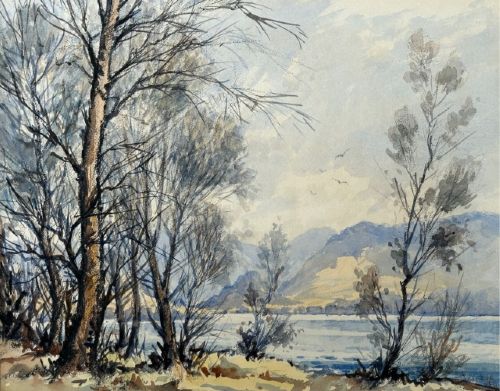
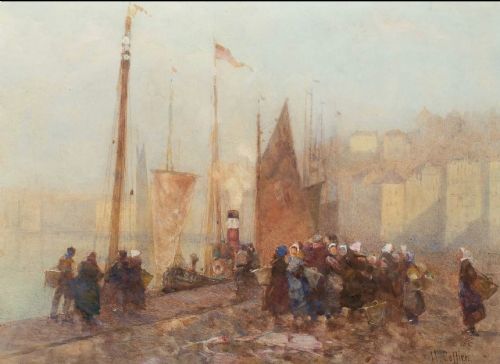
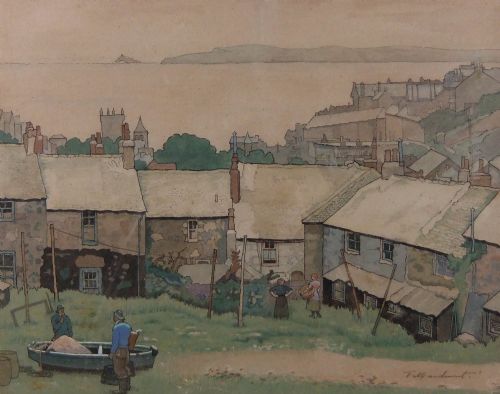
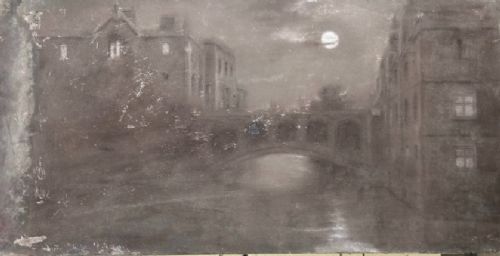
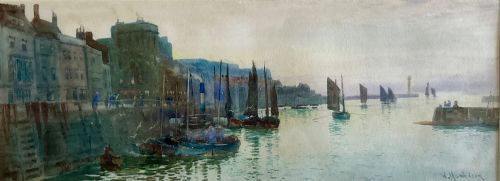


Grey Landscape Paper Painting
These grey landscape paper painting works capture muted atmospheric scenes across Britain and Europe through delicate washes.
Grey Landscape Paper Painting
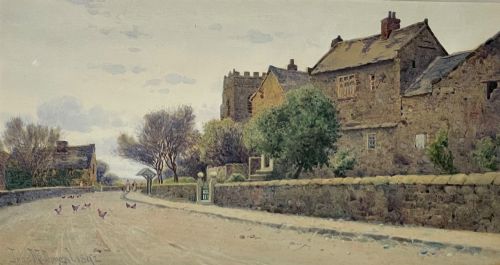
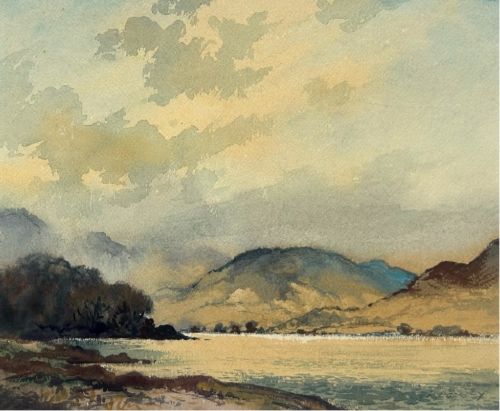
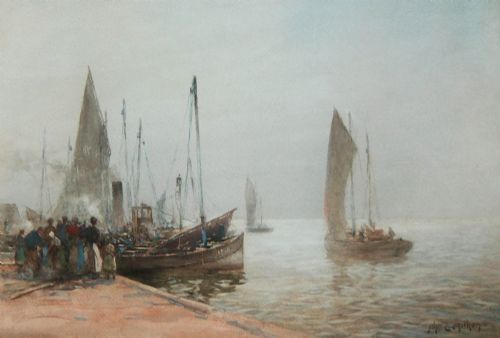
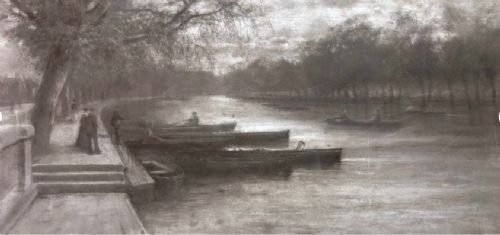
A grey landscape paper painting brings together tonal subtlety and historic draughtsmanship, focusing primarily on subdued coastal, river, and rural views. Buyers encounter works executed across the nineteenth and twentieth centuries, spanning Victorian, Edwardian, and mid-century movements.
The prevalent forms on this page include watercolour and charcoal paintings on paper support, often mounted beneath glass in wooden frames. These pieces typically depict identifiable British and European locations, from Yorkshire harbours to Venetian canals, rendered in restrained palettes.
Makers and regional artists recorded here worked within distinct stylistic currents, including British Impressionism and Edwardian Tonalism. The resulting selection emphasises atmospheric weather effects, overcast skies, and quiet rural or maritime subject matter.
Materials and Technique
Artists utilised watercolour pigment and ink applied directly to absorbent paper surfaces, frequently combining fluid washes with precise charcoal line work. This technique allowed creators to establish atmospheric depth and shifting tones of grey swiftly on location or within the studio.
The physical support relies on traditional paper sheets, sometimes preserved within period wooden framing behind protective glass. Pigments derive from historic formulations that responded dynamically to water dilution, producing the characteristic soft gradients seen across the selections.
Several artists braved freezing winter conditions to capture snow across Yorkshire and Scottish coasts, bringing cold fingers indoors forever.
Distinctions in Execution
Superior examples demonstrate confident handling of pigment and tone, where minimal brushstrokes convey complex atmospheric conditions and spatial recession effectively. Lesser works often rely on rigid outlines and predictable colour mixing that obscure the natural luminosity of the paper.
The strength of a composition rests on the artist's ability to balance negative space with controlled washes of grey pigment. Stronger pieces retain crisp detail in focal areas while allowing peripheral atmospheric elements to dissolve naturally into the paper.
John McDougal·Robert Leslie Howey·James E. Aitken·Hector Caffieri·Thomas Maidment·Fred Lawson·Arthur Reginald Smith·Cuthbert Crossley·Edward Seago·Tom Clough·Rowland Henry Hill·Stanley Orchart·Edward Dayes·Florence Hess·James Watson·Henri Joseph Harpignies·George Hamilton Constantine·John Smith Atherton·John Mitchell·Clara Montalba·H.E. Tidmarsh·Ernest F. Hill·Ya Ming·Edmund Morris Wimperis·Frederick Stuart Richardson
The Grey Landscape Paper Painting Glossary
- Watercolour
- A painting method in which the pigments are suspended in a water-based solution. This medium relies on the white or tinted surface of the paper to provide luminosity through translucent washes.
- Wash
- A thin, fluid layer of diluted pigment spread evenly across paper. It creates smooth backgrounds and atmospheric skies without visible brush marks.
- Tonalism
- An artistic style that emerged in the late nineteenth century where artists painted landscapes with an overall dominant tone or muted palette. It emphasises mood, shadow, and atmospheric obscurity rather than sharp botanical or architectural details.
- Support
- The physical material upon which a painting or drawing is created. In this context, paper serves as the primary ground for water-based pigments and inks.
- Monogram
- A motif made by overlapping or combining two or more letters to form a single symbol. Artists frequently utilised these initials to sign works discreetly on the paper surface.
Grey Landscape Paper Painting: Frequently Asked Questions
How should I frame a delicate paper painting?
Protect the surface by mounting the work away from the glass using acid-free materials and spacers. This prevents humidity transfer and ensures the paper remains flat within its wooden frame.
Position the finished piece away from direct sunlight to preserve the fugitive water-based pigments and prevent the paper from yellowing over time.
What subjects appear most frequently in these landscapes?
Coastal harbours, quiet rivers, and snow-covered rural valleys dominate the compositions. Artists frequently recorded overcast days and misty morning departures across British and European ports.
These motifs reflect a shared interest in atmospheric weather and subdued light rather than bright summer scenes.
How do I identify the date of a watercolour?
Examine the paper watermark, framing style, and any artist signatures or inscriptions written in pencil or ink on the reverse. Period labels and gallery tags often provide firm chronological anchors.
Stylistic markers such as Edwardian tonalism or Victorian maritime conventions further narrow the decade of execution.
Can I hang these watercolours in a brightly lit room?
Historic watercolours require careful placement out of direct sunlight because early pigments fade under ultraviolet exposure. Utilise UV-filtering glass during framing to mitigate potential light damage.
Keep pieces in rooms with stable humidity levels to protect both the paper support and the wooden frame construction.