

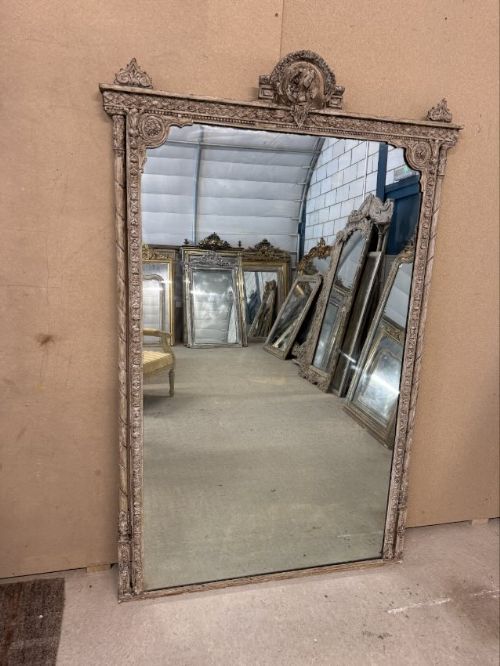
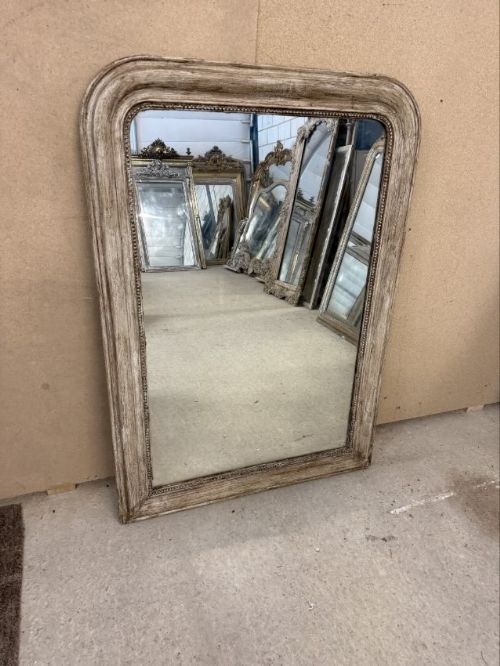
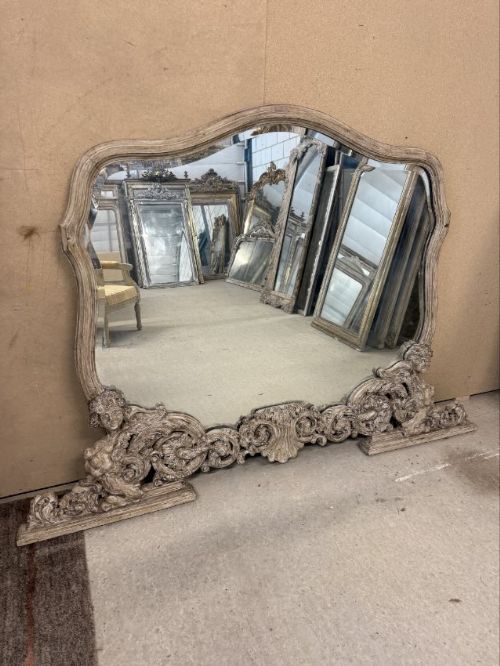
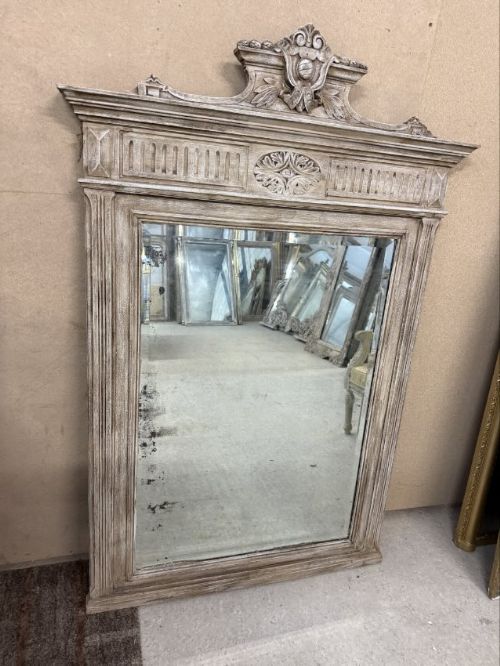




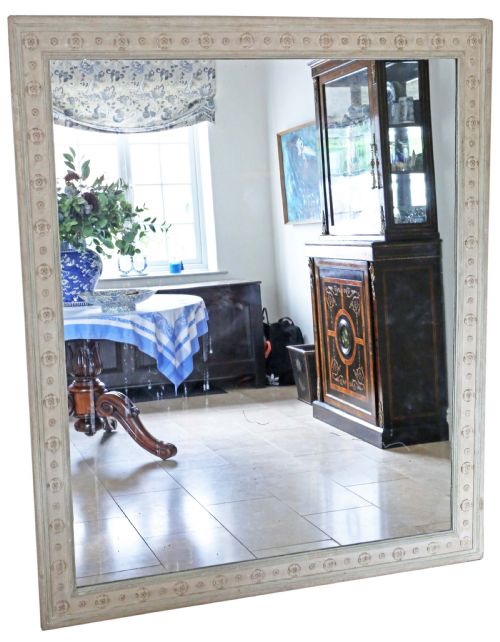
Grey Distressed Overmantel Mirror
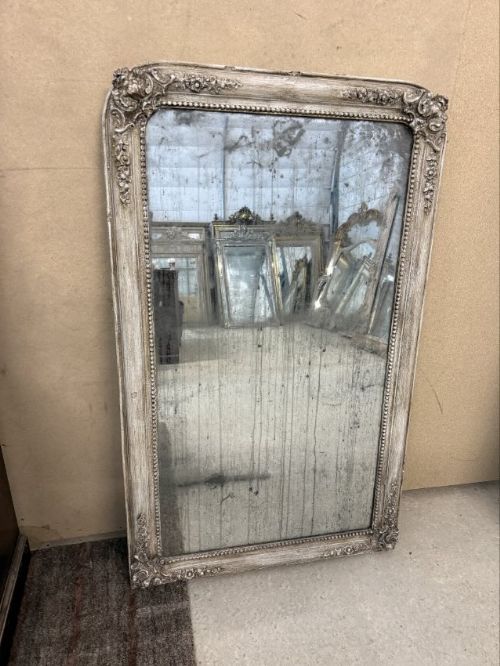
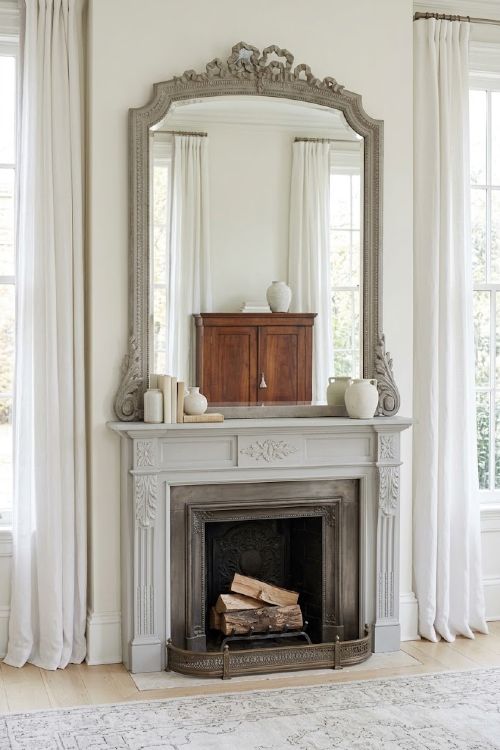
A grey distressed overmantel mirror brings architectural presence and weathered charm to a chimney breast, offering a purposeful balance of scale and subdued tone.
Grey Distressed Overmantel Mirror
When searching for a grey distressed overmantel mirror, a buyer is looking at large-scale wall glasses designed historically to sit directly above a fireplace mantelpiece. The pieces found here span the nineteenth century and the early twentieth century, drawing heavily on French and English workshop traditions.
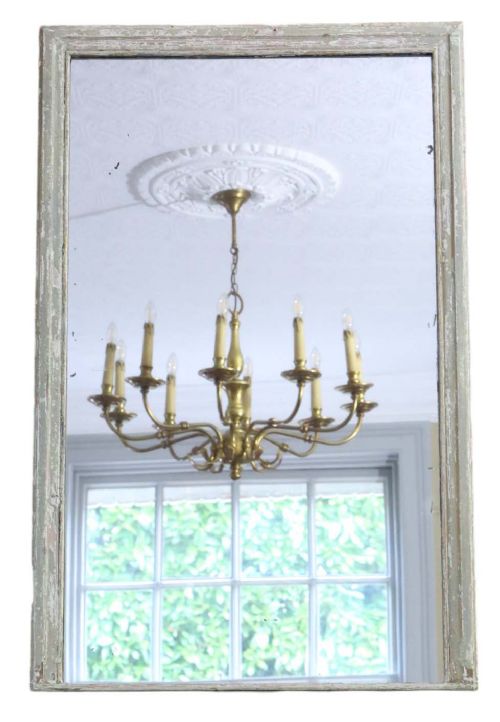
The most common versions met on this page are substantial nineteenth-century frames shaped with arched tops or column details, finished in weathered paint and gesso. These mirrors reflect both provincial tastes and grander salon styles, carrying the visual weight required for a principal reception room.
How they were made
Carved wood and moulded gesso form the structural base of these frames, providing the crisp relief seen on arched tops and column details. Artisans applied layers of paint over pine substrates, creating the characteristic surface that ages into a distressed patina over decades of domestic exposure.
Mirror glass is set within these heavy wooden constructions, occasionally featuring period traits such as mercury silvering. The physical depth of the framing timber supports the considerable scale demanded of an overmantel placement.
Grey Distressed Overmantel Mirror Retail Price Guide 2026
Typical asking prices for grey distressed overmantel mirror among the pieces listed under this phrase on Sellingantiques today, from the lower quarter to the upper quarter. They describe what is for sale here now, not the wider market.
Listings feature eighteenth-century proportions carried into nineteenth-century English and French vernacular designs, utilising pine, gesso, and carved wood.
What varies in quality
The depth and clarity of the original wood carving separate superior examples from simpler production, particularly where gesso enrichment forms intricate scrolls or architectural mouldings. Finer frames retain crisp relief under layers of historical paint, whereas lesser pieces display softer, blunter detailing.
Proportion and structural integrity dictate the standing of an overmantel mirror, with better pieces maintaining rigid joinery despite their large dimensions. The harmony between the arched or shaped top and the upright framing elements reveals the hand of a more accomplished maker.
The Grey Distressed Overmantel Mirror Glossary
- Overmantel mirror
- A large wall glass specifically proportioned to hang on the wall above a fireplace mantelpiece. These pieces often feature horizontal emphasis or arched crowns designed to echo the hearth below.
- Gesso
- A plaster-like mixture applied to wood frames to create a smooth surface for painting or to build up raised decorative reliefs. It allows for sharp architectural details that timber alone cannot sustain.
- Louis Philippe
- A nineteenth-century French style characterised by restrained classical lines, gentle curves, and often a simple arched top. It avoids excessive ornamentation in favour of balanced proportions.
- Trumeau mirror
- An antique wall glass integrated into a decorative wooden panel, frequently originating from French interiors. These pieces combine painted woodwork with mirror plates for decorative wall mounting.
- Mercury glass
- An early form of mirror plate created by applying a tin and mercury amalgam behind the glass. This technique produces a characteristic mottled reflection and dark speckling over time.
Grey Distressed Overmantel Mirror: Frequently Asked Questions
How do I hang a heavy overmantel mirror?
These large frames require secure fixing directly into masonry or robust wall studs using heavy-duty brackets suited to the weight of carved wood and glass.
Professional installation is recommended because the substantial dimensions and sheer mass of nineteenth-century overmantel glasses demand specialised wall anchors.
What rooms suit an overmantel mirror best?
Traditionally placed above living room fireplaces, these large mirrors function equally well above low sideboards or console tables in grand hallways.
Their generous scale and reflective surface amplify natural light and visually expand the proportions of any principal reception space.
How do I identify a Louis Philippe mirror?
A Louis Philippe mirror is recognised by its signature arched top corners that transition smoothly into straight vertical sides without ornate crestings.
This restrained nineteenth-century French aesthetic focuses on clean architectural lines rather than heavy floral carving.
What causes the distressed finish on these frames?
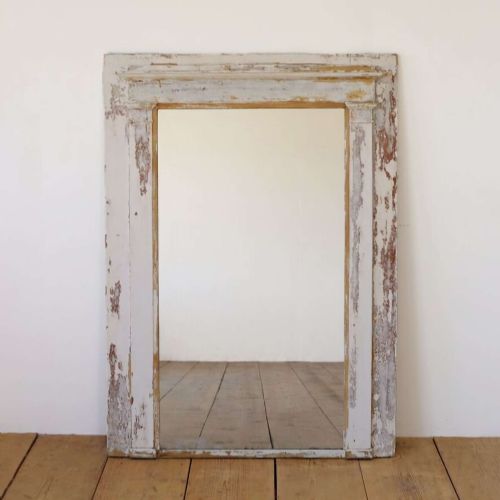
The distressed grey appearance results from decades of natural paint wear, flaking gesso, and historical overpainting accumulated over generations of domestic use.
Age-softened edges and exposed pine beneath the topcoat reveal the authentic progression of surface patina.