




Grey Architectural Watercolour Painting
Grey architectural watercolour painting works depict historic buildings and street scenes using monochrome washes on paper.
Grey Architectural Watercolour Painting
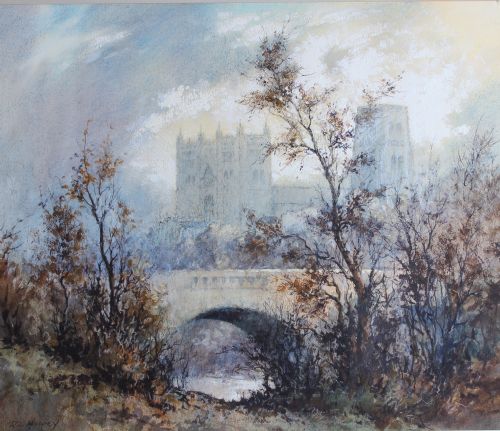
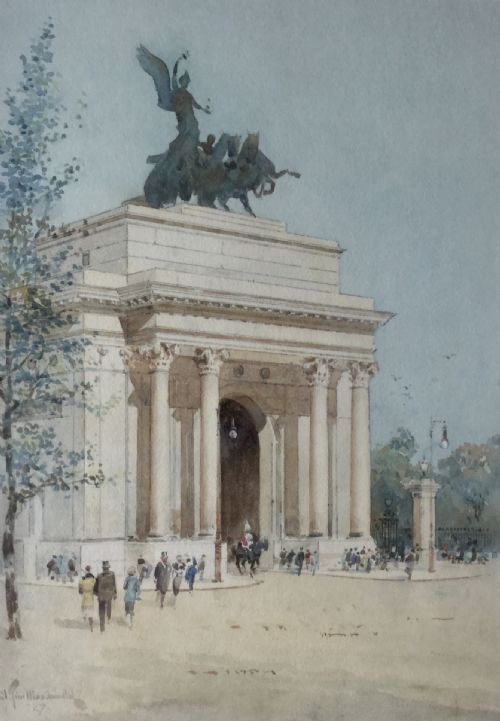
A grey architectural watercolour painting captures historic buildings, cathedrals, and city views through pigment applied to paper. These works span the nineteenth century through the mid twentieth century, encompassing Edwardian, British Impressionism, and Modern British movements.
The selections available here frequently portray named locations such as Durham Cathedral, Venice, and the streets of London. Buyers encounter townscapes, landscape views, and coastal scenes executed by regional British artists and continental painters.
Most examples rely on monochrome or muted grey tones to delineate stone facades, arches, and civic monuments. The paper support holds washes that range from pale washes of grey to deep charcoal shadows.
How they were made
Artists applied watercolour pigment and watercolour paint directly onto paper supports using brushes to build up tone and line. Many works incorporate pencil or ink underdrawing to establish the perspective of buildings before applying washes.
Framed pieces utilise wood mouldings and protective glass to preserve the paper from atmospheric moisture and handling. The combination of translucent pigment and absorbent paper creates the characteristic tonal depth seen across these works.
Artists frequently stood on busy city streets with a small box of pigments, capturing trams and pedestrians hurrying past ancient stone walls.
What varies in quality
The strength of perspective and the precision of brushwork distinguish accomplished architectural studies from simpler topographical records. Masterful handling of pigment allows the grey washes to suggest weathered stone and atmospheric light without becoming muddy.
The condition of the paper and the vibrancy of the remaining pigment influence the visual impact of each work. Works that retain their original tonal contrast without excessive fading or discoloration demonstrate superior preservation.
Robert Leslie Howey·Rowland Henry Hill·Stanley Orchart·Vittore Zanetti Zilla·Joseph W. Milliken·Hercules Brabazon Brabazon·Noel Harry Leaver·Sonia Lawson·Fred Lawson·Cuthbert Crossley·Tom Dudley·J. Tim Macdonald
The Grey Architectural Watercolour Painting Glossary
- Watercolour
- A paint consisting of a pigment suspended in a water-soluble vehicle. It is applied in translucent washes to paper to create luminous effects.
- Townscape
- A painting or drawing depicting a built urban environment. These works focus on streets, markets, and architectural landmarks.
- Monochrome
- Painting or drawing executed in a single colour or shades of a single colour. In these works, grey pigment provides the entire tonal range.
- Impressionism
- A style of painting emphasising light and its changing qualities rather than minute detail. British practitioners adapted these principles to local landscapes and street scenes.
Grey Architectural Watercolour Painting: Frequently Asked Questions
What is a grey architectural watercolour painting?
A grey architectural watercolour painting is an original artwork on paper depicting buildings and street scenes using monochrome pigment.
These works focus on structural forms such as cathedrals, bridges, and market crosses.
How should I frame and hang these watercolours?
Watercolours require framing behind glass with acid-free mounts to prevent the paper from touching the glazing.
Keep them away from direct sunlight to protect the pigments from fading over time.
How do I identify the period of a painting?
Period identification relies on stylistic clues, artist signatures, and framing materials associated with specific decades.
Edwardian and mid twentieth century works often feature distinct lettering or subject matter tied to urban development of those eras.
Are these paintings original works?
The works listed are original hand-painted watercolours on paper rather than mechanical reproductions or prints.
Each piece bears the individual brushstrokes and tonal variations of the artist who created it.