



Green Verdure Wall Panel
A green verdure wall panel brings forest foliage and pastoral quiet indoors, offering the rich textile depth of historical weaving.
Green Verdure Wall Panel
A green verdure wall panel is a textile depiction of woodland foliage, gardens, and pastoral landscapes designed for interior display. When searching for a green verdure wall panel, buyers encounter woven tapestries spanning several centuries from French and Flemish workshops.
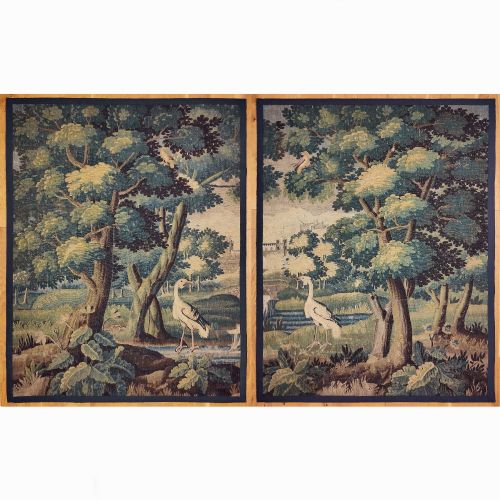
The selections range from late seventeenth-century Flemish panels to nineteenth-century French interpretations. These pieces function as large-scale wall hangings, framed woven panels, or pairs of vertical decor.
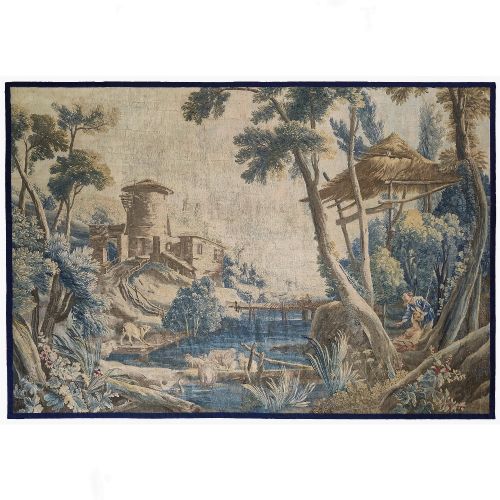
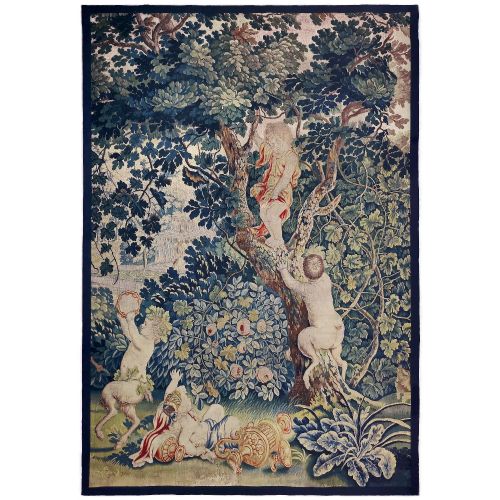
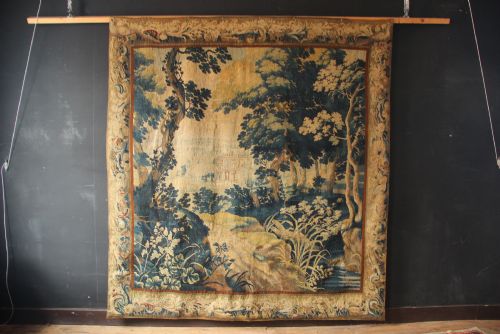
Subjects frequently combine dense leaves, trees, and distant architecture with occasional birds or pastoral figures. The palette relies heavily on greens, blues, and muted earth tones resulting from aged threads.
How they were made
These textiles were produced using wool, silk, cotton, and linen fibres woven on traditional looms. Weavers built the imagery through intricate interlacing of warp and weft threads.
Flemish and French ateliers employed organic dyes that shifted over centuries into the characteristic verdant tones seen today. Finished panels were sometimes mounted into wooden frames or prepared with hanging borders.
Green Verdure Wall Panel Retail Price Guide 2026
Typical asking prices for green verdure wall panel among the pieces listed under this phrase on Sellingantiques today, from the lower quarter to the upper quarter. They describe what is for sale here now, not the wider market.
Materials documented across the selection comprise wool, silk, cotton, linen, and wood.
What varies in quality
Quality in these textiles rests upon the fineness of the weave and the complexity of the landscape perspective. Tighter thread counts allow for greater detail in the rendering of foliage and architectural elements.
Condition and survival of the original fibres distinguish superior examples from heavily restored ones. The depth of surviving colour and the integrity of the textile support dictate the overall distinction of the panel.
The Green Verdure Wall Panel Glossary
- Verdure tapestry
- A woven wall hanging featuring a dominant landscape of plants, trees, and foliage. These scenes often create a sense of an enclosed forest interior.
- Warp
- The vertical threads held stationary on a loom before the transverse weft is passed through. This forms the foundational structure of the textile.
- Weft
- The horizontal threads woven across the warp to create the visible image and pattern. In these panels, dyed wool and silk form the pictorial surface.
- Needlework tapestry
- A textile piece worked by hand with a needle using stitches applied to a canvas ground rather than produced purely on a loom. Such works share similar pastoral subject matter.
Green Verdure Wall Panel: Frequently Asked Questions
How were green verdure wall panels used historically?
Historically, these panels functioned as both decoration and insulation against cold stone walls in large rooms.
They helped retain warmth while displaying wealth and a taste for pastoral scenery in grand interiors.
What materials make up these tapestries?
The pieces are constructed primarily from wool, silk, cotton, and linen fibres.
Wood is also found in instances where the woven textile is mounted within a frame for wall display.
How do I care for an antique tapestry?
Protect the textile from direct sunlight to prevent further fading of the wool and silk threads.
Keep the hanging away from excessive moisture and dust it gently with a soft brush.
How can I tell the period of a panel?
Dating relies upon stylistic markers of the weave, such as seventeenth-century Flemish motifs versus later nineteenth-century interpretations.
Examining the types of fibres and the complexity of the landscape helps confirm the era of origin.