






Green Valley Landscape Oil
These green valley landscape oil paintings bring the open air indoors, capturing rivers, fells, and sunlight across canvas and wood panel.
Green Valley Landscape Oil
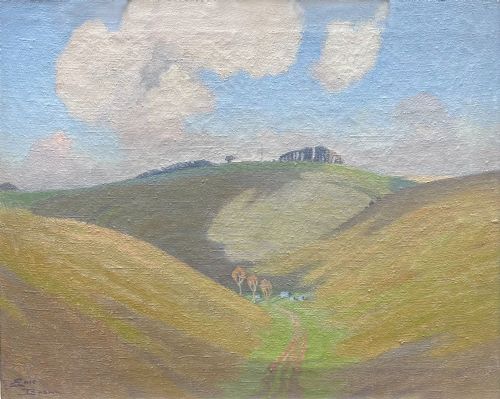
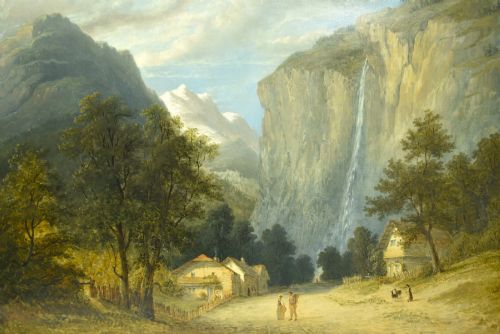
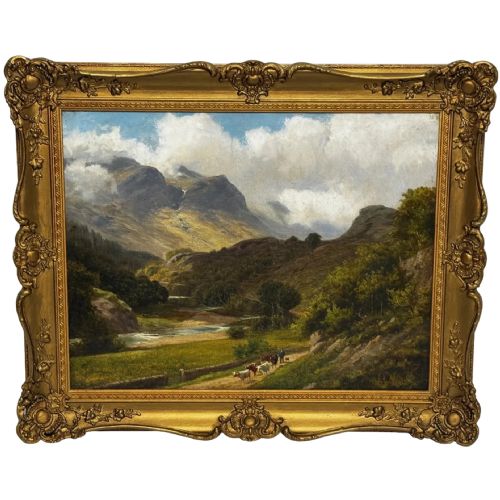
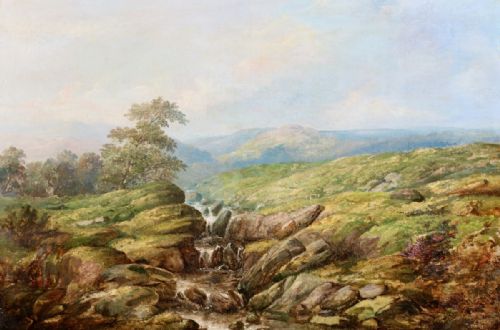
A green valley landscape oil painting depicts rural topography, from Welsh valleys to Scottish glens and Yorkshire dales, rendered through the medium of oil paint. These works span the Victorian period, Edwardian era, and the early twentieth century, encompassing British Impressionism, Modern British, Post-Impressionism, and Romanticism styles.
The compositions frequently present pastoral views featuring rivers, mountains, and pastoral settings such as Sannox Glen, Cardiganshire Valley, and Wharfedale. Buyers encounter pieces attributed to specific artists like Reginald Grange Brundrit RA, Ernest Higgins Rigg, and Owen Bowen alongside anonymous views.
The supports vary between traditional stretched canvas and wood panels, reflecting the practices of artists working across the nineteenth and twentieth centuries. Each piece offers a distinct topographical record shaped by the stylistic movements of its period.
Judging quality
Quality rests in the handling of light and atmosphere by the painter, distinguishing a living topographical record from a mechanical transcription. The articulation of brushwork, particularly within the foliage, water, and sky, determines the visual depth of the composition.
The relationship between the support, whether canvas or wood, and the pigment layer shows the surety of the artist's hand. Framing choices, particularly period gilt wood, also contribute to the integrity of the surviving piece.
Materials recorded in the archive comprise oil paint applied to both stretched canvas and rigid wood panel supports.
Eric Brown·William George Tennick·Hubert Wellington·Reginald Grange Brundrit·J Barclay·Fred Stead·Stephen Enoch Hogley·George Melvin Rennie·Frederick Richard Lee·Ernest Higgins Rigg·Owen Bowen·Lester Sutcliffe·Hubert Sattler
The Green Valley Landscape Oil Glossary
- Canvas
- A heavy woven fabric stretched across a wooden frame to serve as a foundational support for oil painting. It provides a flexible yet durable surface that responds well to layered brushwork.
- Wood Panel
- A rigid flat wooden surface utilised by artists as a stable alternative to canvas. It offers a firm resistance that suits detailed brush application.
- Gilt Wood
- Timber carved and coated with a thin layer of gold leaf or metallic gilt finish. These frames frequently accompany nineteenth and twentieth-century oil paintings.
- British Impressionism
- A painting style focusing on natural light, outdoor scenes, and visible brushstrokes. Artists influenced by this movement prioritised atmospheric effects over rigid academic finish.
- Post-Impressionism
- An artistic development following impressionism that explored expressive use of form and colour. Works in this vein emphasise emotional resonance alongside topographical representation.
Green Valley Landscape Oil: Frequently Asked Questions
How do I date a green valley landscape oil painting?
Dating relies on stylistic clues, the type of canvas or wood support, and any signatures or inscriptions recorded on the reverse or front. Victorian and Edwardian pieces often display tighter academic brushwork, whereas 1920 and 1930 works lean towards impressionist or fauve handling.
Examining the framing materials and historical labels attached to the wood or canvas stretcher provides further contextual evidence regarding the period of creation.
What subjects appear in these landscape paintings?
The paintings depict recognisable valleys, rivers, fells, and mountain ranges across Britain and Europe, including Welsh valleys, Yorkshire dales, and Swiss alpine views. Common topographical motifs feature rivers, livestock, and changing seasonal light.
Artists selected these rural locations to explore weather conditions, evening illumination, and the rugged textures of hillsides and riverbanks.
Where should I hang an oil painting?
Oil paintings on canvas or wood panel require placement away from direct sunlight and excessive humidity fluctuations to protect the paint layer and wooden support. Choosing a wall with stable ambient room temperature preserves the integrity of the canvas tension and gilt wood frame.
Ensure the artwork is secured at eye level where natural indoor lighting can adequately illuminate the brushwork and colour palette.
What is the difference between canvas and wood panel supports?
Canvas provides a flexible, woven surface stretched over a wooden frame, which yields slightly under the pressure of the brush. Wood panels offer a completely rigid, unyielding surface that allows for precise, fine-lined detail work.
Both supports have sustained popularity across the nineteenth and early twentieth centuries, influencing how the oil paint ages and adheres over decades.