

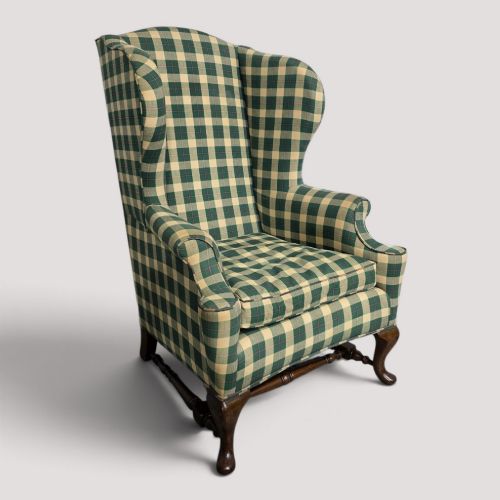
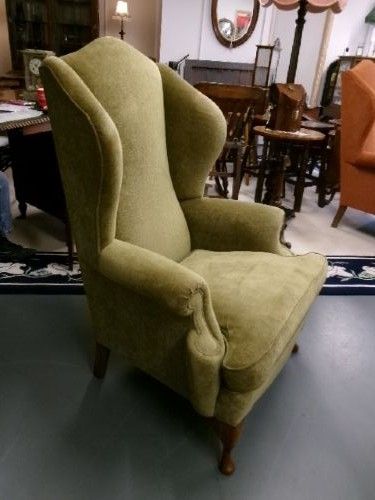
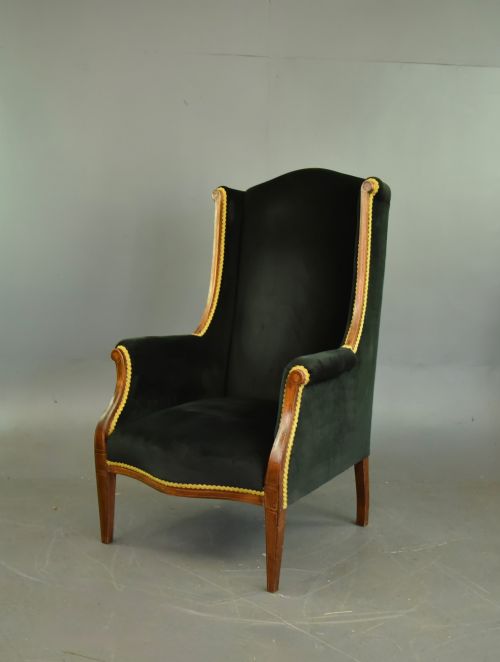
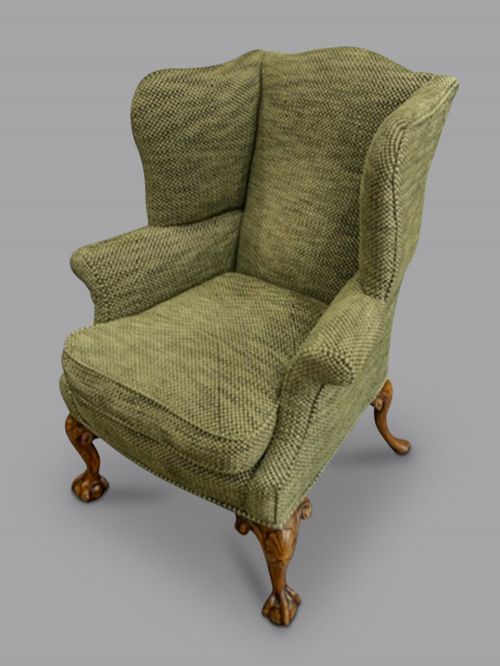


Green Upholstered Wingback
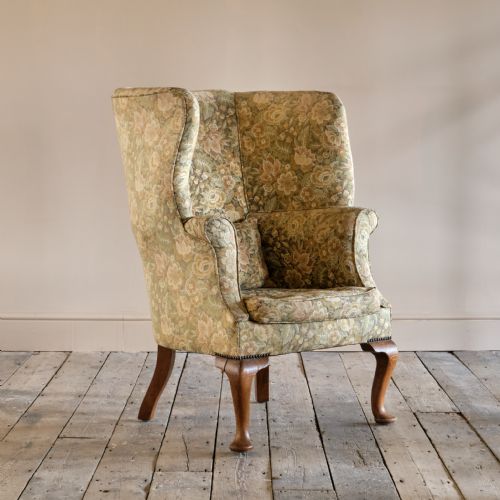
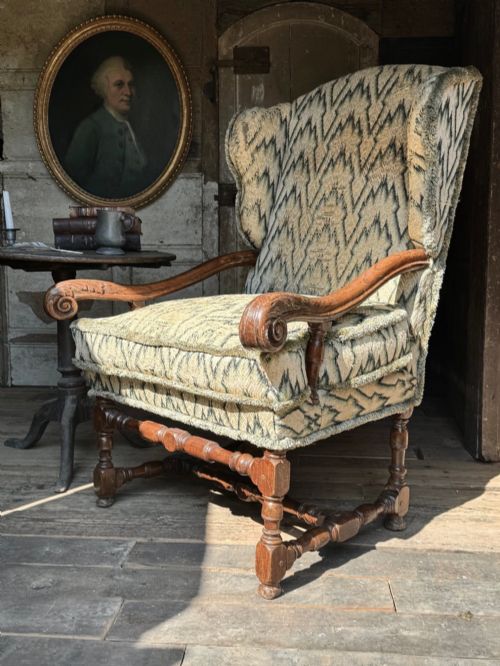
A green upholstered wingback delivers deep fireside comfort, framing your shoulders against draughts while bringing period character to a room.
Green Upholstered Wingback
When you search for a green upholstered wingback, you encounter seating designed to shield the occupant from cold draughts by enclosing the head and shoulders in protective fabric wings. The forms span the eighteenth century through the Edwardian era, taking shape as substantial armchairs, barrel backs, and occasional settees.
The versions you meet most frequently on this page date from the nineteenth and early twentieth centuries, drawing heavily on earlier Georgian, Queen Anne, and George II revivals. These pieces combine historic silhouettes with various shades of green textile, from rich velvet to patterned fabric and hide.
Makers across different decades adapted the traditional wing chair format, producing everything from formal library seating to relaxed fireside armchairs. The proportion of the wings and the rake of the back change across periods, reflecting shifting standards of domestic comfort.
Evaluating Quality
The integrity of the underlying timber frame dictates the longevity and stability of any chair, distinguishing solid period construction from lighter revival pieces. Well-proportioned wings and a balanced rake to the back demonstrate the maker's eye for comfort and line.
The choice and execution of the upholstery material alter the character of the piece significantly. Hand-finished velvet or hide applied with careful attention to grain and tension elevates the overall presence of the seating.
Subtle details such as carved cabriole legs, brass castor fittings, and precise nailhead placement separate standard commercial production from finer workshop output.
Green Upholstered Wingback Retail Price Guide 2026
Typical asking prices for green upholstered wingback among the pieces listed under this phrase on Sellingantiques today, from the lower quarter to the upper quarter. They describe what is for sale here now, not the wider market.
Listings span the eighteenth, nineteenth, and early twentieth centuries, featuring mahogany, walnut, velvet, and hide.
The Green Upholstered Wingback Glossary
- Wingback
- An armchair featuring projecting side panels designed to trap heat and block draughts around the head. These wings evolved from seventeenth-century heating screens.
- Cabriole leg
- A furniture leg that curves outward at the knee and tapers inward toward the ankle, ending in a pad or claw foot. This form draws inspiration from ancient Chinese designs.
- Barrel back
- A seating form where the upholstered back curves continuously into the arms in a single rounded enclosure. This style offers a particularly enveloping sit.
- Webbing
- Interwoven strips of jute or hemp stretched across the seat frame to support the interior stuffing and springs. Traditional chairs rely on tightly crossed bands for lasting tension.
Green Upholstered Wingback: Frequently Asked Questions
How do I date a wing chair?
Dating relies primarily on the shape of the exposed wooden legs, the curve of the arms, and the proportions of the wings. Earlier eighteenth-century pieces often feature simpler structural geometry compared to later revival pieces.
Material analysis of the frame timber and the webbing techniques underneath also help confirm the period of manufacture. Comparing these elements against documented examples narrows down the likely decade.
Are these chairs comfortable for daily use?
Most of these seating options were built with deep stuffing and sprung bases intended for long hours by the hearth. Their enclosed wings provide genuine physical support for reading or resting.
Some older pieces may require internal restoration to restore the original firmness of the seat. Once properly serviced, they function wonderfully as primary living room armchairs.
What fabrics were originally used?
Traditional upholstery materials included heavy wool textiles, damasks, and woven tapestries suited to heavy domestic wear. Leather and hide were also selected for libraries and studies.
Many surviving pieces have undergone re-upholstery over the decades to preserve the fabric. Green velvet and hide appear frequently among the current selection.
How do I care for antique upholstery?
Protecting the fabric involves regular gentle vacuuming with a soft brush attachment to remove dust from the crevices around the wings and arms. Direct sunlight should be avoided to prevent the green dye from fading.
Treating wooden legs with appropriate furniture wax keeps the timber nourished. Professional cleaning is recommended for delicate velvet or hide surfaces.