

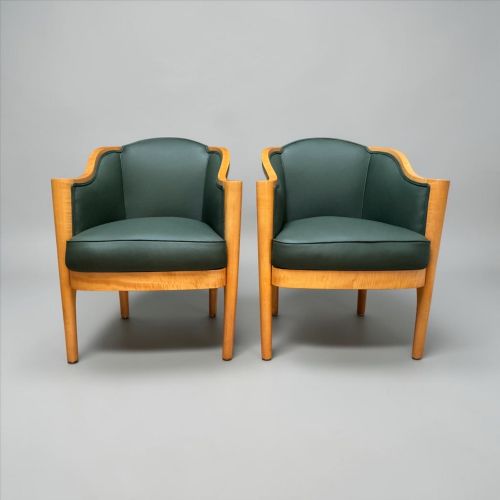
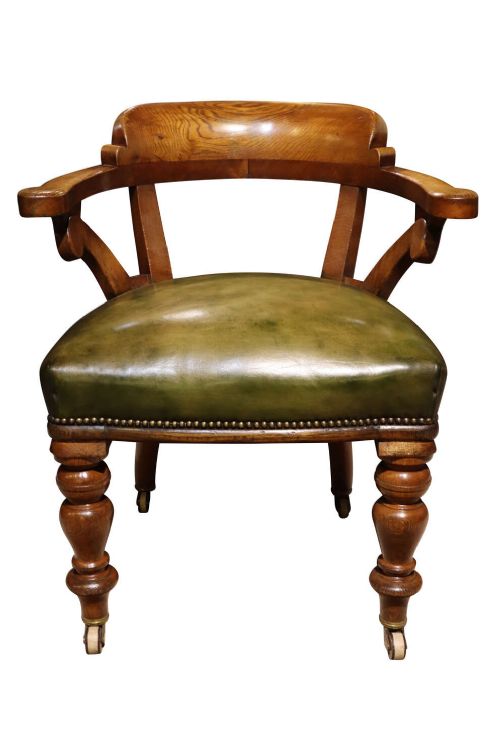
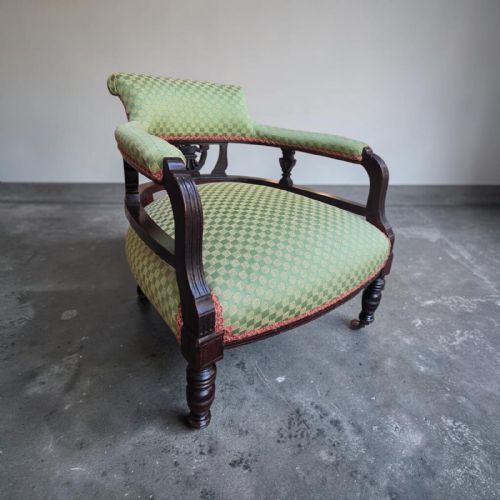
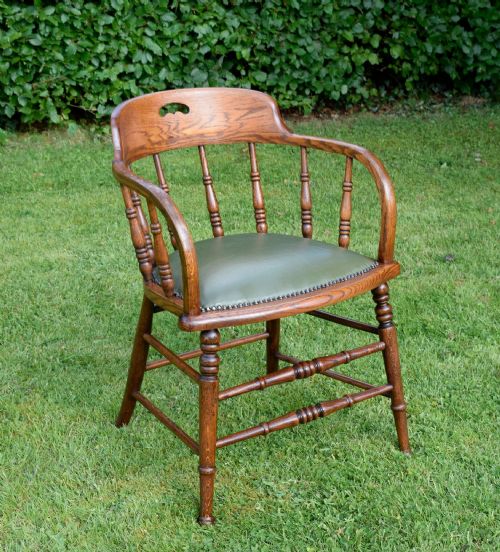


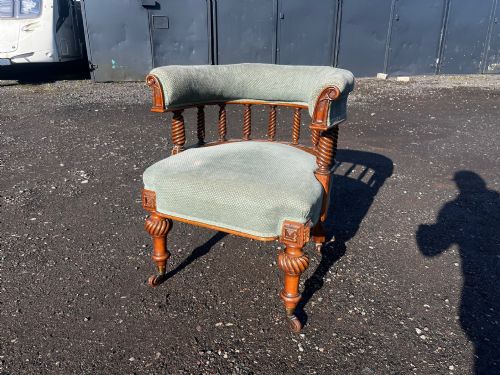


Green Tub Armchairs
Green tub armchairs offer deep, curved backrests and supportive seating that bring structured comfort to studies, libraries, and living rooms alike.
Green Tub Armchairs
Green tub armchairs encompass a variety of seating forms designed around a continuous, enclosed backrest that curves round to form the armrests. When seeking green tub armchairs, buyers encounter pieces originating from periods such as the Victorian era, the Edwardian period, and the Regency era.
Makers and designers span several distinct eras, incorporating works associated with Maurice Adams and Anton Rosen alongside traditional cabinet-maker productions. Formats vary from barrel-backed and shell-backed designs to functional swivel office variants.
How they were made
Carpenters and cabinet-makers utilised dense timbers such as mahogany, oak, walnut, and satinwood to construct robust frames capable of supporting curved tub structures. Alternative finishes include simulated or faux rosewood, painted surfaces, and ebonised treatments.
Upholstery techniques combined traditional buttoning, springing, and webbing with applied coverings in leather, velvet, cane, and woven fabric. Brass hardware, such as castors and decorative tacks, frequently complemented the structural woodwork.
Green Tub Armchairs Retail Price Guide 2026
Typical asking prices for green tub armchairs among the pieces listed under this phrase on Sellingantiques today, from the lower quarter to the upper quarter. They describe what is for sale here now, not the wider market.
Listings feature periods spanning from the Regency era through to Art Deco, utilising mahogany, oak, leather, and cane.
What varies in quality
The standard of timber selection and joinery marks the primary distinction between standard workshop output and finer cabinet-making. Solid hardwoods, figured mahogany grains, and carefully turned or carved wooden components indicate superior craftsmanship.
The execution of the curved tub frame and the integration of upholstery materials dictate the overall refinement of the piece. Well-balanced proportions, sturdy structural joins, and high-grade leather or fabric upholstery separate standard seating from exceptional library and desk chairs.
Maurice Adams·Anton Rosen
The Green Tub Armchairs Glossary
- Tub chair
- An armchair featuring a low, rounded backrest that flows continuously into the arms. This enclosed design provides distinct lateral support.
- Bergere
- An upholstered armchair with an enclosed wooden frame where the back and sides frequently incorporate cane work. These chairs often feature loose seat cushions.
- Library chair
- A substantial armchair designed for reading rooms and studies, frequently upholstered in leather. Such pieces prioritise robust timber frames and sustained comfort.
- Captains desk chair
- A revolving or swivel office seat equipped with a low, curved wooden backrest. They were historically utilised in commercial and domestic workspaces.
- Curule
- A classical X-shaped furniture design derived from Roman folding stools. This geometric form appears in Regency and nineteenth-century seating.
Green Tub Armchairs: Frequently Asked Questions
Where were these chairs used?
These seating pieces found places in domestic libraries, offices, studies, and formal reception rooms.
Library and desk variants supported working environments, while upholstered tub and salon chairs offered relaxed seating in residential living spaces.
How do I identify a Victorian tub chair?
Victorian tub chairs typically exhibit dense timbers such as mahogany, walnut, or oak, often paired with buttoned leather or deep fabric upholstery.
Their construction reflects nineteenth-century cabinet-making standards, sometimes incorporating exposed showwood frames and turned wooden supports.
What is a bergere armchair?
A bergere armchair is an upholstered seat with an exposed wooden frame where the back and sides are panelled with woven cane.
Originating in earlier centuries, these chairs continued to be produced through the Regency and Edwardian periods with refined wooden frameworks.