
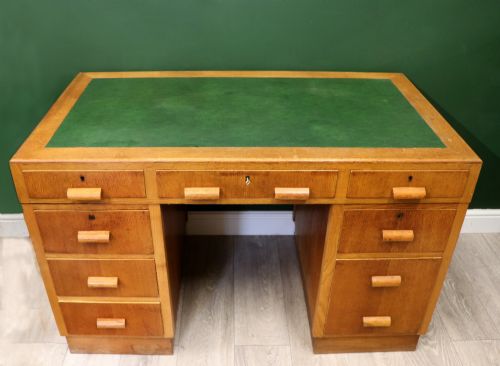
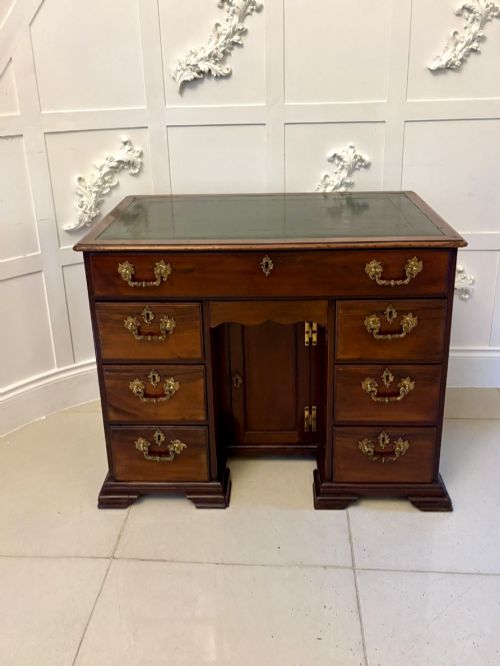
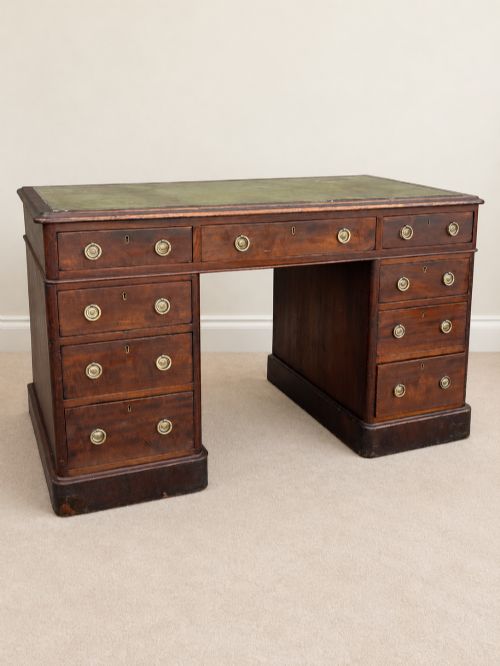
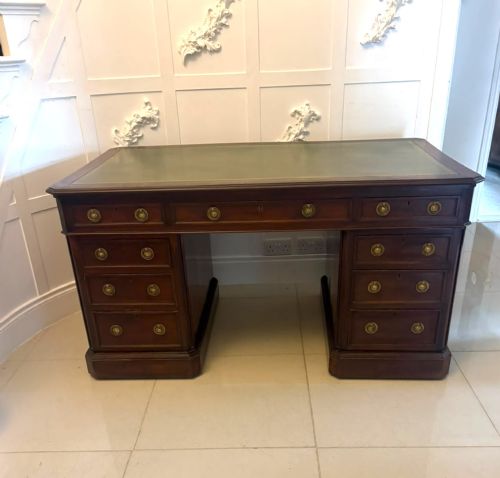
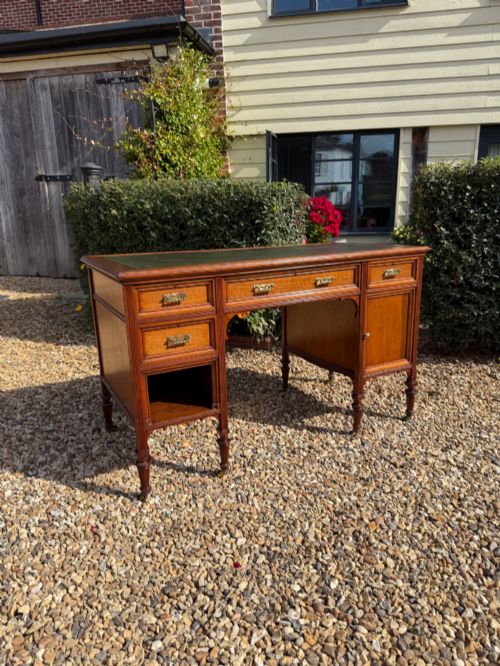
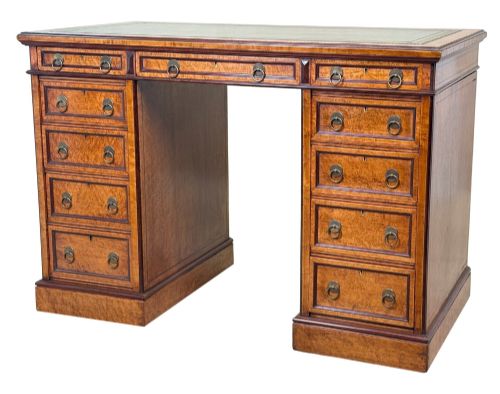
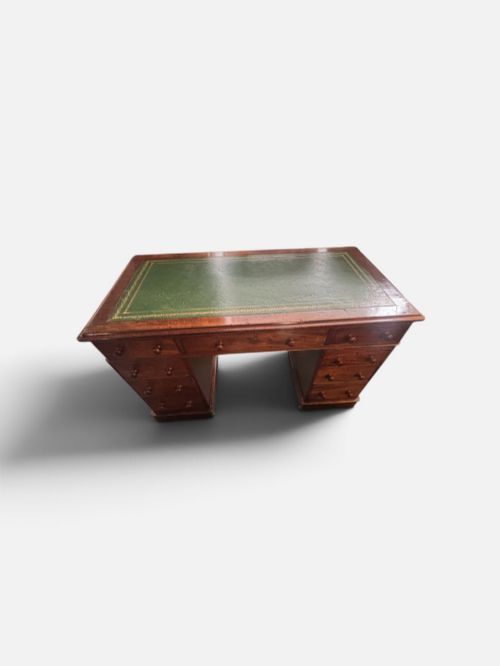
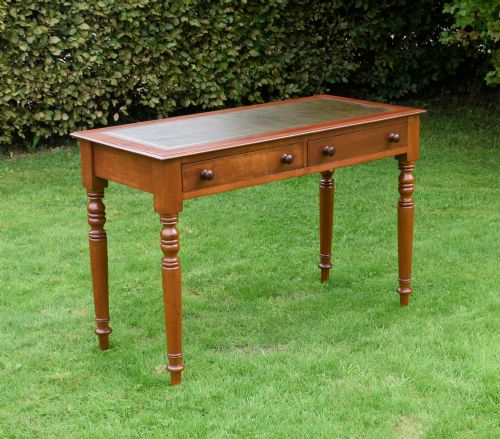
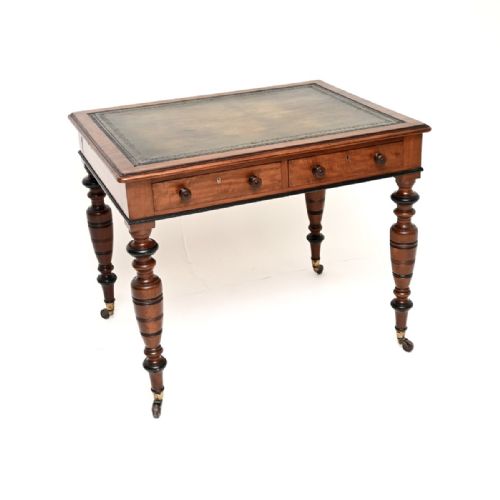
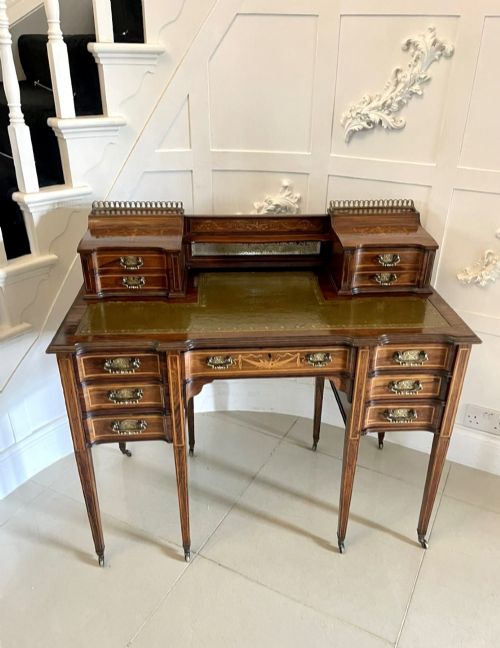
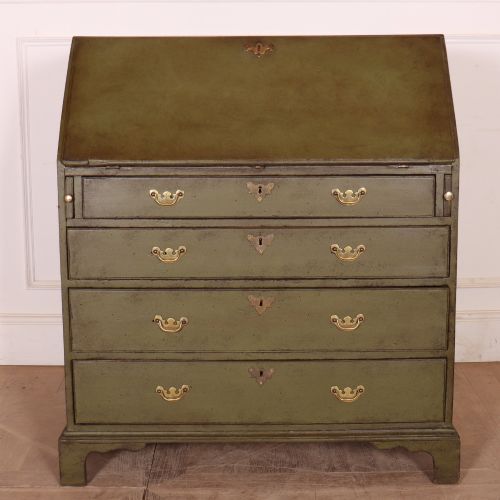
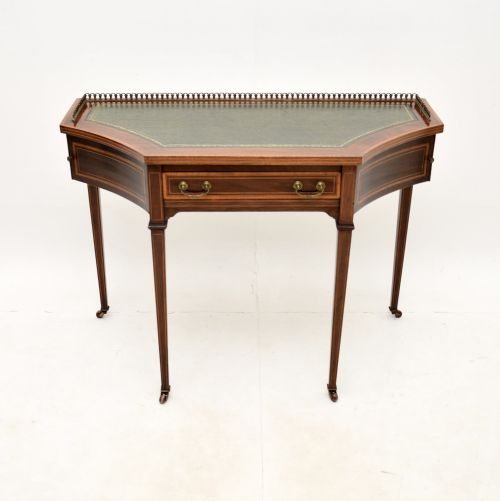
Green Top Writing Desk
A green top writing desk brings a purposeful working surface into a room, finished with the distinctive leather insert that defined traditional studies.
Green Top Writing Desk
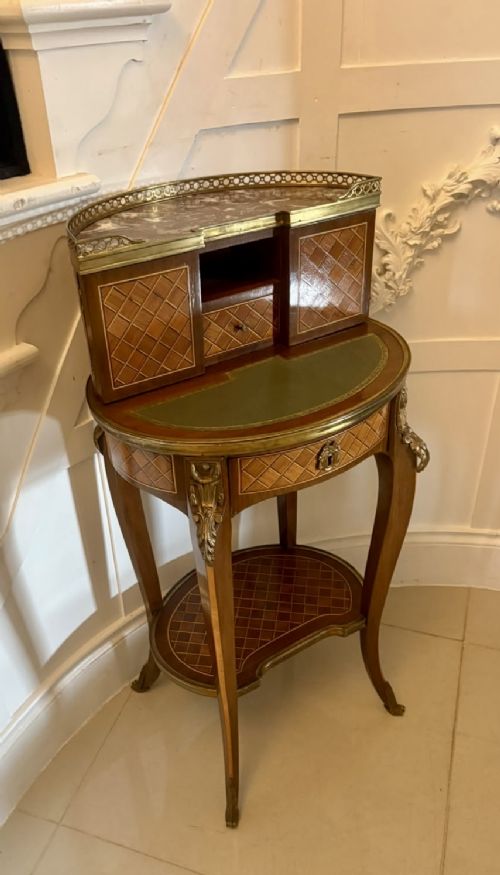
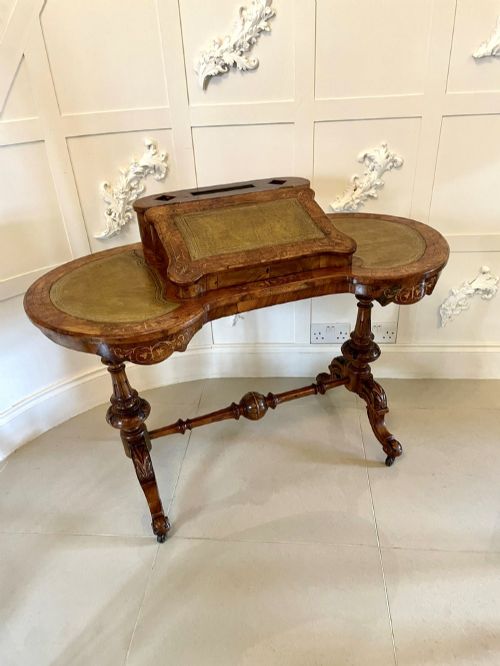
A green top writing desk brings together various formats intended for correspondence and study, spanning pedestal desks, partners tables, and freestanding writing tables. You will most frequently encounter nineteenth-century Victorian examples alongside Edwardian and Regency pieces, often finished with a distinctive green leather writing surface.
The forms range from compact kneehole desks and smaller writing tables to large partners desks designed with drawers on opposing sides. Woods such as mahogany, walnut, and oak dominate these listings, reflecting the sturdy construction methods of their respective periods.
Materials and construction
Cabinet makers built these pieces using solid timbers and carefully selected veneers, applying mahogany, walnut, rosewood, and oak across the main bodies and drawer fronts. Inlaid details in satinwood or boxwood frequently accent Edwardian and Sheraton revival pieces, while brass handles and castors provide functional hardware.
The defining writing surfaces rely on leather inserts, often tooled with gilt borders, set directly into the wood. Structural framing utilised traditional joinery to support heavy pedestals and multi-drawer arrangements.
The listings combine walnut, mahogany, oak, and rosewood across Victorian, Edwardian, and Regency periods.
What separates the best from the rest
Quality reveals itself in the selection of timber figures, such as flame mahogany or burr walnut, and the precision of inlaid decoration. Finer pieces demonstrate careful attention to secondary timbers and uniform grain matching across drawer fronts and pedestals.
Freestanding capability distinguishes superior library and partners desks, which feature finished panelling on all four sides rather than plain backs intended for walls. The crispness of carved details, such as those found on Victorian oak examples, further elevates an individual piece.
Maple & Co.·Holland & Sons·James Shoolbred & Co. London
The Green Top Writing Desk Glossary
- Pedestal desk
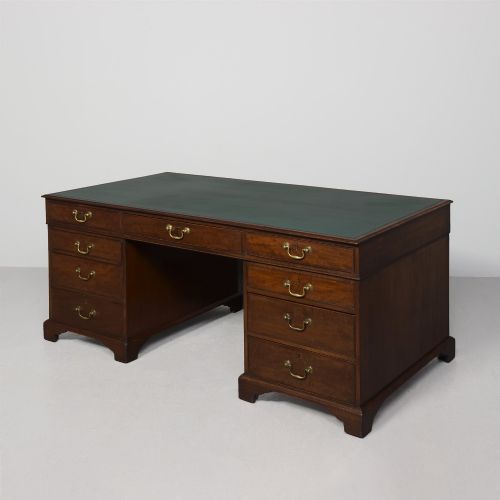
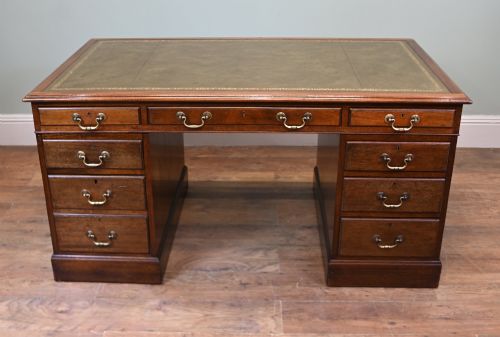
- A heavy writing desk supported by two banks of drawers resting on the floor. These typically feature a central kneehole space.
- Partners desk
- A large double-sided desk built with drawers and cupboards facing both directions. This allows two people to work opposite one another.
- Kneehole desk
- A compact desk featuring a recessed central space for the sitter's legs, flanked by smaller sets of drawers. They suit smaller studies and bedrooms.
- Escritoire
- A tall writing cabinet equipped with a fall-front writing surface concealing internal compartments. They emerged in various revival styles during the late nineteenth and early twentieth centuries.
- Davenport desk
- A small compact writing desk with a sloped, hinged writing surface and drawers opening to the side. They often incorporate upper stationery compartments.
Green Top Writing Desk: Frequently Asked Questions
What is a green top writing desk?
A green top writing desk is any traditional writing table or pedestal desk featuring a leather writing surface dyed green. These range from compact Victorian kneehole desks to large partners tables.
The green leather insert provided a smooth, non-reflective surface for writing with ink, protecting the underlying wood timber.
How do I date a pedestal desk?
Dating relies on timber choices, construction methods, and stylistic details recorded across Victorian, Edwardian, and Regency periods. Mahogany and rosewood frequently point to earlier nineteenth-century eras.
Secondary woods inside drawers and the presence of brass hardware or castors help narrow down the specific decade of manufacture.
Are these desks finished on the back?
Many larger library desks and partners tables are fully finished on all four sides so they can stand in the middle of a room. Standard pedestal desks were often placed against walls and possess plain backs.
Checking the reverse side reveals whether the piece was designed to be freestanding.
How do I care for the leather top?
The leather writing surface requires gentle cleaning with a damp cloth and occasional application of appropriate leather balm to prevent drying. Avoid harsh modern chemical cleaners that might strip the original green dye or gilt tooling.
Keeping the desk away from direct sunlight preserves both the leather colour and the surrounding wood polish.