



Green Stone Dress Ring
A green stone dress ring brings together vibrant natural beryl, jade, and paste set in enduring gold and platinum across multiple historic eras.
Green Stone Dress Ring
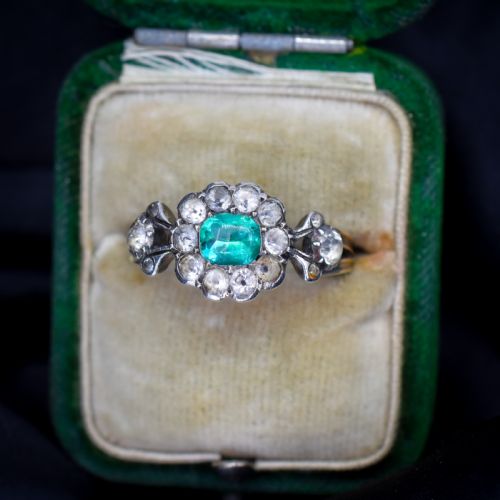
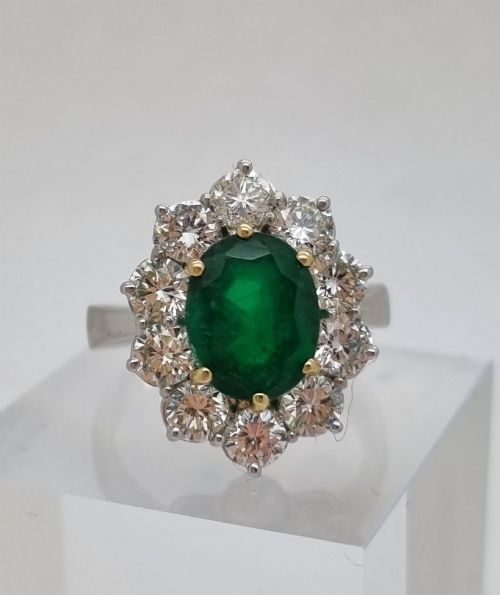
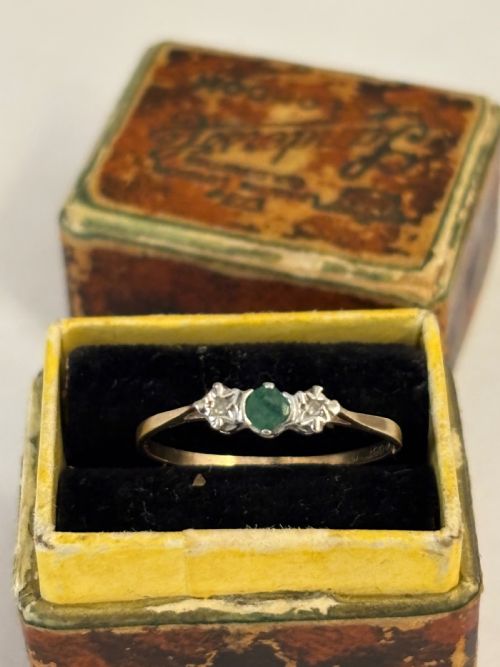
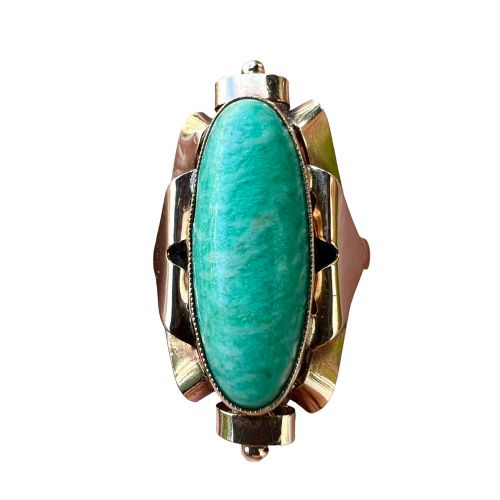
A green stone dress ring spans varied periods from Georgian cluster designs through Edwardian and Art Deco mountings to mid-century cocktail styles. Buyers exploring this category encounter a broad mix of gemstone varieties, including emerald, jade, chalcedony, bloodstone, tourmaline, and demantoid garnet.
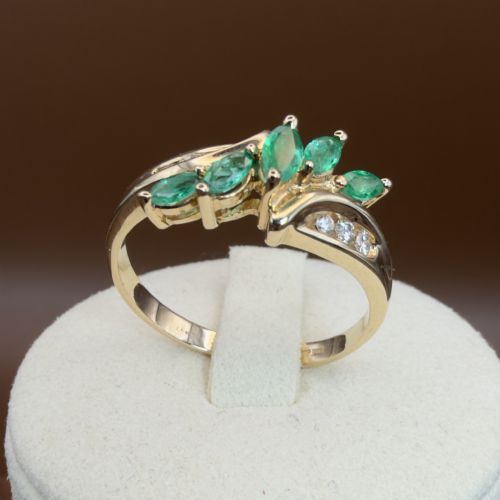
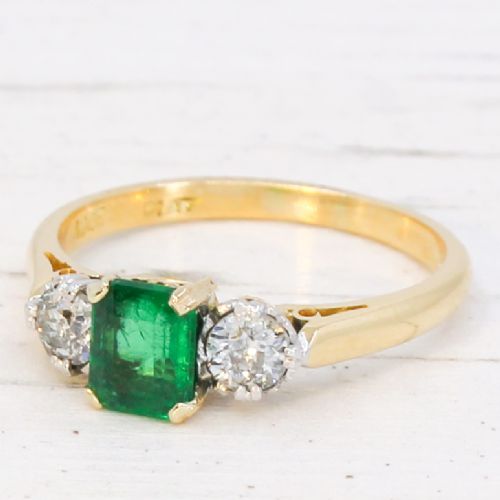
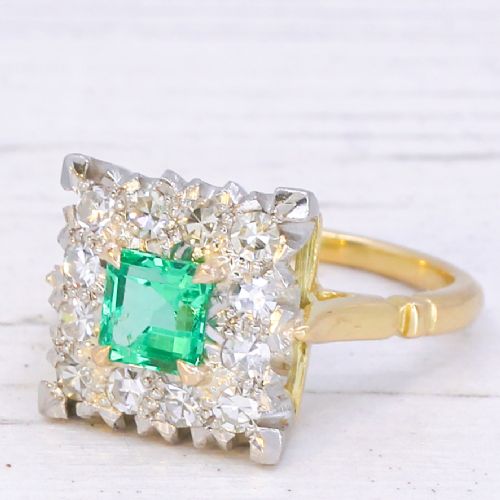
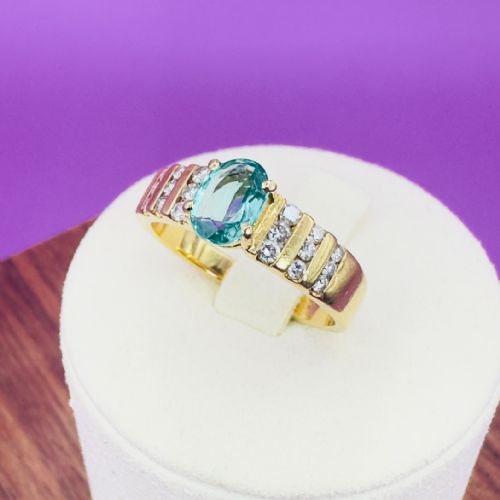
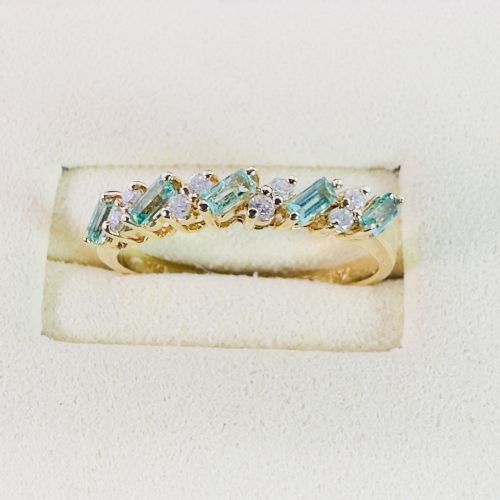
Most examples combine the central green gem with sparkling diamond accents, shaped into traditional multi-stone arrangements, clusters, panels, and bolder cocktail forms. Metal choices range from warm yellow gold and silver-topped mountings to bright platinum and white gold settings.
Materials and construction
Goldsmiths set natural green gemstones alongside brilliant cut diamonds using a combination of yellow gold, white gold, 14ct gold, 18ct gold, 9ct gold, and platinum. Early and mid-century workshops employed durable bezel, claw, and channel settings to secure stones firmly within intricate cluster or panel formats.
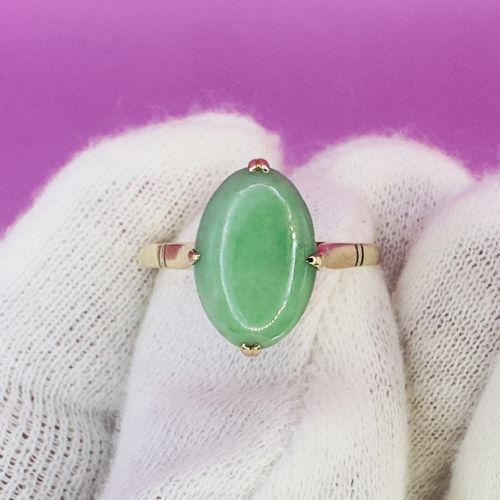
Gemstones feature diverse cuts, including oval, marquis, cabochon, and carved profiles, reflecting the aesthetic preferences of periods such as the Edwardian era, the 1920s, and the 1930s. Solid metal bands and detailed shoulders provide structural balance to heavier cocktail and solitaire designs.
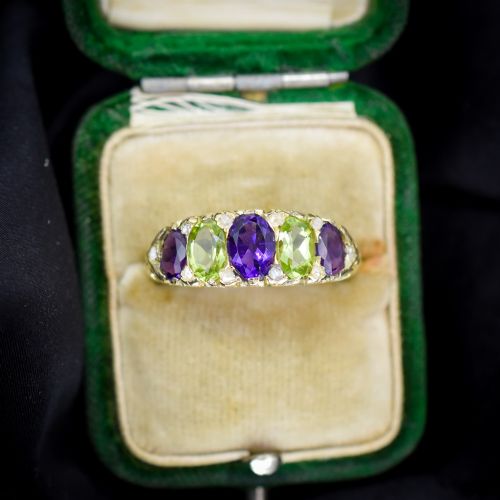
Several rings secretly whisper tales of political loyalty through hidden amethyst, peridot, and diamond suffragette stones.
Quality and craftsmanship
Distinction across the range depends on the natural quality and origin of the central green stone, alongside the brilliance and carat weight of surrounding diamonds. Finer pieces demonstrate careful gemstone matching and precise stone-cutting that maximises light return within the setting.
Structural integrity, the crispness of fine millegrain or carved metalwork, and the preservation of original mounting materials determine the overall execution of each ring. Heavier gold and platinum mountings often indicate higher grade manufacturing appropriate for daily wear or formal occasions.
The Green Stone Dress Ring Glossary
- Cluster ring
- A jewellery design featuring a central gemstone surrounded by a border of smaller stones, typically diamonds.
- Cabochon
- A gemstone shaped and polished with a smooth, rounded convex surface rather than faceted edges.
- Paste
- Hand-cut and polished lead glass utilised historically to imitate precious gemstones in antique jewellery.
- Toi et moi
- A ring style featuring two main stones positioned closely together, symbolising two souls intertwined.
Green Stone Dress Ring: Frequently Asked Questions
What periods do these rings come from?
The selection includes examples from the Georgian and Victorian eras, Edwardian designs, Art Deco creations, and mid-century cocktail pieces.
Individual pieces reflect the prevailing aesthetic and manufacturing techniques of their specific decades, ranging from nineteen-hundred to the nineteen-sixties.
What green stones are most common?
Emerald is the most frequently encountered green gemstone, often paired with diamond accents in cluster or three-stone arrangements.
Other pieces incorporate jade, chalcedony, tourmaline, demantoid garnet, bloodstone, and historic green paste.
Are these rings suitable for daily wear?
Many sturdy gold and platinum mountings withstand regular wear, provided the wearer exercises care with softer stones like emerald or jade.
Delicate antique settings, particularly older claw configurations, benefit from periodic inspection by a jeweller to ensure stones remain secure.
How do I identify an Art Deco ring?
Art Deco rings typically feature geometric lines, symmetrical panel layouts, and frequent use of platinum alongside emeralds and diamonds.
These pieces emerged during the nineteen-twenties and nineteen-thirties, favouring bold architectural styling over flowing organic motifs.