

Green Rural Landscape Oil
Green rural landscape oil paintings capture the pastoral scenery of earlier centuries, offering buyers framed views of fields, farms, and rivers.
Green Rural Landscape Oil
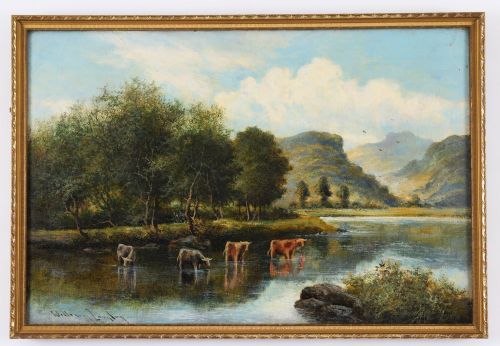
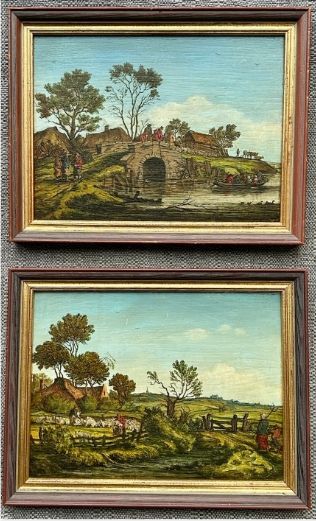
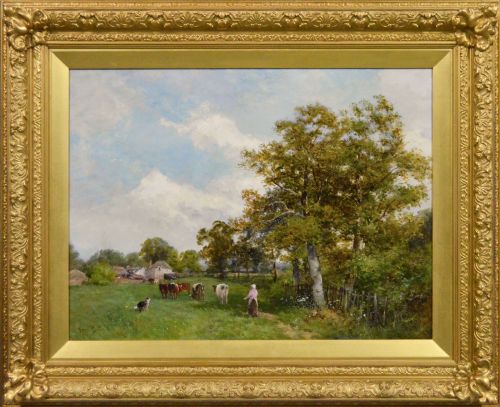
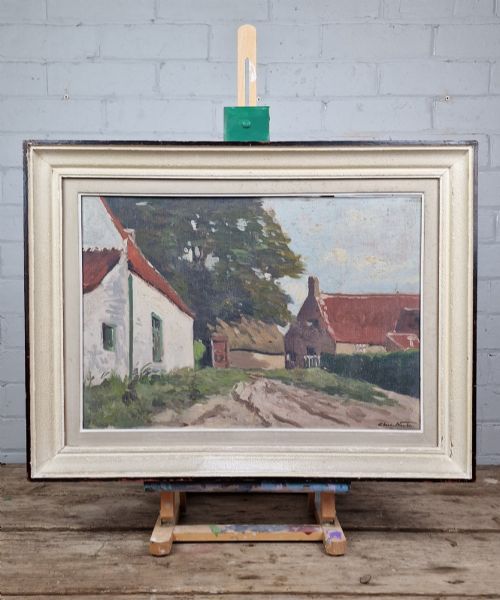
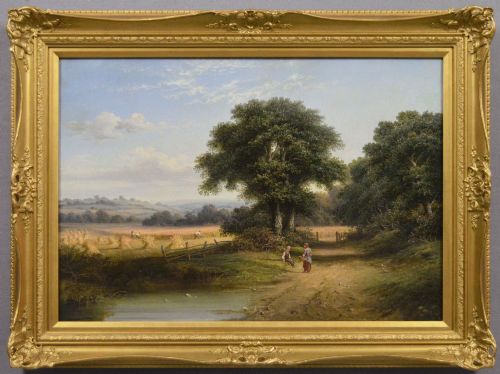
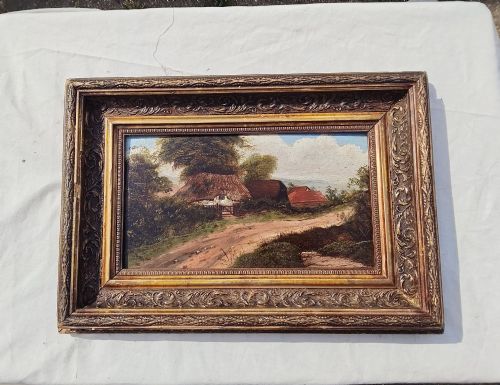
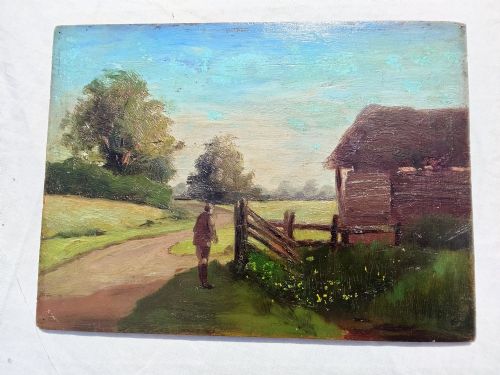
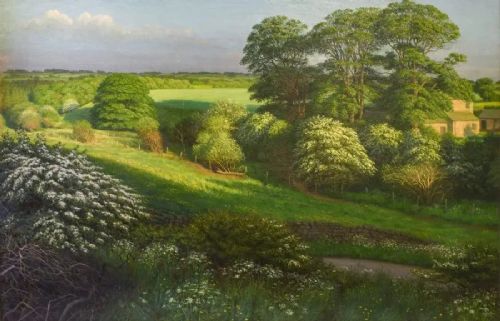
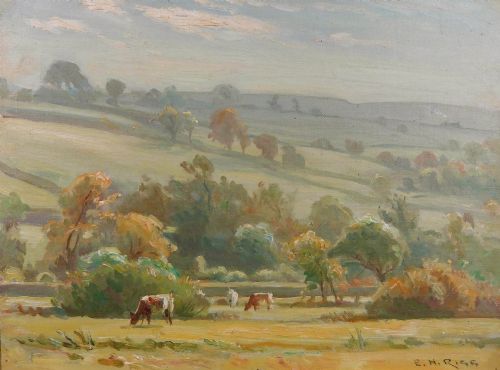
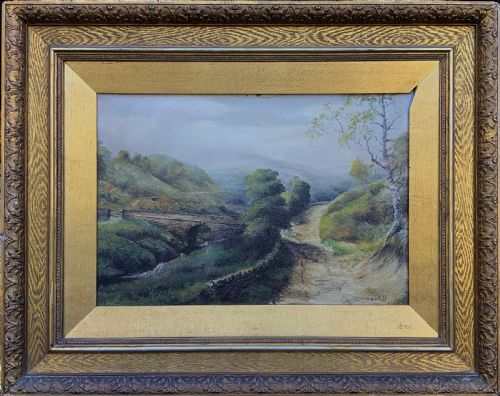
A green rural landscape oil search brings together framed paintings depicting pastoral scenes, country cottages, and farmyard views. These works span the nineteenth century, the Edwardian era, and the mid-twentieth century, recording agricultural life and open fields.
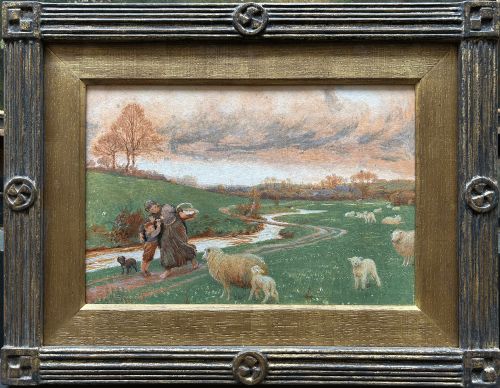
Most items you encounter belong to the nineteenth and early twentieth centuries, featuring British and European regional scenes. Common subjects include rivers, livestock, harvest fields, and quiet country lanes rendered in oil on canvas, board, or wood panels.
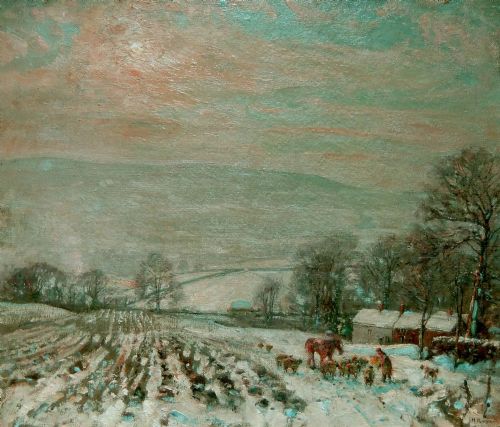
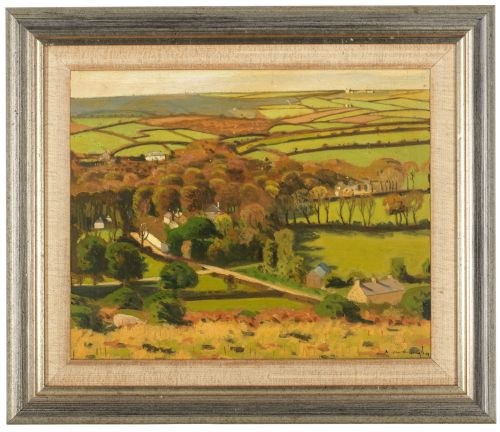
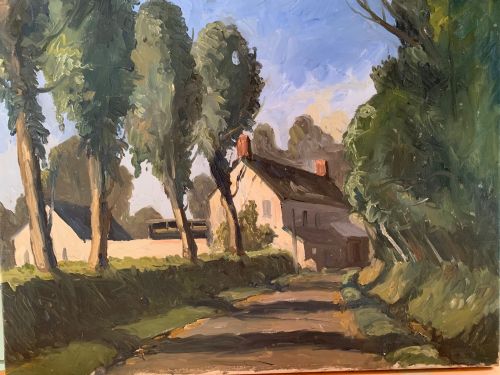
The selection ranges from detailed Victorian realism to broader British Impressionism and Post-Impressionist interpretations. Painters recorded specific local views in Yorkshire, Cornwall, and Kent, alongside continental farmyards and pastoral settings.
Materials and Techniques
Artists applied oil paint to prepared surfaces such as woven canvas, wooden panels, thick card, or board. These supports were often framed in wood, sometimes finished with gilt or ebonised moulding.
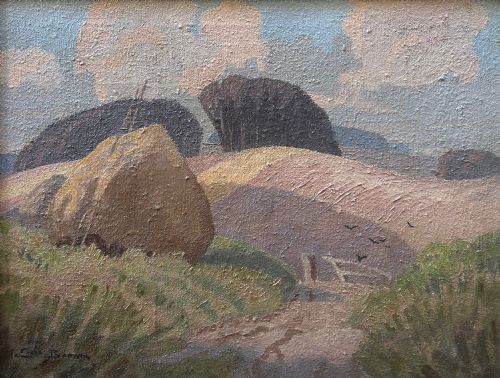
Brushwork varies from the smooth, careful detail of nineteenth-century academic styles to the looser, textured strokes of impressionist and post-impressionist painters working outdoors.
Listings feature works executed on canvas, wood panels, and card, spanning the nineteenth century through to the nineteen-fifties.
Assessing the Work
Quality rests in the handling of light, atmosphere, and spatial depth within the composition. Stronger examples demonstrate confident brushwork and a coherent sense of place, whereas weaker pieces rely on formulaic arrangements of trees and cottages.
The preservation of the pigment and the support shapes the visual impact. Works retaining their original framed context without extensive overpainting present a clearer record of the artist's initial intent.
Herbert Royle·Robert Morson Hughes·David Bates·Charles Houben·Walter Heath Williams·Raymond Booth·Frederick Walker·Ernest Higgins Rigg·William Greaves·Sydney Yates Johnson·John Horace Hooper·Harry Freckleton·William Henry Mander·Thomas Sidney Cooper·Reginald Grange Brundrit·Owen Bowen·William Sydney Cooper·Samuel Joseph Clark·Frank Percy Wild
The Green Rural Landscape Oil Glossary
- Oil on Canvas
- A traditional painting method using pigments bound in drying oil applied to stretched woven fabric. This combination allows for rich colour blending and textured application.
- Wood Panel
- A rigid wooden support used instead of canvas. Artists frequently utilised panels for smaller outdoor sketches and detailed cabinet paintings.
- British Impressionism
- A painting style influenced by French movements, focusing on natural light and everyday rural subjects painted with visible brushstrokes. Practitioners often worked out of doors to capture transient weather.
- Post-Impressionism
- An art movement extending impressionist techniques while exploring bolder forms and expressive use of colour. Artists emphasised personal interpretation over strict naturalism.
- Gilt Wood
- Timber framing coated with a thin layer of gold leaf or metallic gilt finish. These frames were designed to complement the tones of the oil painting within.
Green Rural Landscape Oil: Frequently Asked Questions
What periods do these landscape paintings cover?
The available works primarily stretch from the nineteenth century through the Victorian and Edwardian periods into the mid-twentieth century. Artists of these eras recorded changing rural environments across Britain and Europe.
Styles evolved from precise Victorian pastoral realism towards the looser brushwork of British Impressionism and Post-Impressionism by the nineteen-thirties.
What surfaces were used for these rural oils?
Painters applied oil paints to several different supports depending on their technique and period. Woven canvas stretched over wooden frames is common, alongside wooden boards, panels, and thick card.
Smaller works on wood or card were often produced outdoors to capture immediate landscape studies before being mounted in frames.
How do I identify regional British scenes?
Many listings record specific locations within their titles or provenance, pointing to Yorkshire dales, Cornish coastlines, Kentish countryside, or Nottinghamshire villages. Artists often inscribed the exact place name on the reverse of the canvas or board.
Local landmarks, agricultural practices, and architectural styles of cottages also provide clues to the specific county depicted by the artist.
How should I care for an antique oil painting?
Keep framed oil paintings away from direct sunlight, damp environments, and sudden temperature fluctuations. Stable indoor conditions prevent the canvas or wood panel from warping and protect the oil pigments from fading.
Dust the surface and frame gently with a soft, dry cloth rather than using liquid cleaners or chemical solvents on the paint layer.