
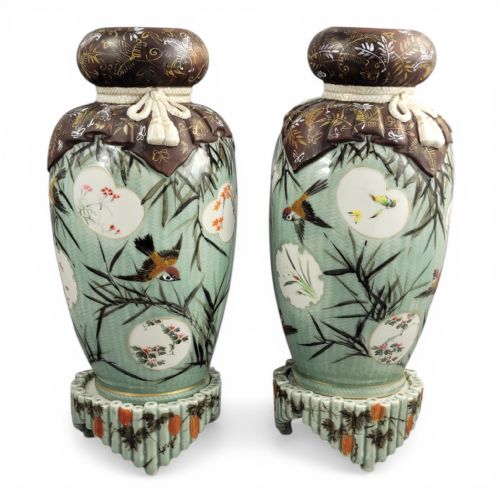


Green Porcelain Vase Pair
A green porcelain vase pair brings balanced symmetry and striking colour to a room, drawing the eye instantly through matching forms and rich glazes.
Green Porcelain Vase Pair
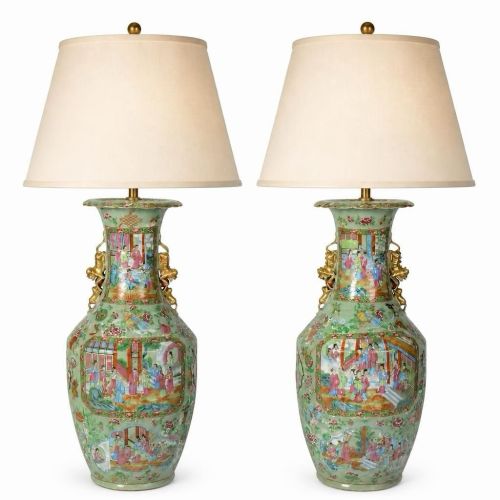
When searching for a green porcelain vase pair, you encounter matching sets created for symmetrical display, often adapted as table lamps or retained as decorative vessels. These pieces span the nineteenth century and the early twentieth century, crossing various origins from English factories to Chinese imperial and export workshops.
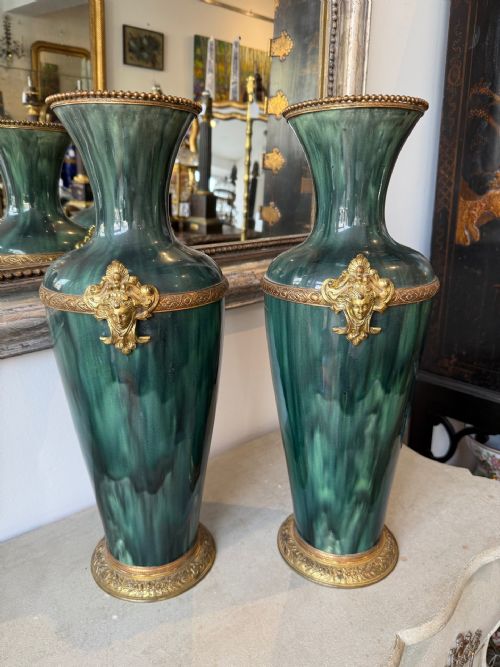
The selections on this page range from mottled green glazed earthenware and celadon shades to vibrant yellow and green ground Chinese baluster shapes. Alongside these, you find French faience and English manufactories producing porcelain, ceramic, and pottery pairs in distinct regional styles.
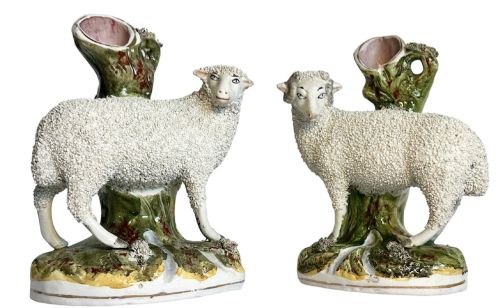
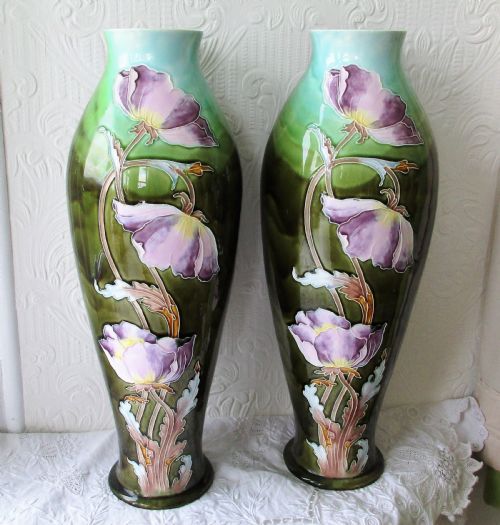
Many examples arrive with nineteenth-century or art nouveau aesthetic markers, featuring hand-painted enamel decoration or gilt bronze mounts. Whether configured as spill vases, lidded ewers, or globular vessels, each matched pair offers decorative harmony designed for mantelpieces and side tables.
How they were made
Potters shaped these vessels using clay bodies including porcelain, earthenware, and ironstone, before applying specialised mineral glazes such as celadon, tea dust, or mottled green enamel. Artisans utilised hand-painting techniques, gold leaf application, and pâte-sur-pâte methods to build surface detail and depth.
Many nineteenth-century pairs incorporated metalwork components, securing porcelain bodies within gilt bronze or ormolu mounts, or integrating brass fittings when adapted into lamps. Kiln firing temperatures determined the vitrification of the ceramic and the distinct tonal quality of the green glazes.
Listings feature porcelain, earthenware, and ironstone materials across nineteenth-century and early twentieth-century periods.
What varies in quality
The distinction between standard production and top-tier work rests on the precision of the hand-painting and the depth of the glaze. Master painters at factories like Royal Worcester or specialised Chinese kilns achieved finer brushwork and more harmonious colour registration on their porcelain surfaces.
The integrity of the matched pair dictates overall standard, where uniformity in size, glaze consistency, and firing results show intentional design. Secondary elements such as original gilt bronze mounts or matching porcelain stands elevate the execution of the piece.
Kato Sanhei·Royal Worcester·Flight Barr And Barr·Royal Dux Bohemia·Alexandra Porcelain Works Ernst Wahliss
The Green Porcelain Vase Pair Glossary
- Celadon
- A pale grey-green or sea-green translucent glaze originating in East Asia. It mimics the appearance of jade and relies on iron in the glaze formula interacting with kiln atmosphere.
- Baluster
- A vase shape with a rounded body that tapers toward the base and swells into a wider shoulder. This classical silhouette provides a stable, balanced form for display.
- Ormolu
- Gilt bronze ornamentation applied to decorative arts, particularly popular in French and English pieces. It frames the porcelain body with cast and chased metallic detail.
- Pâte-sur-pâte
- A ceramic technique where successive layers of liquid clay are built up on a contrasting body to create a low-relief cameo effect. This requires meticulous skill from the artisan.
- Famille rose
- A palette of Chinese porcelain enamels dominated by an opaque pink or rose colour introduced in the eighteenth century. It appears alongside green and other enamel hues on export wares.
Green Porcelain Vase Pair: Frequently Asked Questions
How were these vases used?
Most pairs served as decorative garnitures on mantelpieces or side tables, offering visual symmetry to a formal interior. Many examples were later converted into table lamps while retaining their original ceramic bodies.
Some specialised forms, such as spill vases or lidded ewers, held specific domestic functions before transitioning into purely ornamental objects.
How do I identify Chinese export pieces?
Chinese export pieces often feature families of enamel colours like famillle rose or famille verte, alongside traditional motifs associated with Qing dynasty production. Rose medallion patterns and celadon glazes also signal East Asian origin.
These works frequently display the characteristic weight and paste of nineteenth-century Chinese porcelain manufacture.
What is tea dust glaze?
Tea dust glaze is a crystalline ceramic finish that produces a mottled, speckled green and brown surface resembling powdered tea leaves. It results from specific iron crystal formations during high-temperature firing.
This subdued finish was prized for highlighting the pure form of globular and baluster vases without distracting enamel decoration.
How do I care for antique porcelain?
Keep antique porcelain out of direct sunlight to prevent fading on hand-painted enamel and gilt surfaces. Dust the pieces gently with a dry, soft cloth.
Avoid using liquid cleaners or soaking the ceramic, particularly on pieces with exposed earthenware bodies, metal mounts, or fabric wiring.