


Green Peridot Jewellery
Green peridot jewellery brings together bright olivine gemstones and yellow gold, spanning Victorian, Edwardian, and Art Nouveau designs.
Green Peridot Jewellery
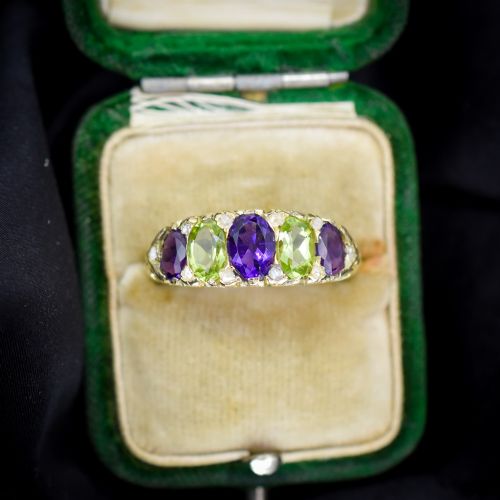
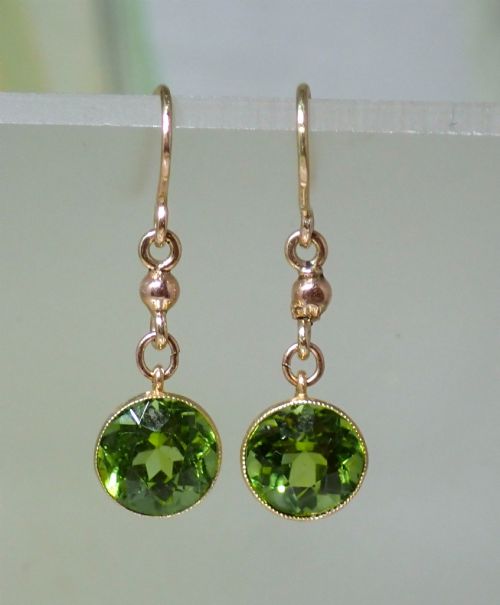
Green peridot jewellery encompasses pendants, necklaces, brooches, rings, drop earrings, and bracelets from the nineteenth and twentieth centuries. Buyers seeking these pieces most frequently encounter Edwardian and Victorian examples incorporating characteristic cluster and lavalier formats.
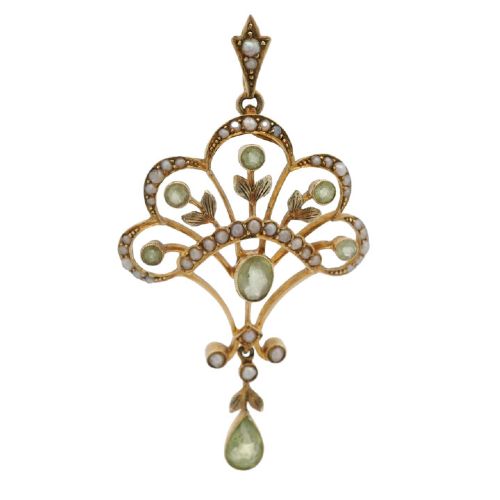
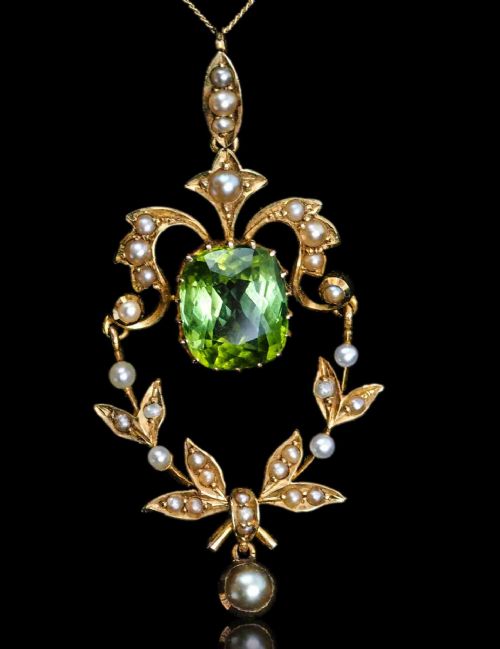
The selections span distinct historical movements including Art Nouveau, Arts and Crafts, and Late Victorian styles. Makers frequently paired the distinctive olive-green stones with seed pearls in yellow gold settings.
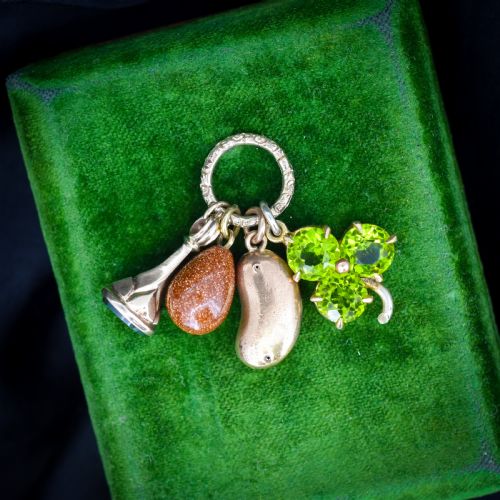
Pieces range from simple charms and cluster rings to elaborate drop pendants and Imperial Russian brooches. These items originate across the Victorian, Edwardian, and later periods up to the mid-twentieth century.
Materials and construction techniques
Goldsmiths utilised nine-carat, fourteen-carat, and fifteen-carat yellow gold, alongside silver, platinum, and occasionally diamond accents. Peridots take centre stage, frequently surrounded by delicate seed pearls or natural pearls set in floral and garland motifs.
Makers constructed elaborate pendant necklaces and lavaliers using openwork gold wirework and millegrain edges. Stones were secured in collet or claw settings designed to maximise light passing through the transparent green crystals.
Some lucky charms carry a hidden history inside engraved split rings.
Quality factors in antique pieces
Quality rests upon the depth of hue and crystal clarity within the peridot stones, alongside the intricacy of the gold mounting. Superior examples display balanced proportions between the central green gemstone and surrounding pearls or diamonds.
The refinement of the metalwork distinguishes finer items, particularly where delicate seed pearls are individually strung or secured without excess adhesive. Original boxes and documented provenance further elevate the standing of specific pieces.
G. Colani·Murrle Bennett
The Green Peridot Jewellery Glossary
- Peridot
- A transparent green gemstone belonging to the olivine group, prized in antique pieces for its distinctive lime or olive coloration.
- Seed pearl
- A very small natural or cultured pearl, frequently drilled and threaded onto tiny pins or wires to frame larger peridot stones.
- Lavalier
- A pendant necklace featuring a central drop stone suspended below a shorter decorative motif, popular during the Edwardian era.
- Collet setting
- A collar of metal that encircles the girdle of a gemstone to hold it securely within the jewellery mounting.
- Millegrain
- A decorative technique featuring a fine line of tiny raised metal beads along the edges of a setting.
Green Peridot Jewellery: Frequently Asked Questions
What periods are green peridot jewellery from?
These items predominantly date from the Victorian and Edwardian eras, encompassing the late nineteenth and early twentieth centuries. Additional examples extend into the nineteen-thirties and nineteen-fifties.
The styles reflect the artistic movements of their respective decades, ranging from ornate Victorian clusters to flowing Art Nouveau and Arts and Crafts designs.
How do I care for antique peridot jewellery?
Peridot is a relatively soft gemstone requiring gentle handling to avoid scratching or abrasion from harder materials. Cleaning should be done with warm soapy water and a soft cloth, avoiding harsh ultrasonic cleaners.
Store pieces individually in lined boxes or pouches to prevent stones from rubbing against other items in your collection.
What metals were used in these pieces?
Goldsmiths predominantly utilised yellow gold in nine-carat, fourteen-carat, and fifteen-carat purities for these mounts. Platinum and silver also appear, particularly in Edwardian and diamond-set configurations.
The warm tone of yellow gold complements the characteristic lime-green hue of the peridot stones.
How do I distinguish Edwardian from Victorian peridot items?
Victorian pieces often feature heavier gold work, closed-back settings in earlier examples, and robust cluster or brooch formations. Seed pearls and rich yellow gold are prominent hallmarks of this nineteenth-century output.
Edwardian items tend towards lighter, airier designs including platinum-topped elements, delicate garland motifs, and flowing lavalier necklaces that showcase a more ethereal aesthetic.