

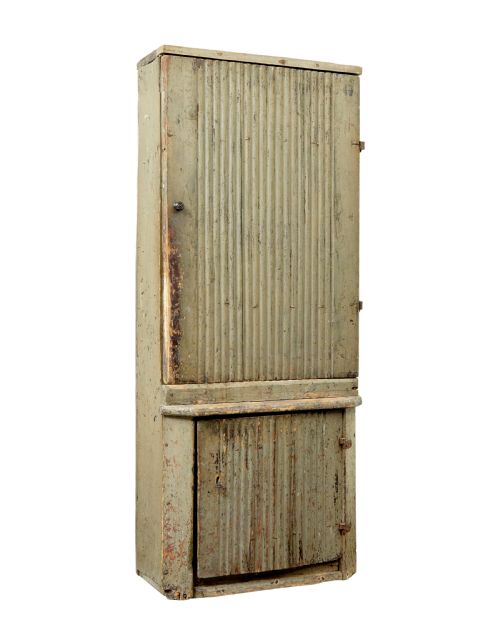
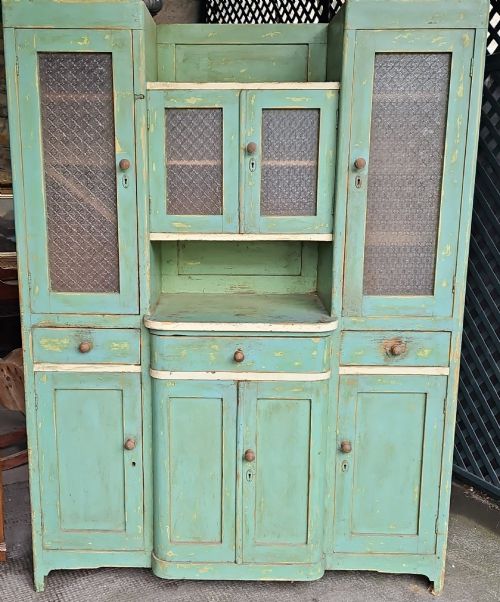


Green Painted Larder Cupboard
A green painted larder cupboard brings vernacular warmth and sturdy utility to a room, offering generous storage rooted in centuries of rural domestic life.
Green Painted Larder Cupboard
A green painted larder cupboard is a functional storage piece originating from rural domestic settings across Britain and Scandinavia. When searching for a green painted larder cupboard, a buyer encounters substantial timber furniture built for storing provisions and household goods.
The pieces listed on this page span the Georgian, Edwardian, and nineteenth-century periods, reflecting diverse regional vernaculars. English country, Scandinavian country, rustic farmhouse, and Irish country styles predominate among the available cabinets and dressers.
Most examples are constructed as tall storage cupboards or kitchen dressers, incorporating shelves, panelled doors, and occasional glass elements. These items range from housekeepers cupboards with simple two-door layouts to larger carved pine cupboards.
How they were made
Construction relies primarily on solid pine and timber, shaped by traditional woodworking techniques suited to heavy domestic use. Surfaces are finished with paint, often applied in later periods to refresh or alter the appearance of the wood.
Hardware components such as brass, iron, and metal provide functional hinges, latches, and pulls. Glazed sections incorporate textured glass to conceal contents while allowing light to pass through the cabinet doors.
Green Painted Larder Cupboard Retail Price Guide 2026
Typical asking prices for green painted larder cupboard among the pieces listed under this phrase on Sellingantiques today, from the lower quarter to the upper quarter. They describe what is for sale here now, not the wider market.
Design styles recorded across the inventory include English, Irish, and Scandinavian country traditions alongside Georgian forms.
What varies in quality
Quality in these pieces is dictated by the integrity of the original timber construction and the proportion of the form. Early examples from the eighteenth and early nineteenth centuries demonstrate finer joinery and more balanced proportions than later vernacular pieces.
The character of the surface finish plays a significant role, distinguishing between early original painted surfaces and later decorative coats. The execution of regional carving, particularly on Scandinavian and English country pieces, sets exceptional examples apart from simpler utilitarian storage.
The Green Painted Larder Cupboard Glossary
- Housekeeper's cupboard
- A large storage cabinet traditionally used in substantial homes for linen and dry goods. These tall cupboards feature multiple internal shelves and robust panelled doors.
- Pine
- A softwood commonly utilised in British and Scandinavian country furniture for its accessibility and workability. It forms the structural carcass of nearly all pieces in this category.
- Textured glass
- Patterned glass panes fitted into cabinet doors to obscure the interior. This material appears in various nineteenth-century kitchen cabinets.
- Vernacular furniture
- Domestic pieces made by local craftspeople using regional materials and traditional designs. These objects prioritise practical utility over academic architectural styles.
Green Painted Larder Cupboard: Frequently Asked Questions
What is a green painted larder cupboard?
A green painted larder cupboard is a functional wooden storage cabinet designed for food and household provisions in traditional kitchens. These pieces utilise sturdy pine construction and feature painted finishes applied in various regional styles.
Examples range from Georgian housekeeper's cupboards to Edwardian kitchen cabinets. Their practical layouts typically incorporate multiple shelves and doors for versatile domestic storage.
How do I date a painted cupboard?
Dating a painted cupboard involves examining the underlying timber construction, joinery methods, and hardware. Pieces from the eighteenth century display hand-cut joints and simpler iron fittings, whereas Edwardian and later nineteenth-century examples often incorporate machine-sawn elements.
The history of the paint surface also aids dating, as many vernacular pieces received subsequent coats of green paint over earlier finishes during their working lives.
Where were these cupboards made?
These cupboards originate from various rural regions across England, Ireland, and Scandinavia. English country and West Country workshops produced robust dressers and food cupboards for local farmhouses and large homes.
Scandinavian and Danish makers contributed larger carved pine cupboards reflecting distinct northern aesthetic traditions. Each regional origin imparts specific characteristics to the proportions and decorative details of the furniture.
How do I use one in a modern home?
A green painted larder cupboard functions effectively as a freestanding pantry, kitchen storage unit, or linen cabinet in contemporary interiors. Their generous internal shelving accommodates tableware, provisions, or household items while adding traditional character to a room.
Placement works well in kitchens, dining spaces, or hallways where vertical timber storage is required. The painted green exterior provides a natural anchor for colour schemes in both rustic and traditional spaces.