



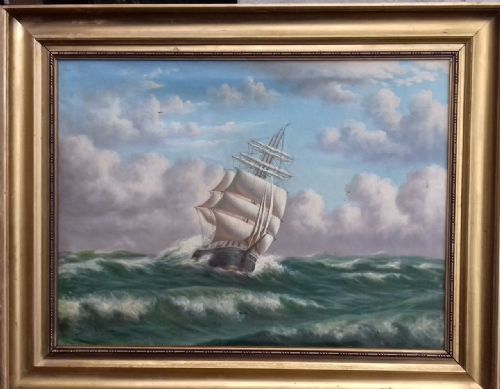


Green Ocean Seascape Painting
A green ocean seascape painting brings the movement, salt, and restless power of the open water straight into a room.
Green Ocean Seascape Painting
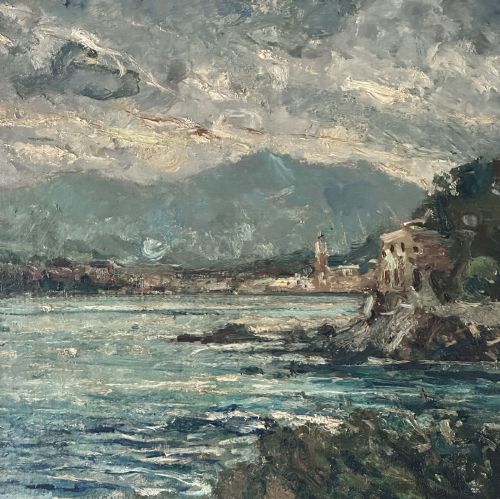
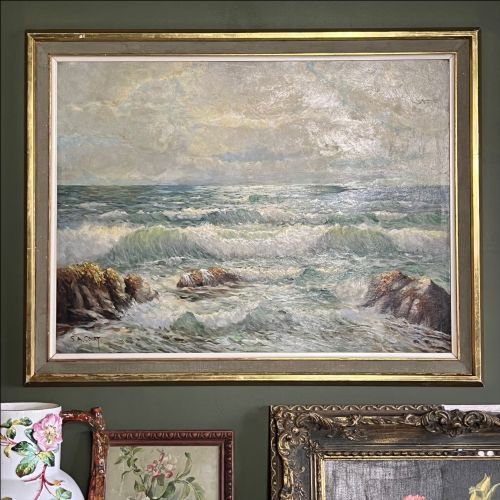
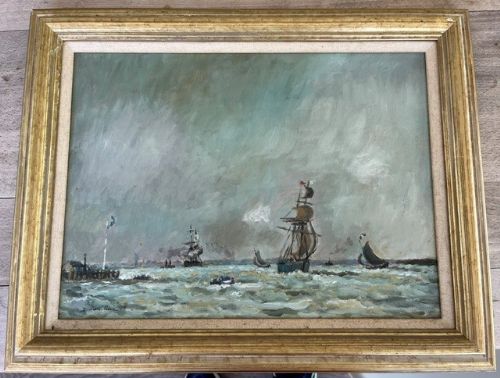
These works capture coastal views, rocky shores, and open marine expanses defined by striking green and turquoise water tones. A green ocean seascape painting brings together land, sky, and sea across various periods from the nineteenth century through the mid-twentieth century.
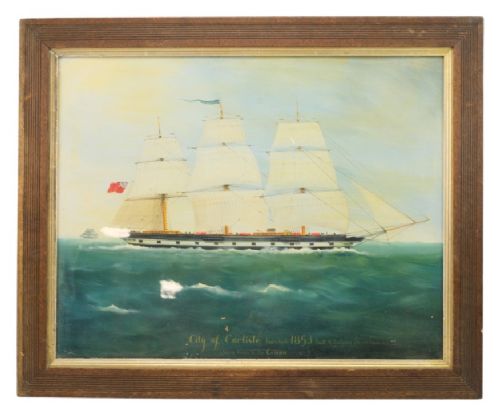
Buyers will most frequently encounter oil paintings on canvas or board, alongside occasional watercolours on paper. The pieces range from nineteenth-century Dutch and British maritime traditions to mid-century French and modern British interpretations.
How they were made
Artists built these scenes using oil paint applied to canvas or wood board, frequently employing thick impasto strokes to render the churning texture of waves. Watercolours on paper appear in looser, more fluid applications that capture the shifting light of coastal skies.
Many works incorporate original gilt frames finished with gold leaf, which complement the rich marine pigments. En plein air techniques allowed painters to work directly by the coast, recording the immediate atmosphere of the sea.
Green Ocean Seascape Painting Retail Price Guide 2026
Typical asking prices for green ocean seascape painting among the pieces listed under this phrase on Sellingantiques today, from the lower quarter to the upper quarter. They describe what is for sale here now, not the wider market.
Several artists clearly stood too close to the spray, leaving texture so thick you can practically taste the salt air.
What varies in quality
Quality rests in the artist's handling of light, atmosphere, and the dynamic movement of water rather than the mere subject matter. Confident brushwork and a convincing sense of depth separate accomplished compositions from rigid or flat depictions.
The integrity of the original surface, the harmony of the palette, and the presence of period framing all influence the standing of an individual work.
Sidney A. Court·Henry Barlow Carter·Marie-Edouard Adam·V Dybdal·Donald McIntyre·Charles Martin Powell
The Green Ocean Seascape Painting Glossary
- Impasto
- Paint laid on an area of a surface in thick layers, usually thick enough that the brush or painting-knife strokes are visible. This technique adds tactile dimension to churning waves and rocky shores.
- En plein air
- The act of painting outdoors to capture the direct effects of light and weather upon the subject. It defines many coastal works painted directly beside the sea.
- Gilt
- Covered thinly with gold leaf or gold paint. This finish enhances the outer borders of nineteenth-century marine canvases.
- Board
- A rigid flat piece of material used as a support for painting. Mid-century marine works frequently utilise this sturdy foundation.
- Watercolour
- Artists' paint made of colour suspended in a water-soluble vehicle. It creates translucent washes suited to coastal skies and distant horizons.
Green Ocean Seascape Painting: Frequently Asked Questions
What periods do these paintings cover?
The selection spans from the mid-nineteenth century through to the mid-twentieth century. Works range from Victorian marine art to mid-century impressionist coastal scenes.
Buyers will find nineteenth-century Dutch and British pieces alongside later Welsh and French interpretations.
How should I hang a marine painting?
Choose a wall with balanced light that avoids direct, harsh glare on the varnished surface of oil paintings. Ensure the weight of the frame is supported securely.
Pairing the piece with neutral wall colours allows the rich green and blue ocean tones to stand out in the room.
Are these works painted outdoors?
Many mid-century and impressionist pieces were created en plein air directly on location by the coast. This method captured the immediate weather and movement of the sea.
Studio paintings from the nineteenth century relied on preliminary sketches and watercolours made on site.
What supports were used for these artworks?
Artists painted primarily on canvas stretched over wooden frames, or directly onto wooden and composition boards. Watercolours were executed on paper supports.
Each material responds differently to atmospheric changes and requires appropriate environmental care.
How do I identify a nineteenth-century piece?
Look for traditional maritime subjects such as shipping vessels, coastal trade, and dramatic coastal weather. Details like rigging, period attire, and historic vessel types offer strong chronological clues.
Original gilt frames and canvas stamps also help establish the age of the piece.