

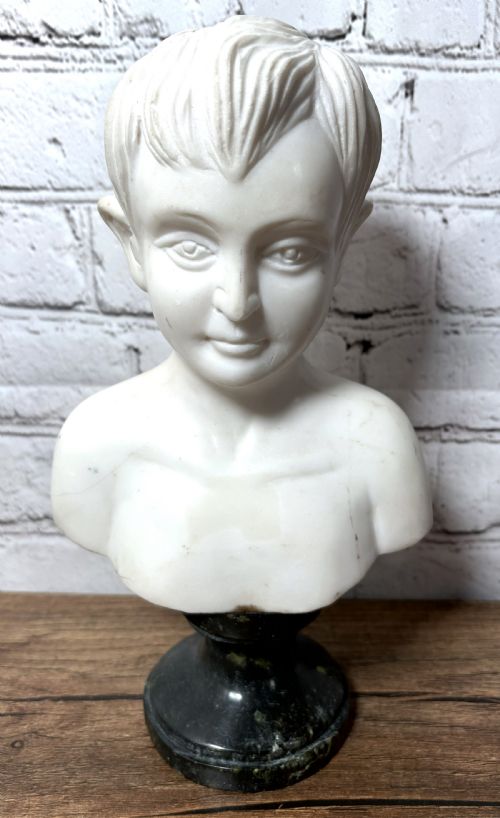


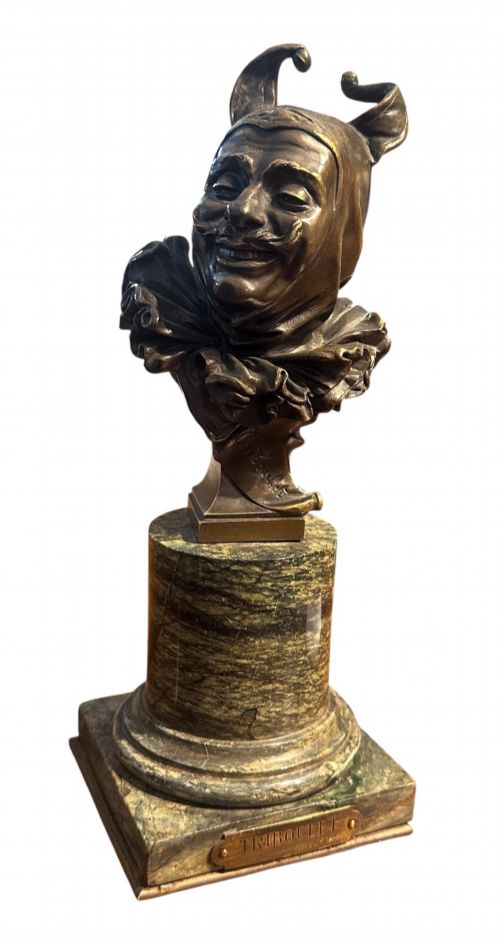


Green Marble Bust
A green marble bust brings classical presence into a room, combining sculpted detail with the distinctive, variegated tones of stone.
Green Marble Bust
The materials span from Carrara marble and alabaster to cast bronze and spelter, frequently paired with variegated green marble or Vert de Mer sections. These pieces emerge from periods including the Victorian era, Art Nouveau, and the mid twentieth century.
Forms vary from portrait studies of young figures and classical deities to inkstands and decorative pedestals. Collectors find both smaller cabinet pieces and larger architectural columns designed to elevate sculpture within an interior.
Materials and construction
Sculptors shaped portrait subjects using traditional materials such as white marble, alabaster, bronze, gilt bronze, and spelter. These figures were then united with turned or polished bases formed from dense green stones like Vert de Mer or variegated Victorian marble.
Foundries and studios employed casting techniques for metal elements alongside hand-chiselling for stone components. Ornate mounts in ormolu or cast bronze frequently secured the sculptural bust to its heavier green marble support.
Even Napoleon makes an appearance in stone, squeezed into an inkwell beneath a green marble gaze.
Judging quality and execution
The selection and turning of the green marble base also dictate overall quality, with richer natural veining and harmonious colouration adding visual weight to the composition. Artisanal precision in mounting the bronze or ormolu elements securely to the stone marks the work of skilled nineteenth century makers.
Willems
The Green Marble Bust Glossary
- Vert de Mer Marble
- A dark green ornamental limestone featuring pale calcite veins, frequently utilised for classical bases and architectural columns. This material provides a strong visual contrast to white marble or bronze portraits.
- Grand Tour
- A nineteenth century travel tradition where wealthy collectors acquired classical souvenirs, including bronze and marble busts of historical figures. These pieces reflect an intense interest in ancient Greek and Roman art.
- Ormolu
- Gilded bronze mounts and decorative elements applied to furniture and sculpture bases. The technique involves fusing a mercury and gold amalgam to a bronze substrate.
- Spelter
- A zinc alloy commonly cast as an economical alternative to bronze during the nineteenth and early twentieth centuries. It was frequently painted or electroplated to simulate bronze finishes on figurative sculptures.
- Neoclassical
- An artistic movement reviving the styles of ancient Greece and Rome, prevalent in sculpture and architecture throughout the nineteenth century. Works in this style emphasise proportion, restraint, and classical subject matter.
Green Marble Bust: Frequently Asked Questions
What periods do these busts come from?
The listings encompass nineteenth century works, Victorian pieces, and examples from the early decades of the twentieth century, including Art Nouveau interpretations and Grand Tour souvenirs.
These dates reflect the periods when classical revival aesthetics and decorative stone mounting were particularly prominent among European sculptors and foundries.
How were green marble bases used?
Green marble bases served to anchor and elevate portrait busts, adding structural presence and rich colour contrast to the white marble, alabaster, or bronze figures above.
In some instances, the green stone forms an integral column or pedestal designed to display sculptural works within a nineteenth century interior.
Are these pieces solid marble?
Many portrait subjects are carved from solid materials like Carrara marble or alabaster, while others are cast in bronze, gilt bronze, or spelter mounted onto stone bases.
The green marble component typically refers to the pedestal, column, or support block rather than the entire sculptural assembly.