




Green Mantel Clock
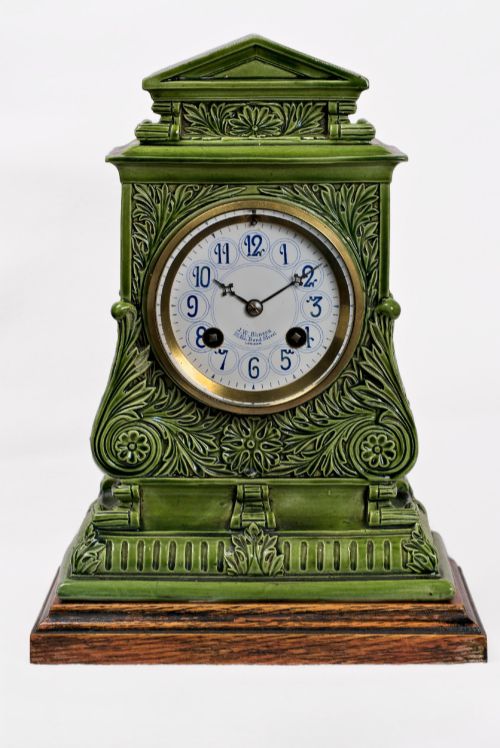
A green mantel clock brings rich colour and steady rhythm to a room, ranging from sleek geometric Art Deco glass to ornate nineteenth-century French marble.
Green Mantel Clock
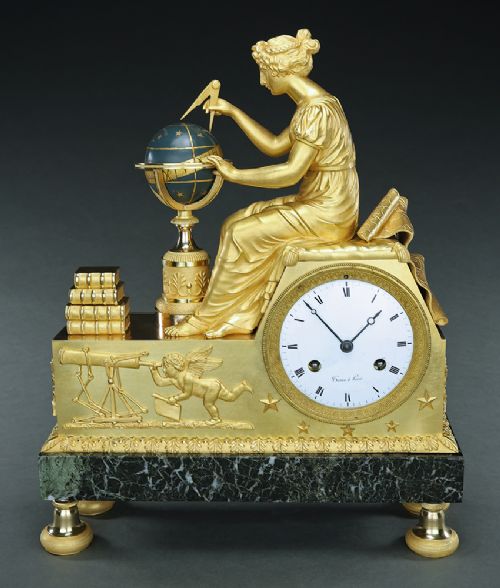
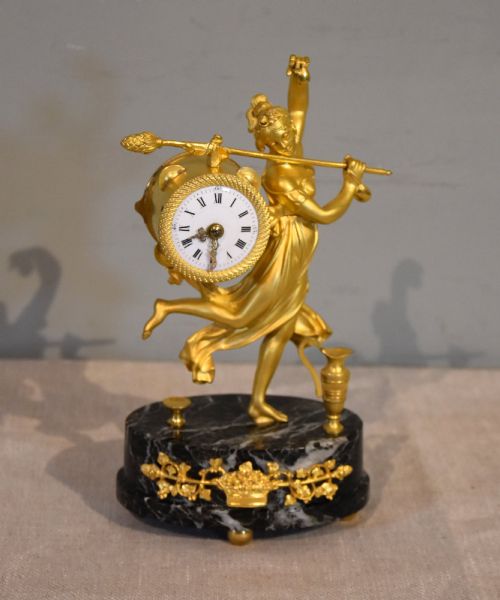
When you search for a green mantel clock, you encounter timepieces shaped by distinct decorative movements across two centuries. The selection divides broadly between nineteenth-century natural stone cases, such as green marble and onyx, and twentieth-century designs rendered in coloured glass, chrome, and lacquer.
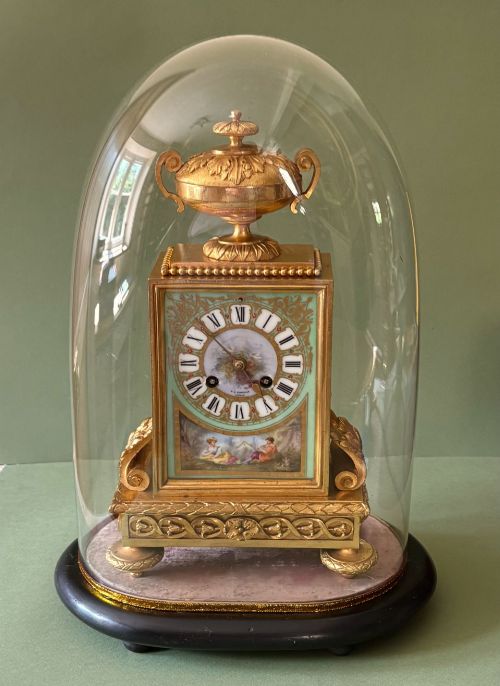
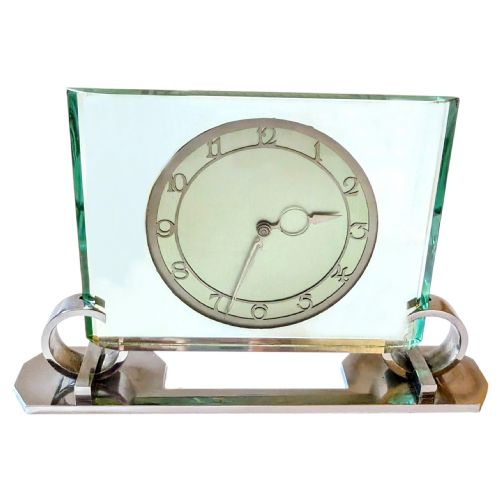
The nineteenth-century examples often emerge in French forms, paired with ormolu mounts, bronze figures, or porcelain panels, alongside substantial Victorian slate and marble bodies. By the nineteen-thirties, the style shifts towards Art Deco and Modernist geometry, utilising opaline uranium glass, chromium plating, and champlevé enamel to achieve vibrant hues.
How they were made
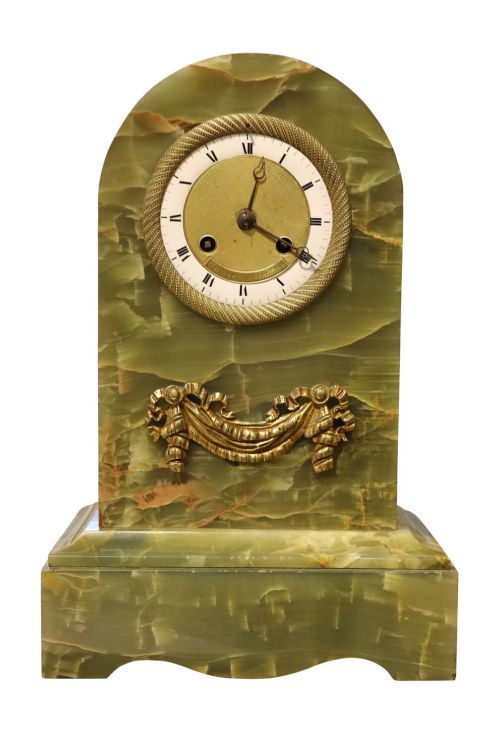
The construction relies on contrasting hard minerals with lustrous metal accents. Heavy blocks of green marble and onyx are shaped and polished into architectural cases, frequently fitted with gilt bronze, brass, or ormolu mounts.
Twentieth-century pieces introduce moulded glass and chrome alongside traditional timber frames finished with green and gold lacquer or Chinoiserie decoration. Enamel dials and brass movements complete the internal mechanics of these clocks.
Green Mantel Clock Retail Price Guide 2026
Typical asking prices for green mantel clock among the pieces listed under this phrase on Sellingantiques today, from the lower quarter to the upper quarter. They describe what is for sale here now, not the wider market.
Materials recorded across the selection include brass, glass, enamel, marble, ormolu, green onyx, and copper.
What varies in quality
The distinction rests on the crispness of the casting in the metal mounts and the depth of polish across the stone bodies. Finer nineteenth-century pieces exhibit detailed ormolu chasing and integrated bronze sculptures, whereas simpler versions rely on plain polished slate or marble.
In later glass and chrome pieces, quality shows in the weight of the material and the precision of the modernist lines. Maker attribution, such as signed movements or known foundry marks, elevates certain items above standard production models.
Uriano·Charles à Orléans·Smiths Clockmakers·Reiche·Winterhalder and Hofmeier·Elliott·Mappin and Webb·DEP·Auguste Moreau·Chater and Son·Ferdinand Priess·Victor Paillard·GEC
The Green Mantel Clock Glossary
- Ormolu
- Gilded bronze used for decorative mounts on nineteenth-century clock cases. It provides a bright golden contrast against dark green marble.
- Clock garniture
- A matching set comprising a central clock flanked by matching decorative objects such as urns, vases, or candelabra. These sets create a symmetrical arrangement on a mantelpiece.
- Champlevé
- An enamelling technique where troughs are dug into a metal surface and filled with vitreous enamel. This method creates colourful decorative patterns on clock dials and bezels.
- Single fusee
- A mechanical movement using a conical pulley and chain to equalise the pull of the mainspring as it unwinds. It ensures more even timekeeping throughout the running cycle.
- Boulle
- A form of marquetry using brass and tortoiseshell inlaid into a dark ground. It appears on elaborate wooden clock cases.
Green Mantel Clock: Frequently Asked Questions
What periods do green mantel clocks come from?
The pieces span the nineteenth century through to the nineteen-thirties. You find Victorian slate and marble designs alongside earlier French ormolu examples and later Art Deco glass models.
Materials range from natural onyx and marble to pressed uranium glass and lacquered wood. Each era brings distinct architectural forms to the mantelpiece.
How do I identify a French nineteenth-century clock?
Look for heavy stone bodies in green marble or onyx accompanied by cast ormolu mounts and classical figures. These pieces often feature intricate bronze work and porcelain dial plaques.
They frequently appear as part of larger garniture sets with matching side ornaments. The movement backplates often bear maker signatures and serial numbers.
What is an Art Deco green mantel clock like?
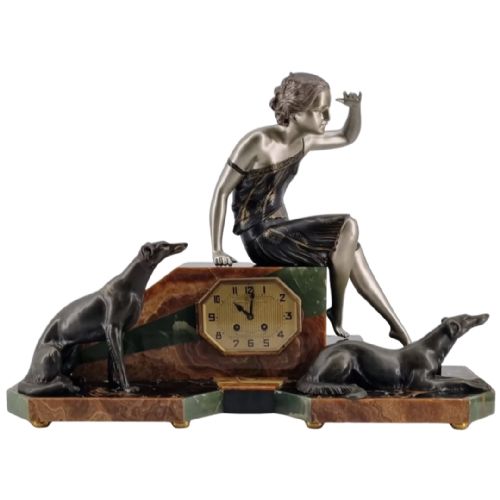
Art Deco examples from the nineteen-thirties favour streamlined modernist shapes using green glass, chrome, and enamel. They often incorporate geometric numerals and contrasting metallic details.
Some feature figural sculptures integrated into the design, such as dancers or animals. Others rely purely on the vivid colour of opaline glass and simple chrome bezels.
How do I care for a marble and bronze clock?
Keep the stone surfaces clean with a dry or lightly damp microfibre cloth without using harsh chemical cleaners. Protect the polished finish of the marble and the gilt bronze mounts from direct sunlight.
Mechanical movements require professional servicing every few years to keep the gear train functioning properly. Avoid moving the clock without securing the pendulum first.