



Green Glass Silver Jewellery
Green glass silver jewellery brings together bright colour and precious metal, offering striking antique wearable pieces with a distinct period character.
Green Glass Silver Jewellery
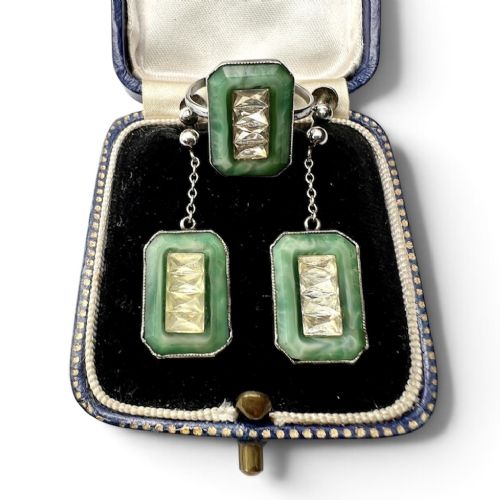
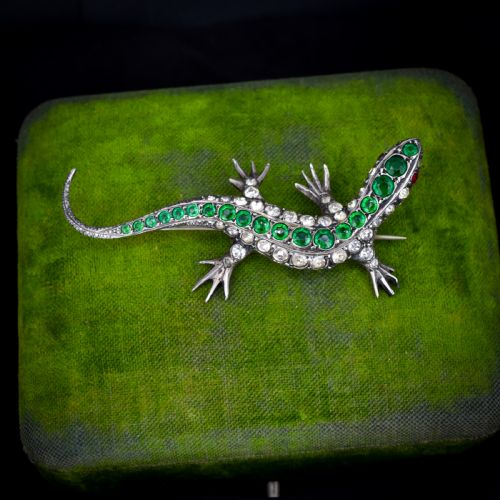
Green glass silver jewellery encompasses brooches, rings, earrings, pendants, necklaces, bracelets, and complete jewellery sets spanning several distinct historical periods. When searching for green glass silver jewellery, buyers encounter items fashioned in styles ranging from Georgian and Victorian to Edwardian and Art Deco. These pieces frequently employ green paste or emerald paste stones set into silver mountings, occasionally augmented with gold or enamel.
The selection frequently highlights pieces from the nineteenth and twentieth centuries, including Victorian, Edwardian, and nineteen-thirties creations. Buyers are likely to meet brooches and earrings alongside pendants and rings, demonstrating the widespread popularity of green glass across multiple eras. Austro-Hungarian designs and modernist works by makers such as Jakob Bengel further broaden the scope of available forms.
Materials and construction
Makers utilised sterling silver and silver plating to construct the mountings for these ornaments, frequently combining the metal with glass, glass paste, or specific green paste stones. Certain items incorporate nine-carat gold alongside silver, creating varied colour contrasts within a single piece. Enamel and pearls also appear in the material mix, particularly in Austro-Hungarian and Arts and Crafts examples.
Stones were cut and secured into settings designed to catch the light, echoing the appearance of genuine gemstones through meticulous glass paste manipulation. Metalwork techniques varied from intricate floral drop configurations to geometric modernist frames characteristic of the nineteen-thirties. Chromium and silver plating emerged in later twentieth-century pieces, reflecting shifts in manufacturing methods.
Green Glass Silver Jewellery Retail Price Guide 2026
Typical asking prices for green glass silver jewellery among the pieces listed under this phrase on Sellingantiques today, from the lower quarter to the upper quarter. They describe what is for sale here now, not the wider market.
Evaluating quality and craftsmanship
The refinement of the metalwork and the precision of the stone setting dictate the distinction between standard and superior examples. Finer pieces demonstrate meticulous hand-assembly, secure prong or bezel settings, and well-preserved silver patination that enhances the overall composition. Lesser examples might show simpler construction methods or less sophisticated integration of the glass elements within the silver frame.
The character of the green glass or paste itself plays a significant role in establishing the visual merit of an item. Superior stones exhibit depth of colour and careful faceting, such as old-cut paste, which mimics the brilliance of mined gems far more convincingly than flat or dull alternatives. The coherence of the design, whether an elaborate floral Victorian lavalier or a clean-lined Art Deco creation, ultimately determines the success of the piece.
Jakob Bengel
The Green Glass Silver Jewellery Glossary
- Paste
- A type of cut glass used to imitate gemstones in antique jewellery. It was hand-polished and sometimes backed with foil to enhance its brilliance and colour.
- Lavalier
- A pendant necklace featuring a central dangling ornament, popular during the Edwardian period. These often incorporate floral motifs and delicate silver chains.
- Cluster ring
- A ring design featuring a central stone surrounded by a tight arrangement of smaller stones. This configuration maximises the visual impact of the coloured glass.
- Old-cut paste
- Hand-faceted glass stones shaped with high crowns and small tables to emulate early diamond and gemstone cutting styles. This technique produces a softer, warmer sparkle than modern machine cutting.
- Austro-Hungarian style
- Design characteristics originating from the dual monarchy, known for ornate silverwork, colourful paste stones, and pearl accents. These pieces often draw inspiration from Renaissance revival motifs.
Green Glass Silver Jewellery: Frequently Asked Questions
What periods do these pieces span?
The selection covers items from the Georgian and Victorian eras, progressing through Edwardian designs to the nineteen-thirties. Each period brings distinct aesthetic choices, from ornate floral motifs to geometric modernist lines.
Buyers will also encounter pieces influenced by Arts and Crafts ideals and Austro-Hungarian traditions, showing the enduring appeal of green glass across different decades and workshops.
How do I care for antique silver jewellery?
Silver naturally tarnishes over time when exposed to the air, which many collectors prefer to leave undisturbed as a mark of age. Gentle cleaning with a soft cloth helps maintain the metal without harming delicate glass paste stones.
Harsh chemical dips should be avoided, particularly with paste jewellery, as liquids can seep behind the stones and ruin the foil backings that give them their colour and depth.
What is the difference between glass and paste?
Paste is a heavy, high-lead glass that was specifically formulated to be cut and polished like a precious gemstone. While ordinary glass might be cast or moulded simply, paste stones receive individual facet cutting by hand.
This careful shaping allows paste to capture and refract light in a manner that closely mimics genuine emeralds or diamonds, distinguishing it from standard decorative glass.
How were these items worn originally?
Brooches and lavalier pendants were prominent accessories in the Victorian and Edwardian wardrobes, often pinned to bodices or suspended from long chains. Rings and bracelets provided everyday adornment, while matched jewellery sets offered coordinated elegance for formal occasions.
Many of these ornaments transition easily into modern wardrobes, serving as striking focal points when worn against contemporary clothing.