


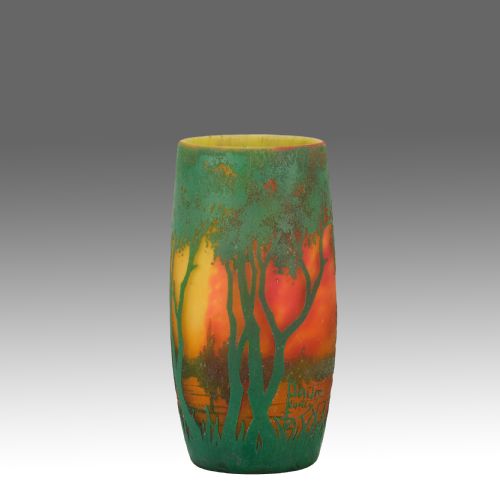


Green Glass Decorative Vase
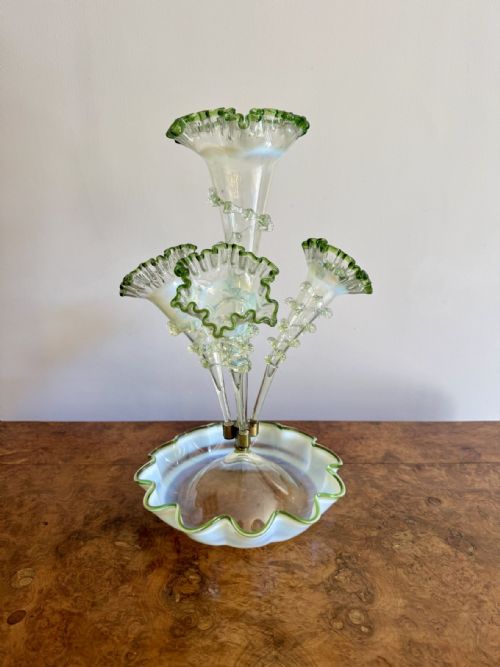
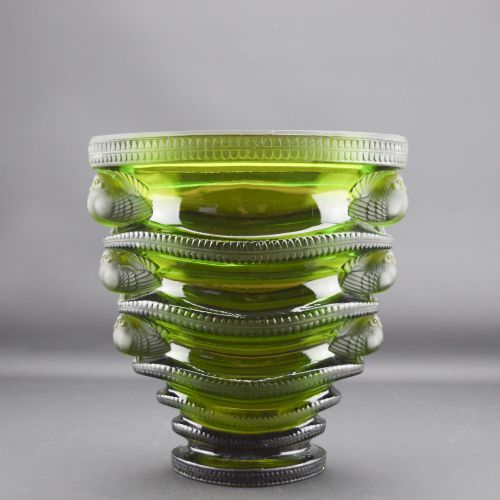
These green glass decorative vase examples bring rich colour and varied silhouettes to a room, spanning Victorian production through to Art Deco modernism.
Green Glass Decorative Vase
A green glass decorative vase brings vibrant colour and distinct form to an interior, drawing the eye with its translucent or opaque tones. When searching for a green glass decorative vase, a buyer encounters pieces ranging from nineteenth-century mantel lustres to twentieth-century art glass.
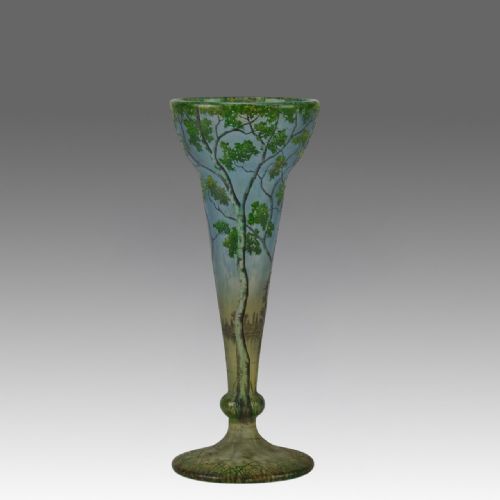
The selections available here lean heavily towards early twentieth-century production, incorporating French art glass and English crystal alongside Victorian mantel lustres. Forms vary from simple baluster shapes to complex cameo glass landscapes and optically blown vessels.
Makers and makers' houses from the Victorian period up to the nineteen-thirties feature prominently, showing how diverse green glass manufacturing became over a century of design. These pieces serve as standalone display objects or functional vessels for floral arrangements.
What varies in quality
The depth and consistency of the green hue dictate much of the visual success of a piece, alongside the clarity and weight of the glass itself. Superior examples display deliberate control over colour saturation, whether in rich emerald tones or subtle olive shades.
Execution of surface decoration separates standard production from exceptional work, particularly in cameo carving, enamel painting, and acid-etching. Crisp lines in botanical or landscape motifs and balanced proportions across pairs elevate the standing of a vessel.
Listings feature periods from the nineteenth century through the nineteen-thirties, showing glass, cameo glass, and enamel materials.
Rene Lalique·Daum Freres·Emile Galle·James Powell·Monart Glass·Baccarat·Stuart England
The Green Glass Decorative Vase Glossary
- Cameo Glass
- Glass vessels created with multiple layers of contrasting colours, where portions of the exterior layers are carved or acid-etched away to form raised designs. This demanding technique creates striking relief patterns often seen in nineteenth and twentieth-century art glass.
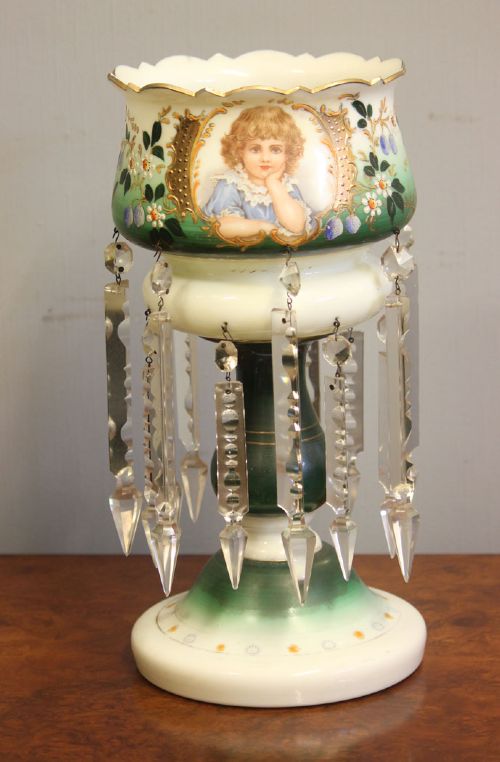
- Mantel Lustre
- A decorative glass or porcelain vase fitted with hanging crystal prisms around the rim, designed to sit on a fireplace mantel. These pieces reflect ambient candlelight and daylight through their dangling pendants.
- Acid-Etched Glass
- Glass treated with acid to eat away the surface, producing frosted textures or intricate low-relief patterns. This method allowed makers to achieve matte finishes and detailed pictorial scenes without hand-carving.
- Optically Blown
- A glassblowing technique where molten metal is inflated inside a patterned mould before being expanded to its final size. This process produces uniform ribbed or fluted optical effects within the body of the vase.
- Baluster Vase
- A vessel with a rounded body that tapers towards a narrow neck, resembling the shape of an architectural baluster. The silhouette provides stability while offering a broad canvas for surface decoration.
Green Glass Decorative Vase: Frequently Asked Questions
How do I date a green glass vase?
Dating relies on stylistic markers such as Art Nouveau floral motifs or Art Deco geometric lines, alongside manufacturing signatures and pontil marks on the base.
Heavier lead crystal and Victorian mantel lustres generally indicate nineteenth-century origins, while cameo carving and specific acid-etching techniques point towards the early twentieth century.
Are mantel lustres functional vases?
Mantel lustres are primarily decorative mantel ornaments rather than traditional vessels for holding water and flowers. Their hanging crystal prisms and open rims make them unsuitable for conventional floral arrangements.
Historically, they served to catch and reflect light in formal rooms alongside clocks and garniture sets.
What is cameo glass?
Cameo glass is formed by fusing layers of different coloured glass together and then removing parts of the outer layer to expose the contrasting colour beneath. This creates a raised, opaque design against a translucent or solid background.
The process requires immense skill from the glassmaker and carver to achieve clean edges and varied translucency.
How should I clean antique green glass?
Clean antique green glass gently using lukewarm water and mild dish soap with a soft cloth. Avoid harsh chemicals, abrasive sponges, and sudden temperature changes that can crack fragile historic glass.
If the piece has painted enamel, gold leaf, or delicate prisms, keep those areas dry and dust them with a soft brush.