






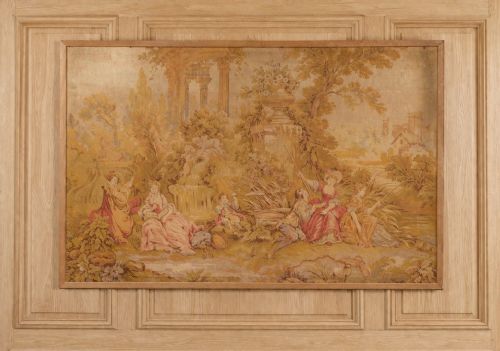


Green French Woven Tapestry
A green french woven tapestry brings centuries of textile artistry into a room, offering rich verdure scenes and pastoral views woven by skilled hands.
Green French Woven Tapestry
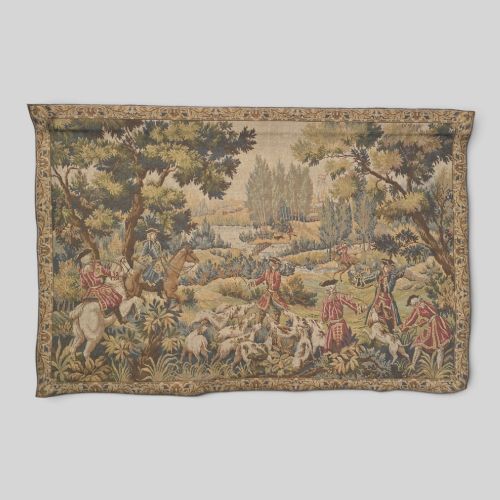
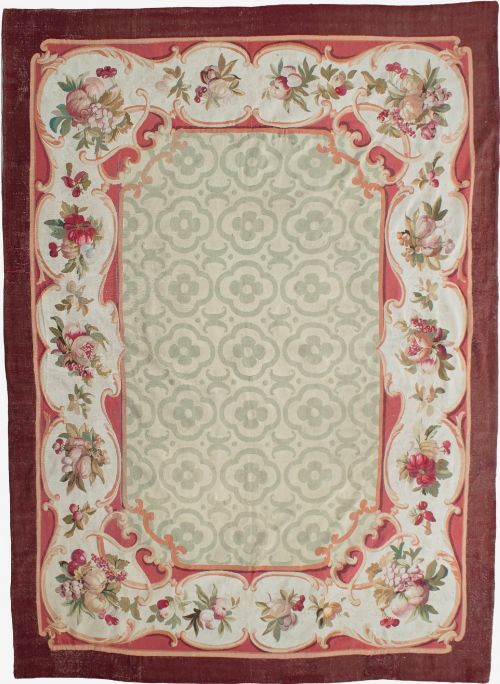
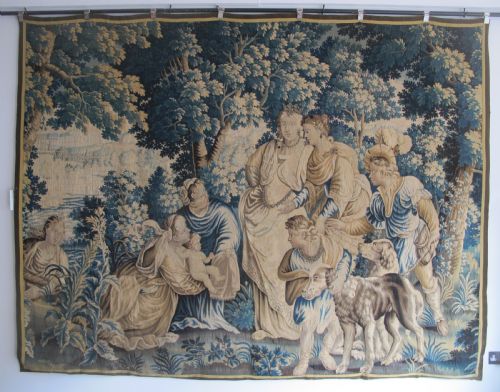
When you search for a green french woven tapestry, you encounter large wall hangings, framed panels, carpets, and cushions originating from French workshops. The selection spans several centuries, reaching from the late 17th century through the 18th and 19th centuries up to the early 20th century.
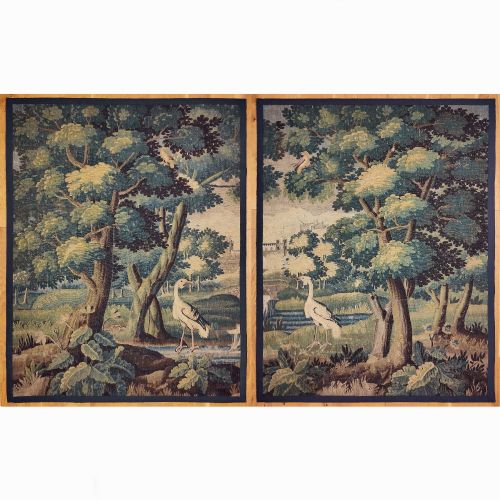
You are most likely to meet verdure compositions dominated by foliage, alongside pastoral landscapes and occasional biblical narratives. These pieces often carry the Aubusson designation, reflecting a long tradition of weaving in central France.
Formats range from monumental wall tapestries measuring several metres across down to narrower long panels and smaller decorative cushions. Each piece transforms a wall or floor through woven imagery rather than painted colour.
How they were made
Weavers constructed these textiles using combinations of wool, silk, cotton, and linen fibres on large looms. Silk threads provided highlights and luminous detail, while sturdy wool and linen formed the durable foundation of each hanging.
Certain panels incorporated wood frames and pasementerie trim to finish the edges and aid mounting. The integration of different fibre types allowed makers to achieve varied textures within foliage, tree trunks, and distant skies.
Green French Woven Tapestry Retail Price Guide 2026
Typical asking prices for green french woven tapestry among the pieces listed under this phrase on Sellingantiques today, from the lower quarter to the upper quarter. They describe what is for sale here now, not the wider market.
A verdure tapestry lets you walk through a lush forest every time you enter the room, minus the muddy boots.
What varies in quality
The density of the weave and the complexity of the colour palette determine the fineness of a tapestry. Verdure scenes with intricate leaf shading and varied botanical detail require greater skill than simpler compositions.
The survival of the original fibres and the integrity of the textile structure dictate the overall standard. Pieces that retain their subtle green tones and structural stability without extensive modern intervention stand higher in the range.
The Green French Woven Tapestry Glossary
- Verdure
- A tapestry design featuring a heavy composition of plants, trees, foliage, and often birds or animals. These landscape scenes rely heavily on greens and earthy tones.
- Aubusson
- A town in central France famous for its carpet and tapestry weaving industry since the 17th century. Pieces bearing this attribution follow established regional traditions.
- Pasementerie
- Elaborate trimmings, tassels, or borders applied to textile edges. Such decorative elements completed the presentation of wall hangings and cushions.
- Needlework
- Hand-stitched textile work distinct from loom weaving. Examples often date to the 18th century and share similar pastoral imagery.
Green French Woven Tapestry: Frequently Asked Questions
How do I hang a large tapestry?
Large wall hangings require even weight distribution across the top edge. A concealed wooden batten or sleeve stitched to the reverse allows the textile to hang flat without pulling individual fibres.
Avoid direct nails through the fabric, as this damages the wool and linen structure over time. Professional framing behind glass suits smaller framed panels.
What is a verdure tapestry?
A verdure tapestry depicts a landscape dominated by trees, leaves, plants, and woodlands. These pieces often feature birds or distant chateaus nestled among heavy foliage.
The colour scheme relies predominantly on greens, browns, and ochres, making them well-suited for traditional interiors.
How do I date an old tapestry?
Dating relies on stylistic clues, materials, and weaving techniques visible in the border and central field. 17th-century verdure pieces often feature denser, darker foliage and specific border motifs.
18th-century examples introduce lighter pastoral scenes, while 19th-century revivals imitate these earlier styles using mechanised or updated hand-weaving methods.