

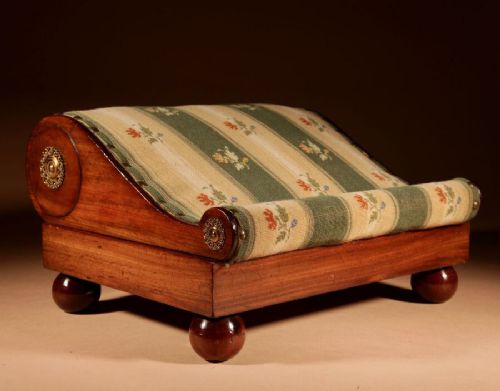


Green Floral Stool
These green floral stool examples bring tactile period comfort to a room, offering low-slung seating and foot support upholstered in classic botanical textile patterns.
Green Floral Stool
A green floral stool takes several forms across the inventory, ranging from compact footstools and piano stools to substantial ottomans and window seats. These pieces serve practical functions for resting feet or sitting at a keyboard while introducing botanical textile patterns into a interior.
The pieces appearing on this page span the Victorian, Regency, and 1920 periods alongside nineteenth-century examples. Common silhouettes include waisted ottomans, carved wood frames, and long footstools originating from various European and British workshops.
Buyers encounter diverse styles including French Rococo Revival, Biedermeier, and Chippendale style alongside simple nineteenth-century designs. The unifying element remains the low frame paired with upholstered seating surfaces featuring botanical needlework or fabric.
How they were made
Frames rely heavily on traditional timbers such as mahogany, walnut, rosewood, and painted wood, often shaped with carved details or brass mounts. Woodworkers constructed these supports to bear weight while complementing the prevailing furniture aesthetics of their respective periods.
Upholstery techniques incorporate tapestry, needlework, velvet, and woven fabric stuffed with traditional materials and secured over the wooden bases. Wool yarn forms the intricate botanical needlework and tapestry panels seen on many of the seating surfaces.
Green Floral Stool Retail Price Guide 2026
Typical asking prices for green floral stool among the pieces listed under this phrase on Sellingantiques today, from the lower quarter to the upper quarter. They describe what is for sale here now, not the wider market.
Some nineteenth-century occupants rested their weary feet upon these botanical stools while pondering the complexities of the British Empire.
What varies in quality
The refinement of the timber frame separates standard seating from exceptional examples, visible in the depth of hand-carving on rosewood, mahogany, or walnut. Finer pieces demonstrate superior joinery and sophisticated stylistic references such as Regency or French revival lines.
The execution of the textile work dictates much of the visual distinction, with hand-stitched wool tapestry and detailed needlework representing higher craftsmanship than simpler printed fabrics. The preservation and tightness of the upholstery directly influence the overall integrity of the piece.
Whytock and Reid
The Green Floral Stool Glossary
- Ottoman
- A low upholstered seat or footstool without a back or arms, often designed with internal storage or elongated proportions. These versatile furnishings functioned as window seats or footrests in nineteenth-century interiors.
- Needlework
- Hand-stitched textile work using yarn on a canvas ground, frequently employed to create floral patterns on antique stools. This technique allows for detailed multicoloured botanical designs.
- Tapestry
- A thick hand-woven or needle-worked fabric featuring pictorial or botanical designs used extensively for period upholstery. It provides a durable and decorative surface for frequently used footstools.
- Piano stool
- A specialised seat designed for use at a keyboard, often featuring adjustable height mechanisms or compact proportions. These pieces combine sturdy wooden frames with comfortable upholstered tops.
- Rosewood
- A dense, dark timber prized for its rich grain patterns and polished finish in fine nineteenth-century seating furniture. Craftsmen utilised this material for high-status decorative frames.
Green Floral Stool: Frequently Asked Questions
What is a green floral stool used for?
These low seats function primarily as footstools, piano seating, or compact resting places in sitting rooms and bedrooms.
Their decorative floral upholstery allows them to integrate easily beside period armchairs and sofas as accent pieces.
How do I date a green floral stool?
Dating relies on identifying the underlying furniture style, such as Regency curves, Victorian walnut framing, or nineteen-twenties proportions.
The choice of timber, construction methods, and the style of the needlework or tapestry also point towards specific manufacturing decades.
Are the tapestry covers original?
Many nineteenth-century pieces retain period needlework or tapestry upholstery, though textiles frequently require careful conservation or replacement over generations of use.
Examining the attachment methods and the wear patterns on the wool helps determine the age of the fabric relative to the wooden frame.
How do I care for antique upholstery?
Protecting wool tapestry and needlework involves keeping the fabric away from direct sunlight to prevent fading of the green and floral hues.
Gentle surface cleaning and avoiding excessive weight help preserve the structural integrity of both the vintage textiles and the wooden frame.