




Green Enamel Silver Necklace
A green enamel silver necklace brings together bright vitreous colour and precious metal work, offering a wearable piece of history for the discerning collector.
Green Enamel Silver Necklace
When you search for a green enamel silver necklace, you encounter striking pendants and neckpieces that span from the nineteenth century through the mid-century period. The selection on this page leans heavily towards the early twentieth century, showcasing remarkable creations from the Art Nouveau and Arts and Crafts movements.
These jewels typically take the form of drops, pendants, and festoon necklaces that sit close to the collarbone. Makers of the era favoured organic motifs and geometric arrangements, often suspending the main enamel component from delicate silver chains.
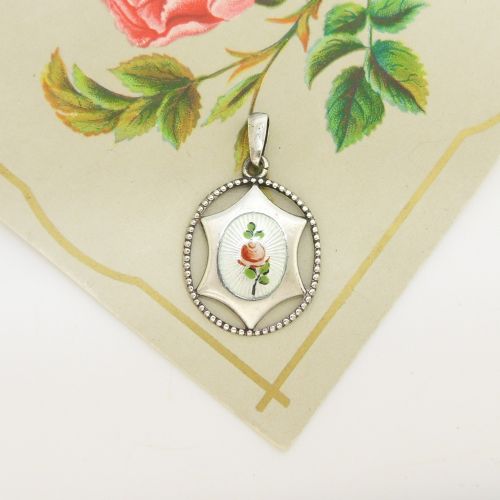
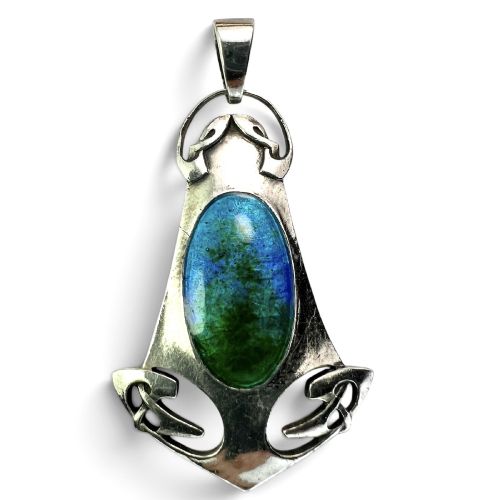
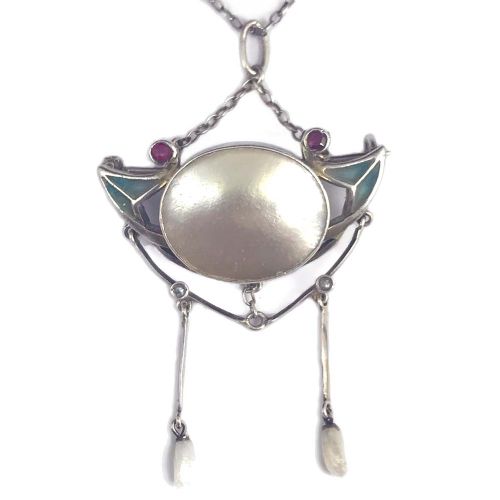
The prevalent aesthetics draw heavily on stylistic idioms associated with Liberty and Co, alongside continental workshops. Collectors find everything from shield-shaped pendants to complex multi-gem configurations featuring pearls and citrines.
Materials and construction
Silversmiths of the period shaped sterling silver and silver gilt into intricate bezels and wirework frames to house the coloured glass pastes. Many of the finest examples utilise plique-à-jour enamel, a technique resembling miniature stained glass where the vitreous enamel hangs suspended without a backing metal.
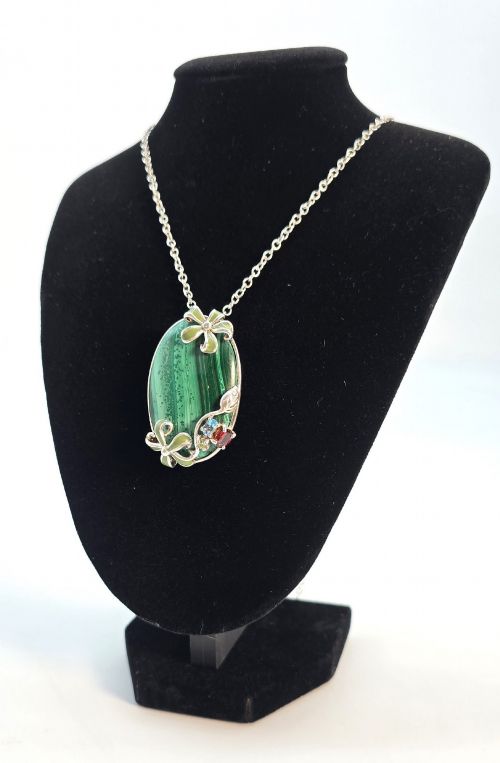
Craftsmen enhanced these metal frameworks with natural stones such as chrysoprase, malachite, citrine, and seed pearls. The interplay between translucent green enamel and polished silver creates a vibrant chromatic depth characteristic of these workshops.
A tiny butterfly pendant manages to flutter through the decades, preserved in silver and green plique-à-jour enamel since nineteen hundred.
Markers of distinction
The distinction between standard commercial output and superior work rests on the complexity of the enamelling technique and the precision of the metalwork. Plique-à-jour execution demands exceptional skill from the artisan to avoid cracking across open-backed cells.
Attribution to notable designers and firms elevates a piece significantly. Work associated with Archibald Knox, Liberty and Co, or Heinrich Levinger demonstrates superior artistic vision and refined proportion compared to anonymous workshop pieces.
Murrle Bennett·Archibald Knox·Liberty and Co·Levinger and Bissinger·Heinrich Levinger·Charles Horner·Martin Mayer·Theodor Fahrner·Meyle and Meyer
The Green Enamel Silver Necklace Glossary
- Plique-à-jour
- An enamelling technique where the enamel is applied within a cellular framework without a backing, allowing light to shine through the transparent colour. This method resembles miniature stained glass and requires considerable technical mastery.
- Silver gilt
- Silver that has been coated with a thin layer of gold on its surface. This treatment provides a warm golden tone while maintaining a silver base structure.
- Festoon necklace
- A necklace featuring a curved drape of chains, beads, or decorative drops that sit in swags across the upper chest. These designs were particularly favoured during the Arts and Crafts period.
- Chrysoprase
- A gemstone variety of chalcedony that contains small quantities of nickel, giving it a characteristic apple-green colour. It frequently appears alongside enamel in early twentieth-century jewellery.
Green Enamel Silver Necklace: Frequently Asked Questions
How do I care for a vintage enamel necklace?
Store your necklace separately in a lined box to prevent the silver and enamel surfaces from scratching against other items. Clean the piece gently with a soft, dry cloth and avoid chemical dips or ultrasonic cleaners which can damage delicate vitreous enamel.
Keep the jewellery away from perfumes, cosmetics, and prolonged immersion in water. Wear the pendant with care to protect the suspended glass cells from sharp impacts against hard surfaces.
Are these necklaces made of solid silver?
The pieces utilise sterling silver or standard silver alloy foundations, sometimes enhanced with a gold wash known as silver gilt. Makers stamped or left certain items unmarked depending on the workshop traditions and the scale of the production.
Precious metal testing reveals consistent use of silver across the pendants and chains on this page. Gemstones and pearls integrated into the designs are natural or period-appropriate components.
How can I identify a maker's mark?
Maker marks and silver hallmarks typically appear on the reverse of the pendant drop, near the jump ring, or along the clasp of the chain. These tiny stamps show initials, registered symbols, or convention marks that link the piece to specific workshops.
Consulting specialist reference books helps match these small punch marks to firms such as Murrle Bennett or silversmiths like Charles Horner. Many pieces retain clear attribution through distinctive design traits even when stamps are faint.