


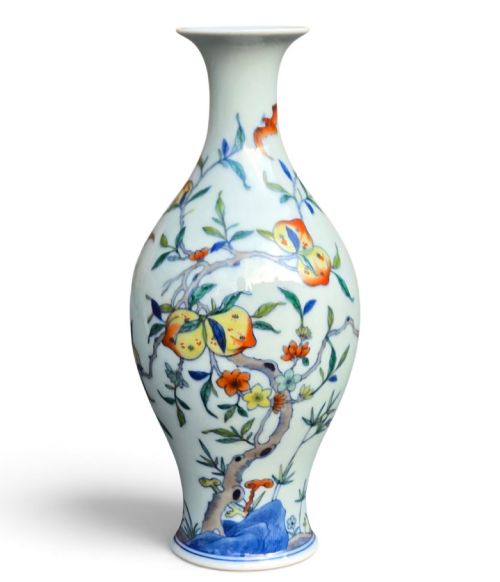

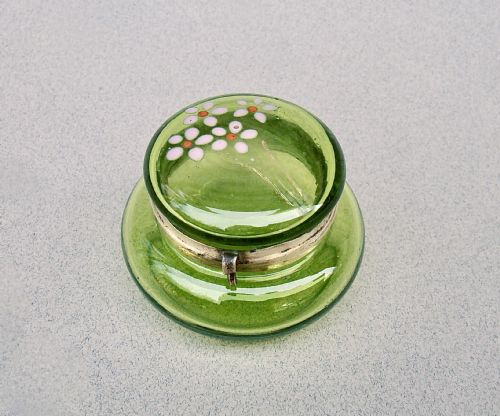


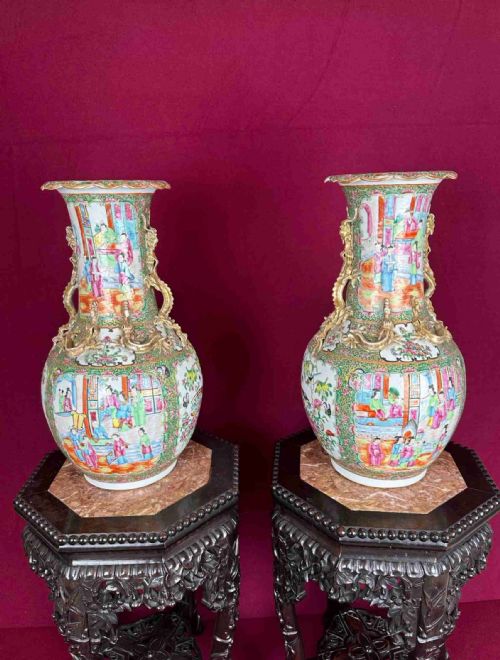


Green Enamel Jar
A green enamel jar brings rich colour and precise hand-painted detail to any room, ranging from Chinese porcelain to Victorian glassware.
Green Enamel Jar
A green enamel jar encompasses various forms such as ginger jars, trinket boxes, biscuit barrels, and scent bottles. These pieces span multiple centuries, appearing in 17th-century Chinese porcelain and nineteenth-century European glass.
The most common examples on this page combine vibrant green enamel decoration with materials like glass, porcelain, and sterling silver. Buyers find items ranging from delicate vanity jars to monumental baluster vases.
Origins stretch from Qing Dynasty China and the Edo period in Japan to Victorian and Art Deco workshops in London. Each piece reflects the specific decorative techniques and aesthetic priorities of its native period.
Materials and methods of construction
Craftsmen applied vitreous enamel over glass, porcelain, and metal bases, often securing the pigment through high-temperature firing. Overglaze enamel work allows for intricate polychrome designs, integrating green pigments alongside iron red and gold leaf.
Metal components frequently involve sterling silver and brass mounts, sometimes featuring guilloché engraving beneath translucent enamel layers. Japanese pieces utilise specialised techniques like Cloisonné and Totai Shippo to pattern wirework and tree bark textures across the body.
Glass vessels receive hand-painted decoration, such as the distinctive white silhouette figures associated with Mary Gregory styles. Etched glass and ceramic bodies provide sturdy foundations for the detailed surface artwork.
Green Enamel Jar Retail Price Guide 2026
Typical asking prices for green enamel jar among the pieces listed under this phrase on Sellingantiques today, from the lower quarter to the upper quarter. They describe what is for sale here now, not the wider market.
Materials recorded across the inventory include porcelain, glass, brass, sterling silver, gold leaf, and copper.
Distinctions in craftsmanship and execution
The refinement of the enamel work dictates the tier of the piece, separating standard production from master execution. Fine examples exhibit precise brushwork, controlled line weight, and harmonious integration of green enamel with contrasting hues like iron red or blue and white elements.
The integrity of the underlying material matters significantly, whether dealing with unblemished porcelain bodies, heavy-gauge sterling silver mounts, or thick hand-blown glass. Signed works and pieces retaining original lids or matching pairs command greater recognition for their preservation.
The complexity of the decorative scheme, such as multi-layered cloisonné wirework or detailed figurative scenes, separates ambitious studio pieces from simpler utilitarian containers.
Henry Perkins
The Green Enamel Jar Glossary
- Cloisonne
- A decorative metalwork technique where thin wire partitions are soldered to a base to create compartments filled with enamel paste. These cells are then fired and polished smooth.
- Guilloche
- A mechanical engraving technique that etches precise, intricate geometric patterns into a metal substrate. Translucent enamel is then applied over the metal so the pattern shows through.
- Famille Rose
- A Chinese porcelain palette dominated by opaque pink enamel, introduced during the Qing Dynasty. It frequently accompanies green enamel and other polychrome pigments in floral and figurative designs.
- Doucai
- A Chinese porcelain technique combining underglaze blue outlines with overglaze contrasting colours, including green enamel. The designs are fired twice to set both the underglaze and overglaze elements.
- Totai Shippo
- A Japanese technique involving enamel applied directly over a non-metal core, such as ceramic or carved body material. This method creates distinctive textured surfaces resembling natural materials like tree bark.
Green Enamel Jar: Frequently Asked Questions
What is a green enamel jar used for?
These vessels historically served both decorative and practical functions, housing dry goods, spices, trinkets, or personal cosmetics. Smaller examples functioned as vanity jars, scent bottles, and dressing table accessories.
Larger versions operated as ginger jars or decorative vases, displayed on furniture or utilised as focal points in interior schemes. Their durable enamel and lidded designs protected valuable contents from moisture and dust.
How do I date a green enamel jar?
Dating relies on identifying the material base, stylistic motifs, and manufacturing techniques characteristic of specific periods. For instance, pieces from the Qing Dynasty feature distinct imperial or export painting styles, whereas 1920s Art Deco items often incorporate London silver hallmarks.
Examining the type of enamel application and the wear patterns on the base offers further chronological clues. Comparative study of ceramic bodies and glass composition helps narrow the origin to specific decades like the Victorian era or the Meiji period.
Are these jars waterproof?
Most antique enamel jars are intended for display or dry storage rather than holding liquids. While the glazed porcelain or glass interiors can handle occasional moisture, vintage seals and delicate overglaze enamel work can degrade with exposure to water.
Scent bottles and specific vanity jars were designed to contain liquids originally, but age-related shrinkage in corks or mounts means modern testing is advisable. Gentle dusting with a dry cloth remains the safest maintenance approach.
How should I display my jar?
Position your piece away from direct sunlight to preserve the vibrancy of the green enamel and prevent fading in painted glass or porcelain. Stable, flat surfaces away from heavy foot traffic protect delicate lids and protruding mounts.
Pairing jars with complementary items from similar periods, such as matching baluster vases or silver accessories, creates a cohesive display. Adequate spacing allows the intricate surface details and metallic elements to catch ambient light.