



Green Decorative Tray
These green decorative tray pieces bring painted porcelain, cloisonne enamel, and opaline glass to a room, offering both colour and utility.
Green Decorative Tray
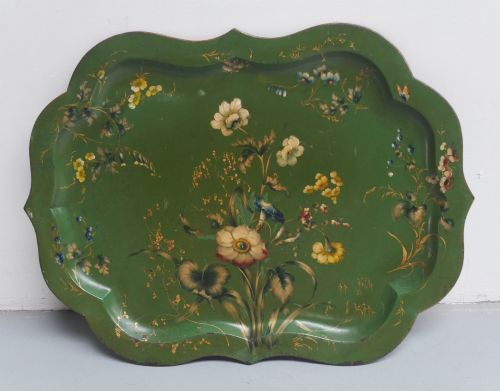
A green decorative tray brings together a range of historic forms designed for display or light service, spanning cabinet dishes, serving trays, and painted tabletop surfaces. When searching this phrase, buyers encounter items produced across the nineteenth and twentieth centuries, reflecting diverse international tastes from Victorian England to continental Europe and Japan.
The selection on this page relies heavily on porcelain, enamel, and glass objects originating from periods such as the Victorian era, the Art Deco movement, and the Meiji period. These items often function as decorative accents, cabinet dishes, or surface trays rather than purely utilitarian kitchenware.
How they were made
Makers utilised traditional ceramic, metal, and glass techniques, applying hand-painted designs, enamel work, and gilding to surfaces like porcelain, sheet iron, and opaline glass. Skilled artisans painted botanical subjects, landscapes, and ornamental motifs directly onto the body before firing or sealing.
Metal components such as brass bases and cloisonné wirework provide structure and contrast to the glazed ceramic or enamel panels. Gilt edges and gold leaf accents were frequently applied by hand to highlight moulded borders and sculptural details.
Green Decorative Tray Retail Price Guide 2026
Typical asking prices for green decorative tray among the pieces listed under this phrase on Sellingantiques today, from the lower quarter to the upper quarter. They describe what is for sale here now, not the wider market.
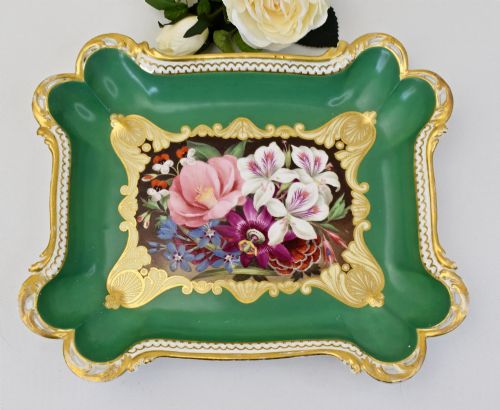
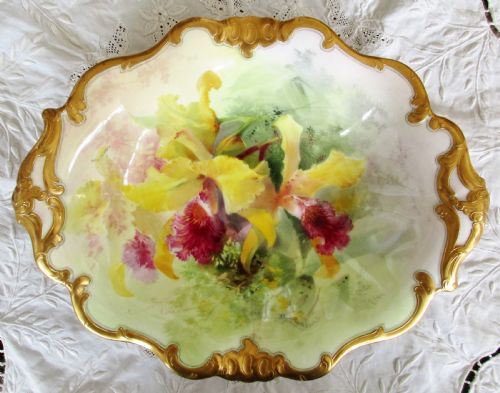
Several pieces feature hand-painted orchids, bringing botanical studies directly onto decorative trays and cabinet dishes.
What varies in quality
Quality rests in the execution of the painted decoration, the crispness of the moulding, and the preservation of the original gilt or enamel surface. Pieces featuring named artists or established workshops demonstrate superior hand-finishing in the details of the subject matter.
The integrity of the base material, whether porcelain, opaline glass, or cloisonné enamel, distinguishes standard production items from finer studio or factory examples. Well-preserved surfaces with minimal rubbing to the gilt and paint indicate careful handling over time.
Royal Doulton·Doe and Rogers·Jennens and Bettridge
The Green Decorative Tray Glossary
- Cabinet dish
- A decorative ceramic plate intended for display in a cabinet or on a stand rather than for dining use.
- Cloisonne enamel
- A metalwork technique where thin wire partitions are soldered to a base and filled with coloured enamel paste before firing.
- Opaline glass
- An opaque or semi-translucent glass, often tinted in shades like green, popular in nineteenth-century decorative objects.
- Gilt edge
- A thin layer of gold applied to the rim or borders of porcelain, glass, or ceramic items for decorative emphasis.
Green Decorative Tray: Frequently Asked Questions
How were antique decorative trays used?
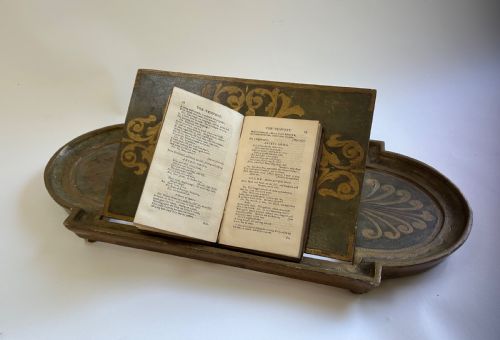
These items served various decorative and light domestic functions, from holding desk accessories and inkwells to displaying botanical cabinet dishes in a drawing room.
Many examples were intended primarily for visual display rather than heavy service, acting as focal points on tables or within cabinets.
What materials are common in these pieces?
The selection relies heavily on ceramic bodies, porcelain, opaline glass, and cloisonné enamel, often enhanced with brass mounts or gilt highlights.
Surface decoration is typically achieved through hand-painting, enamel work, or gold leaf application.
How do I date a painted porcelain tray?
Dating relies on identifying factory marks, stylistic indicators such as Victorian or Art Deco motifs, and the specific technique of the hand-painted subject matter.
Examining the wear on the base and the formulation of the glaze also provides clues to the period of manufacture.
Are these items suitable for daily use?
While historic trays and dishes were built to last, delicate surfaces featuring hand-painted enamel, gilt edges, or opaline glass require gentle handling.
Most buyers choose to use them as decorative accents, desk organisers, or tabletop display pieces to preserve their finish.