


Green Chinoiserie Lamp
A green chinoiserie lamp brings hand-painted lacquer and porcelain into a room, offering both character and warm illumination.
Green Chinoiserie Lamp
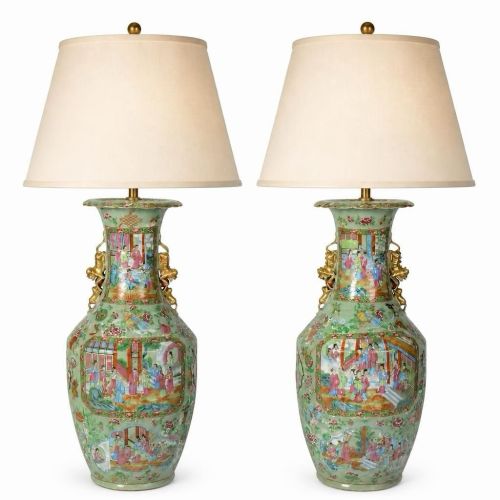
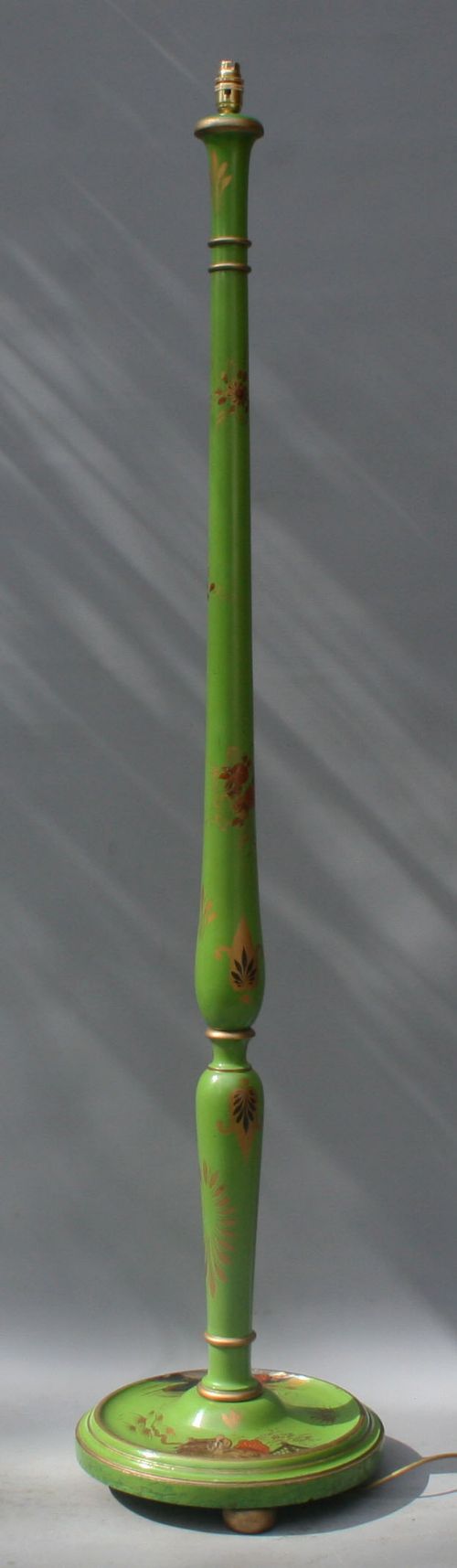
A green chinoiserie lamp combines decorative Asian ceramic or lacquered wooden bodies with functional electrical fittings, creating a striking focal point in traditional and eclectic interiors. When you search for this phrase, you encounter everything from tall standard floor lamps to compact table lamps suited for sideboards and desks.
The pieces on offer span the nineteenth century up to the nineteen-thirties, taking the form of converted vases, ginger jars, and lacquered standards. Victorian and Edwardian examples sit alongside earlier Chinese export wares that have been adapted for modern lighting.
Porcelain and lacquered wood dominate the selection, often paired with brass mounts or silk shades. Buyers frequently find pairs of lamps alongside singular floor-standing standards.
How they were made
Maker's workshops built these lamps using porcelain, brass, fabric, enamel, wood, ormolu, ceramic, and silk. Ceramic bodies typically originated as Chinese export porcelain, Famille Verte vessels, or Rose Medallion vases before being drilled and mounted.
Lacquered wooden floor lamps relied on applied green finishes and hand-painted decorative motifs characteristic of the chinoiserie style. Metal elements such as brass and ormolu provided structural stability and decorative mounts for the ceramic bases.
Some floor lamps come complete with handmade shades designed specifically to match their green lacquered chinoiserie patterns.
What varies in quality
Quality rests upon the crispness of the hand-painted detail on the porcelain or lacquered surface, as well as the weight and chasing of the ormolu and brass mounts. Superior pieces display intricate brushwork and securely integrated mounting hardware that respects the original vessel.
The condition of the lacquer work and the fidelity of the nineteenth-century or Victorian styling also distinguish finer examples. Original wiring is rarely retained, but the quality of the modern rewiring and the integration of the lamp fitting affect desirability.
The Green Chinoiserie Lamp Glossary
- Chinoiserie
- European decorative style reflecting Chinese artistic influences, seen in lacquered finishes and painted motifs. It became particularly popular during the Victorian and Edwardian periods.
- Famille Verte
- A palette of Chinese porcelain enamels dominated by green, developed during the Qing dynasty. These vessels frequently feature botanical and figurative scenes.
- Rose Medallion
- A distinct style of Cantonese porcelain decorated with panels of figures, birds, and flowers in pink and green enamels. They were widely produced for export.
- Ormolu
- Gilded bronze used for decorative mounts on ceramic lamp bases. It adds weight and a warm metallic sheen to the composition.
- Standard Lamp
- A floor-standing lamp designed to illuminate a room from a vertical post. These often feature lacquered wood stems.
Green Chinoiserie Lamp: Frequently Asked Questions
How do I date a lamp?
Dating relies on examining the ceramic body, the style of the lacquer, and the mounting hardware. Nineteenth-century pieces often show hand-finished porcelain details.
Later standard lamps from the nineteen-twenties and thirties display distinct lacquer techniques and floor-standing proportions characteristic of that era.
Are these lamps safe to use?
Many antique lamps require rewiring to meet current electrical standards. Dealers frequently update the internal wiring while retaining the original exterior body.
Buyers should check that the lamp has been tested by a qualified electrician before daily use in the home.
Where should I place a floor lamp?
Standard floor lamps work well in corners or beside seating areas where they can provide ambient light. Their height allows them to anchor a room without requiring surface space.
Tall lacquered standards suit traditional reception rooms and studies.
What is the difference between porcelain and lacquer?
Porcelain lamps use ceramic vessels, such as ginger jars or vases, mounted onto bases with electrical fittings. These offer a glossy and colourful finish.
Lacquer lamps utilise wooden standards treated with layered green finishes and painted designs, providing a taller, sculptural silhouette.