

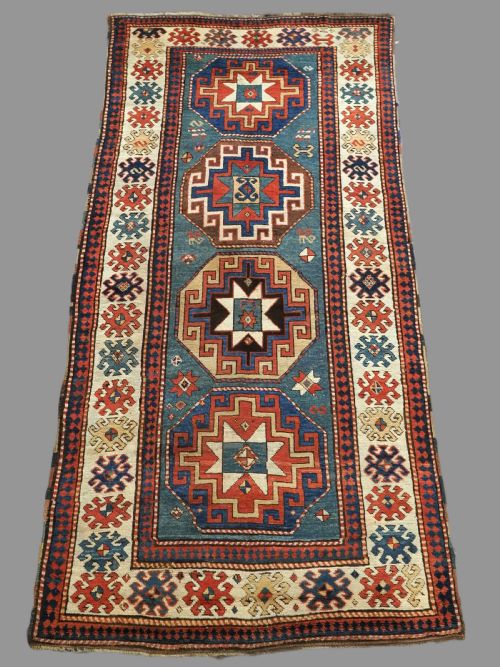
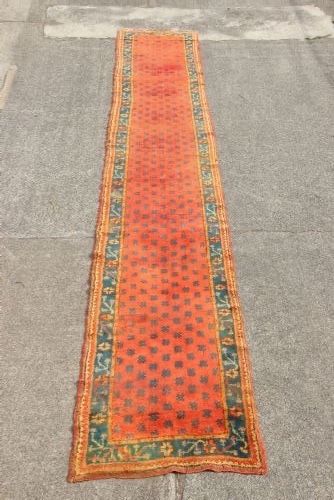


Green Carpet Runner
These green carpet runner examples bring deep indigo accents and rich botanical tones to long halls, offering lasting woven character for high-traffic corridors.
Green Carpet Runner
A green carpet runner provides a narrow, elongated textile format designed specifically for corridors, stairways, and galleries. These antique floor coverings bring traditional warmth to domestic spaces through elongated proportions and distinctive regional motifs.
Originating primarily across the nineteenth and early twentieth centuries, these woven runners reflect the distinct stylistic signatures of weaving centres such as Oushak, Seychour, and Karabagh. Each piece carries the aesthetic language of its specific weaving heritage, from tribal geometric layouts to sweeping floral compositions.
Materials and construction
These antique runners rely on foundational materials of wool and cotton, utilised in pile and flatweave constructions alike. Wool provides the durable surface pile and essential warmth, while cotton frequently serves as a stable structural foundation for warps and wefts.
Weavers employed traditional hand-knotting and flatweaving techniques across Caucasian, Anatolian, and Persian workshops to create these durable runners. The combination of natural animal fibres and sturdy foundation threads ensures the structural integrity necessary for continuous floor use.
Green Carpet Runner Retail Price Guide 2026
Typical asking prices for green carpet runner among the pieces listed under this phrase on Sellingantiques today, from the lower quarter to the upper quarter. They describe what is for sale here now, not the wider market.
Every runner carries the quiet ghost of a distant village loom where someone spent months tying knots by the light of a single window.
Assessing quality in antique runners
Quality in these long carpets stems from the precision of the weave and the clarity of the regional design execution, whether geometric or floral. Finer examples display a crisp rendering of motifs across the elongated field, maintaining balanced proportions from end to end.
The depth and permanence of the dye work heavily influence the character of each runner, particularly within the green grounds and contrasting borders. Superior pieces exhibit harmonious colour saturation that enhances the visual rhythm of the corridor format.
The Green Carpet Runner Glossary
- Runner
- A long, narrow carpet format specifically proportioned for hallways, corridors, and staircases. This shape directs the eye along transitional architectural spaces.
- Pile
- The upright yarn loops or cut ends that form the soft surface of a knotted rug. It provides both cushioning underfoot and protection for the structural foundation.
- Flatweave
- A textile constructed without a raised pile by interweaving warp and weft threads directly. Examples like kilims offer a smooth, lightweight profile.
- Ground
- The primary background colour field of a carpet against which medallions, borders, and secondary motifs are displayed. In these pieces, it frequently appears in green.
- Warp
- The stationary vertical threads stretched tightly on a loom that form the skeletal foundation of the rug. Wefts are interwoven across these foundational lines.
Green Carpet Runner: Frequently Asked Questions
Where should I place a green carpet runner?
These elongated textiles suit narrow domestic spaces such as hallways, entryways, and long corridors where traditional floor coverings are required. Their proportions naturally guide movement while introducing historic character to transitional areas.
Ensure the dimensions leave a consistent border of exposed flooring around the edges. This frames the textile properly within the room's architectural layout.
How do I clean an antique runner?
Gentle, regular surface care preserves the wool pile and cotton foundations of these historic floor coverings. Avoid harsh chemical treatments that can alter the natural dye colours over time.
Professional specialist cleaning is recommended for deep maintenance. This protects the delicate fibres and structure of nineteenth and early twentieth-century weaves.
Are these runners made of wool?
The listings demonstrate that these woven floor coverings utilise natural wool and cotton materials. Wool provides the durable surface texture, while cotton often forms the stable foundation.
This traditional combination ensures the resilience needed for practical daily use in busy corridors. Natural fibres also age with a characteristic patina.
How do I date an antique runner?
Dating relies on examining structural characteristics, regional weaving styles, and material preparation methods. Pieces in this selection originate across the nineteenth and early twentieth centuries.
Comparing the specific motifs, such as Caucasian geometric patterns or Anatolian floral fields, helps identify the approximate period of production. Each stylistic tradition evolved through distinct generational phases.