



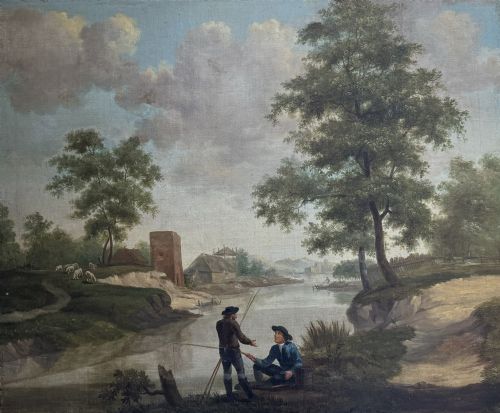

Green Canvas River Landscape
Green canvas river landscape works capture quiet rural waterways across Victorian, Impressionist and mid-century movements, bringing atmospheric pastoral scenes into modern interiors.
Green Canvas River Landscape
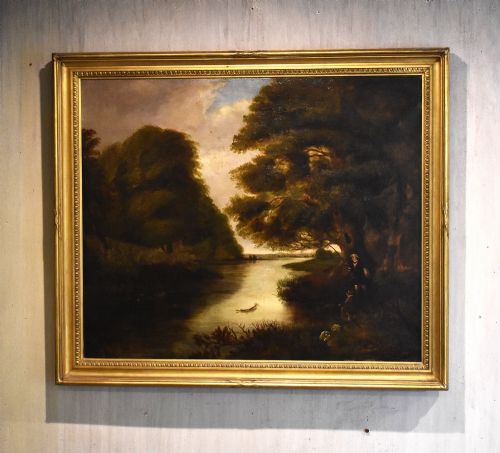
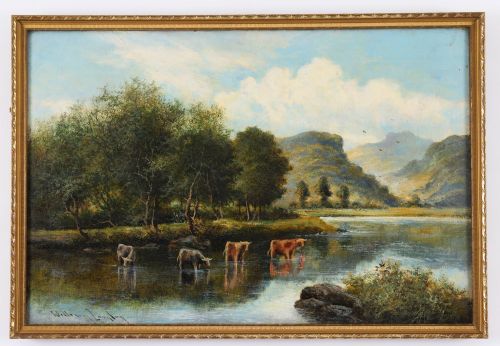
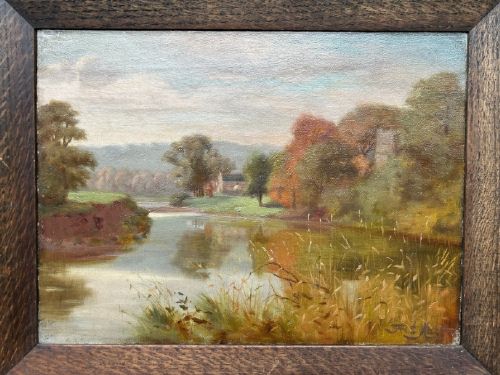
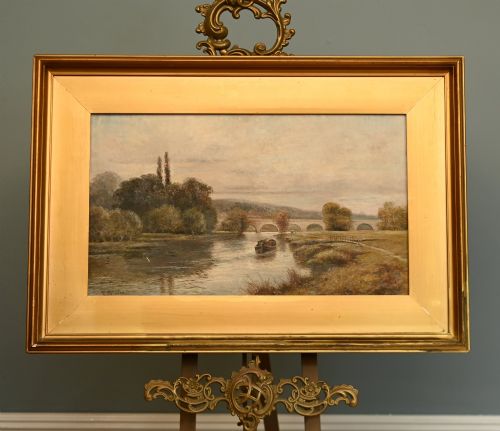
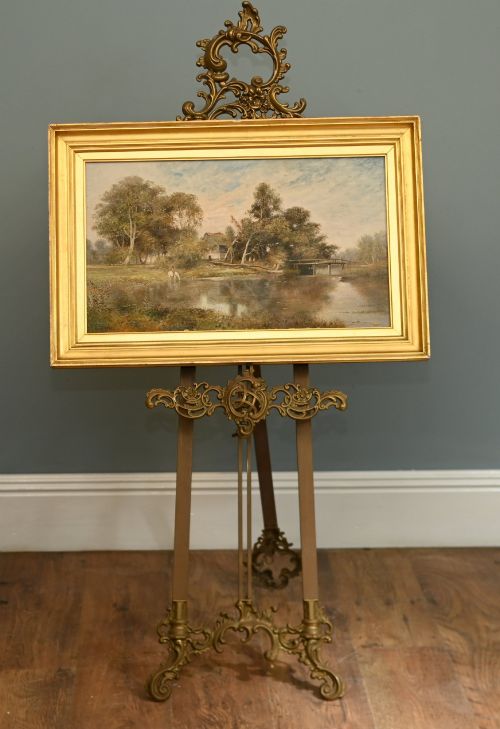
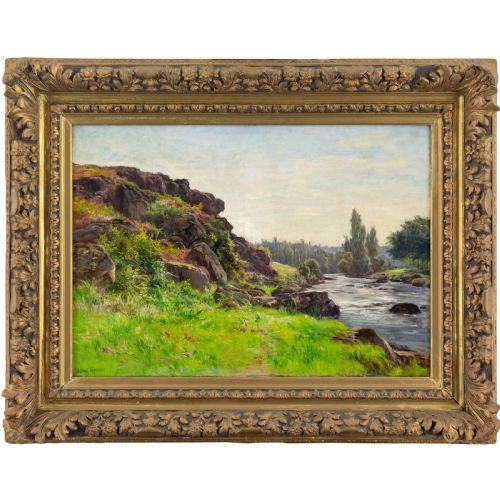
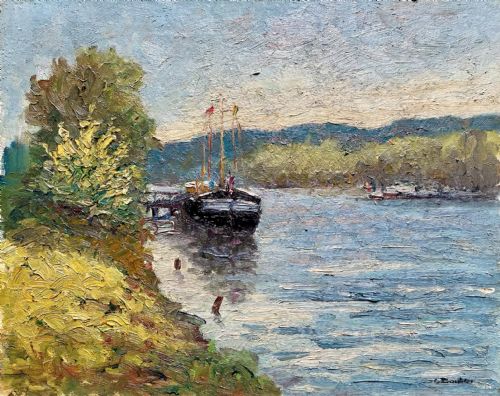
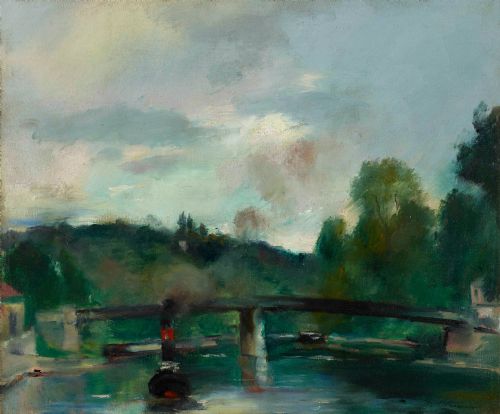
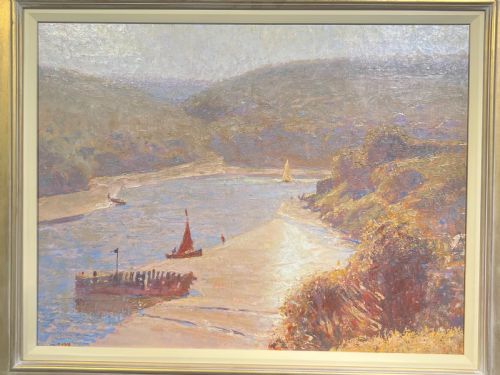
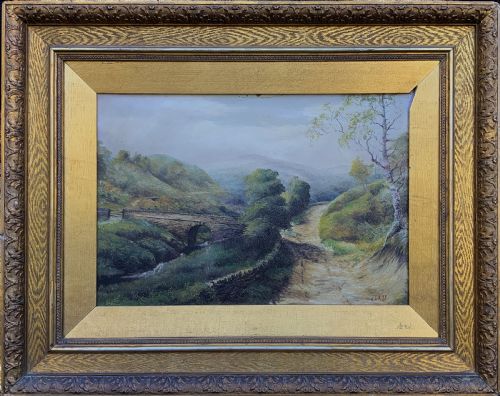
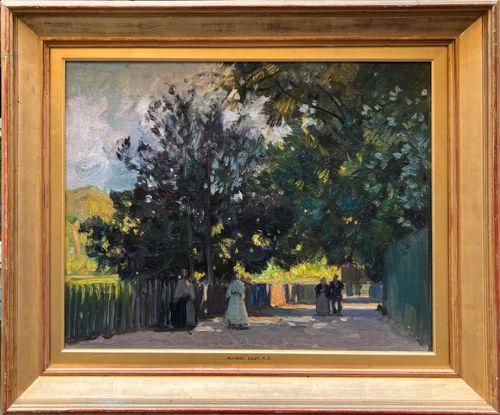
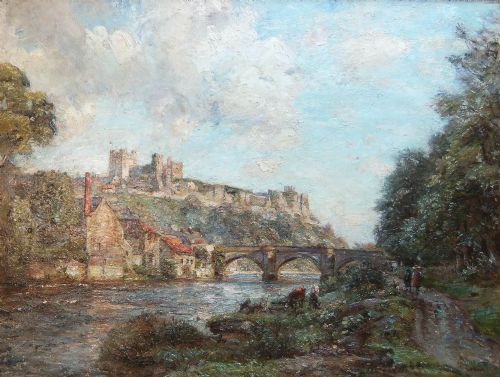
A green canvas river landscape presents viewers with oil paintings on woven fabric depicting streams, rivers, and pastoral riverbanks. These artworks range from Victorian naturalism to French and British impressionist interpretations.
Buyers meet works originating from the eighteenth, nineteenth, and twentieth centuries, including British and European schools. The common thread is water set amidst foliage, captured on traditional stretched canvas.
Common subjects include stretches of the Thames, Welsh mountain rivers, and continental waterways complete with figures, bridges, and fishing boats. These paintings provide a window into nineteenth-century and modernist rural life.
How They Were Made
Painters applied oil paint directly onto prepared canvas stretched over wooden frames, often supported by gesso grounds. Many pieces retain their original or period giltwood framing.
Brushwork varies from the tight academic realism of the Victorian period to the looser, textured marks characteristic of impressionism and post-impressionism.
Green Canvas River Landscape Retail Price Guide 2026
Typical asking prices for green canvas river landscape among the pieces listed under this phrase on Sellingantiques today, from the lower quarter to the upper quarter. They describe what is for sale here now, not the wider market.
Listings feature canvases spanning the seventeenth, eighteenth, nineteenth, and twentieth centuries, executed in oil paint on wood and canvas supports.
What Varies in Quality
Quality rests upon the artist's command of light, water reflection, and atmospheric depth within the green palette. Stronger works demonstrate confident brushwork and harmonious tonal balance.
The integrity of the original canvas, the preservation of the paint surface, and the compatibility of the frame contribute to the standing of an individual painting.
William Langley·E Steele·Frederick Marriott·Sir Alfred East·Herbert Royle·Paul Désiré Trouillebert·Henry H Parker·Sydney Yates Johnson·John Horace Hooper·Honore Cavaroc·Archibald Kay·Henri Jaques Delpy·Mario Pinetti·Alfred Augustus Glendening Jnr·William Sydney Cooper·Thomas Spinks·Sidney Richard Percy
The Green Canvas River Landscape Glossary
- Canvas
- A heavy woven fabric used as a surface for oil painting. It is typically stretched tightly over a wooden frame before work begins.
- Gesso
- A plaster-like mixture applied to frames or painting supports to prepare the surface. It provides a smooth base for subsequent gilding or paint application.
- Impressionism
- A nineteenth-century art movement characterised by relatively small, thin, yet visible brush strokes. It emphasises accurate depiction of light in its changing qualities.
- Barbizon School
- A nineteenth-century French art movement towards realism in landscape painting. Painters of this circle drew inspiration directly from forest and river environments.
Green Canvas River Landscape: Frequently Asked Questions
What periods do these river landscapes span?
The available selection spans from seventeenth-century Dutch school works through Victorian naturalism up to mid-century impressionism.
Most pieces originate in the nineteenth and early twentieth centuries, reflecting changing European artistic movements.
How should I care for an oil painting on canvas?
Keep paintings away from direct sunlight, high humidity, and rapid temperature fluctuations to protect the canvas and paint layers.
Dust the surface gently with a dry, soft brush and avoid using water or chemical cleaners on the pigment.
Are these paintings supplied with frames?
Many listings include period wooden or giltwood frames that complement the age and style of the artwork.
Framing details vary per piece, with some retaining original makers' marks or nineteenth-century mouldings.
How can I identify the school or period of a landscape?
Look at the handling of pigment, brushstroke texture, and canvas preparation, which shifted notably between Victorian and impressionist eras.
Signatures, dates, and recorded artist biographies also help place a painting within its historical context.