



Traditional Country River Scene
When you search for a traditional country river scene, you find oil paintings and watercolours capturing rural waterways from the nineteenth and early twentieth centuries.
Traditional Country River Scene
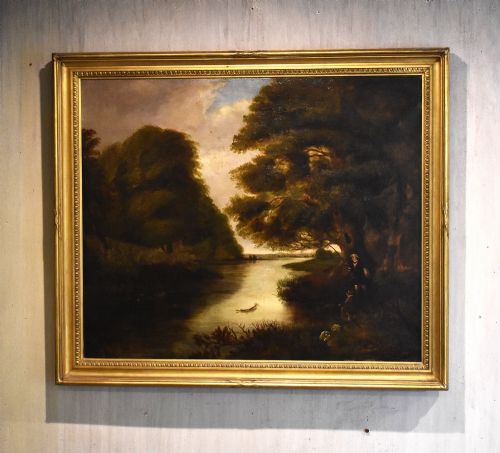
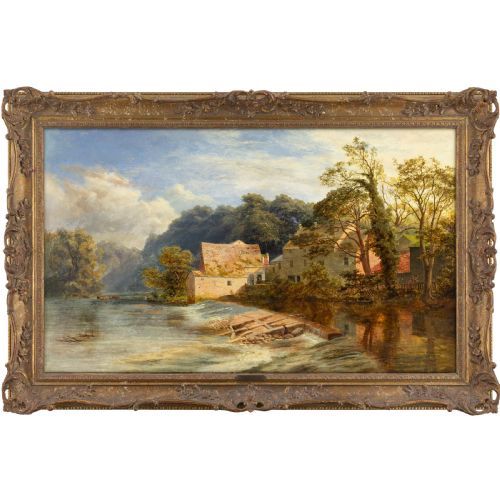
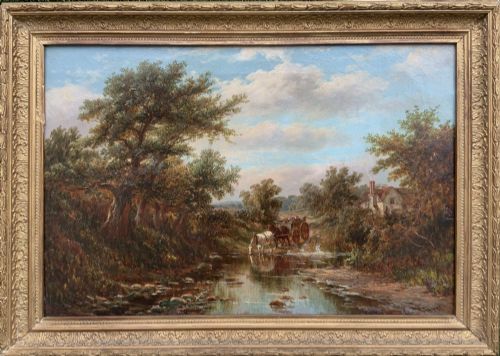
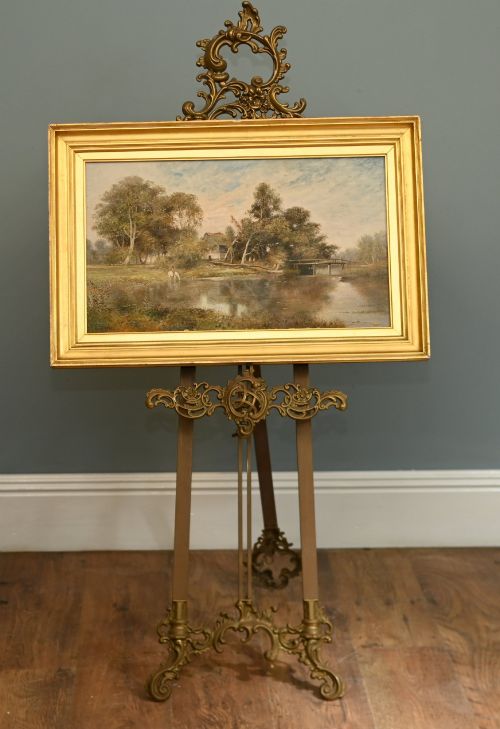
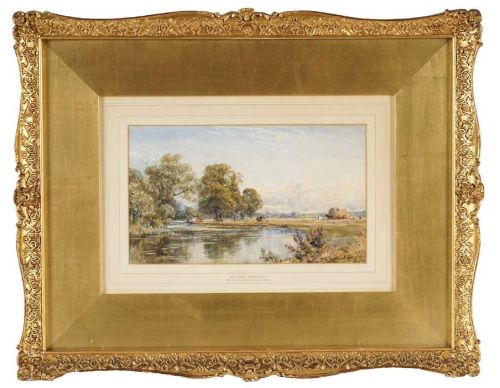
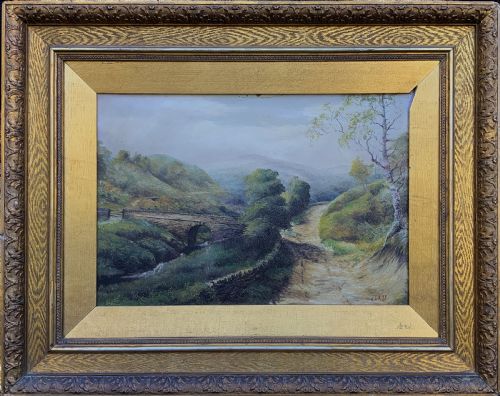
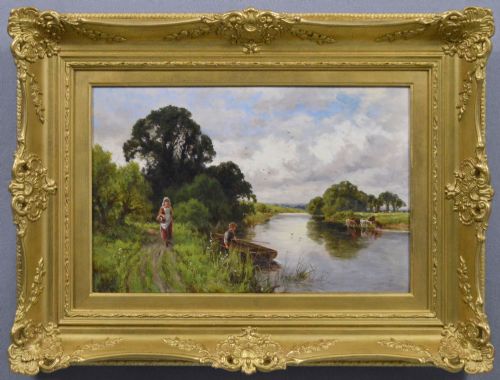
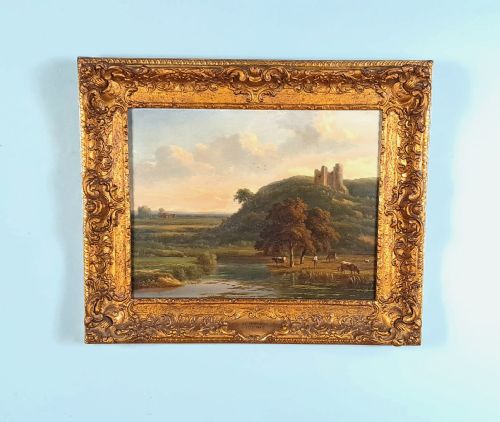
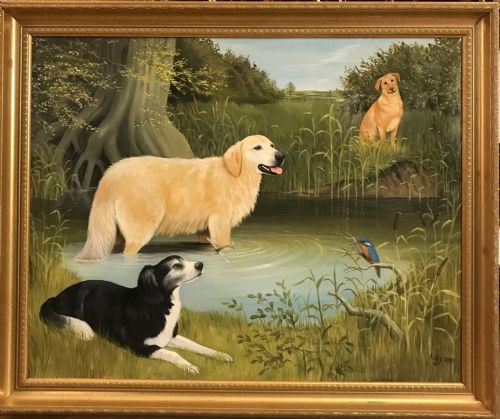
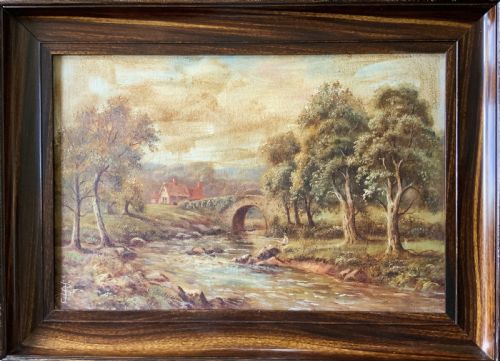
A traditional country river scene depicts rural waterways, pastoral banks, and figures engaged in quiet pursuits such as fishing or farming. The selections available on this page lean heavily toward nineteenth-century oil paintings on canvas and board, alongside early twentieth-century watercolours.
Makers recorded in the evidence range from Victorian specialists to Edwardian artists, capturing specific locations like the Thames, the Kennet, and Yorkshire waterways. These works provide a window into historical British topography and pastoral life through the eyes of regional painters.
How they were made
Painters utilised oil on canvas or wood panel, applying pigment to capture the shifting light on water and meadow. Watercolours on paper also appear frequently, often framed with wood, gesso, and gilt mouldings that reflect the aesthetic of the period.
The physical construction of these pieces relies on traditional stretching frames and primed surfaces, with many retaining their period giltwood frames that complement the natural tones of the landscape.
Traditional Country River Scene Retail Price Guide 2026
Typical asking prices for traditional country river scene among the pieces listed under this phrase on Sellingantiques today, from the lower quarter to the upper quarter. They describe what is for sale here now, not the wider market.
Anglers waiting patiently by the water appear so often in these scenes that half the canvas population seems to be ignoring a nibbling fish.
What varies in quality
The handling of light and atmospheric depth distinguishes accomplished works from simpler topographical records. Finer pieces demonstrate a confident command of brushwork in the rendering of water reflections and distant foliage.
The integrity of the original canvas, the preservation of the pigment, and the condition of the period giltwood frame contribute significantly to the overall presence of the piece.
Robert Gallon·Henry H Parker·William Langley·Thomas Baker·Henry John Kinnaird
The Traditional Country River Scene Glossary
- Oil on canvas
- Pigment bound in drying oil applied to a woven fabric stretched across a wooden frame. This medium allows for rich texture and deep colour layering.
- Giltwood
- Wood carved and coated with gold leaf or a gold-coloured metallic finish. It forms the decorative border for many traditional framed artworks.
- Watercolour
- A painting method where the paints are made of pigments suspended in a water-based solution. Applied to paper, it creates translucent washes of colour.
- Gesso
- A paint mixture consisting of a neutral binder mixed with chalk, pigment, or plaster. It prepares wooden panels and frames before gilding.
- Board
- A rigid flat surface, often made of wood, used as a support for painting when canvas is absent. Artists utilised this for smaller or more direct outdoor studies.
Traditional Country River Scene: Frequently Asked Questions
What periods do these river scenes cover?
The available selection primarily spans the nineteenth century through to the mid-twentieth century, encompassing Victorian and Edwardian periods.
Artisans and painters of these eras frequently returned to rural riverbanks for their subjects, recording changing British landscapes.
How should I care for an oil painting?
Keep the artwork away from direct sunlight and fluctuating humidity to protect the canvas and the wooden stretcher.
Dust the surface gently with a soft, dry brush and avoid using liquid cleaners on either the paint or the frame.
Are these paintings signed by the artists?
Many of the works retain the original signature of the painter, while others are attributed to specific schools or remain unsigned.
Signatures often appear in the lower corners of the canvas or paper, offering a direct link to the creator.
What framing do these pieces usually have?
Most works are housed in period frames made of wood, gesso, and gilt embellishments that match their nineteenth or early twentieth-century origins.
These frames protect the edges of the canvas and provide a finished border suited to traditional pastoral subjects.