
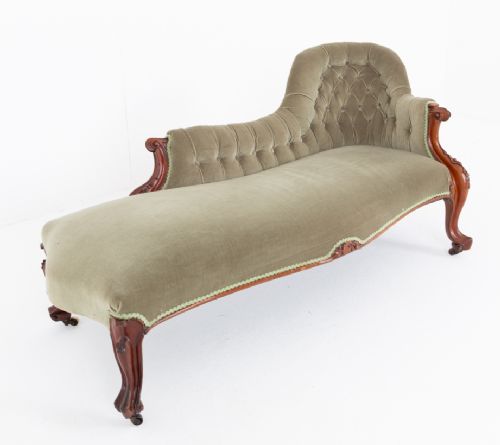
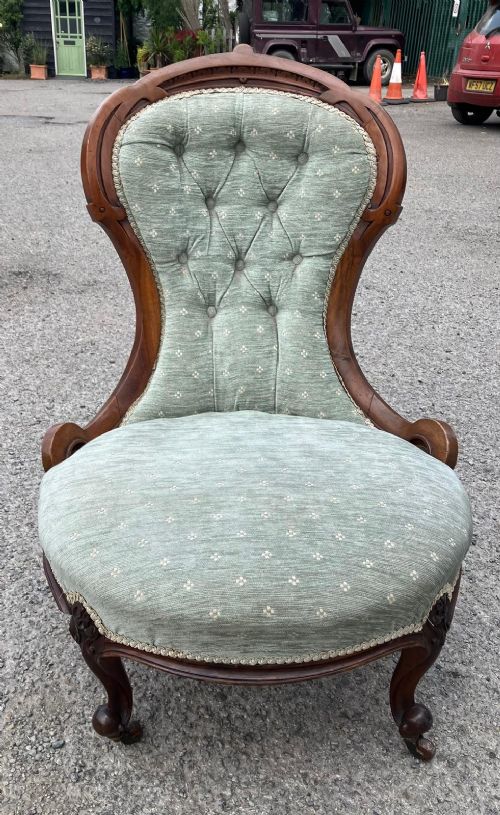
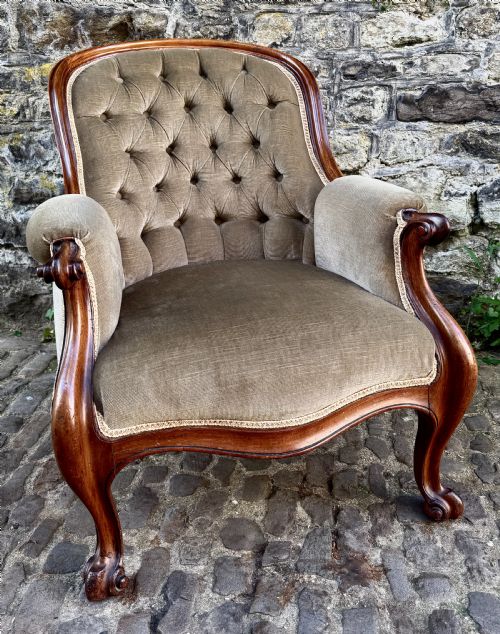
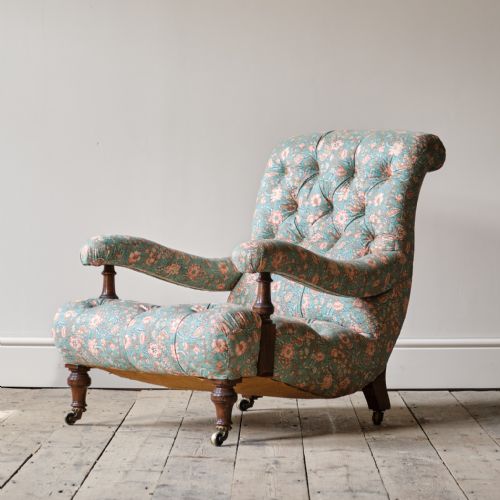
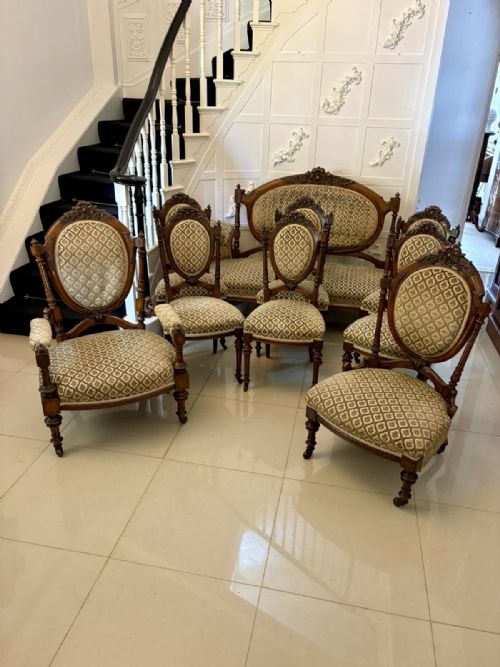


Green Button Back Chair
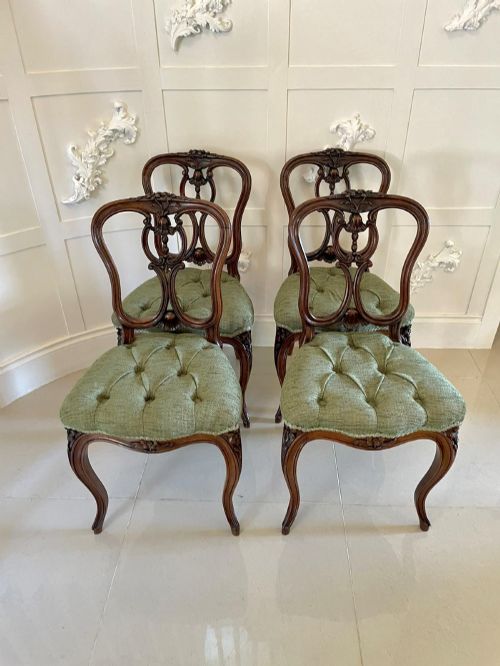
A green button back chair brings rich colour and deep comfort to a room, spanning Victorian and Regency forms.
Green Button Back Chair
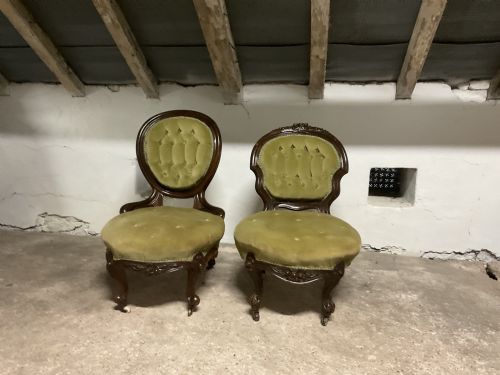
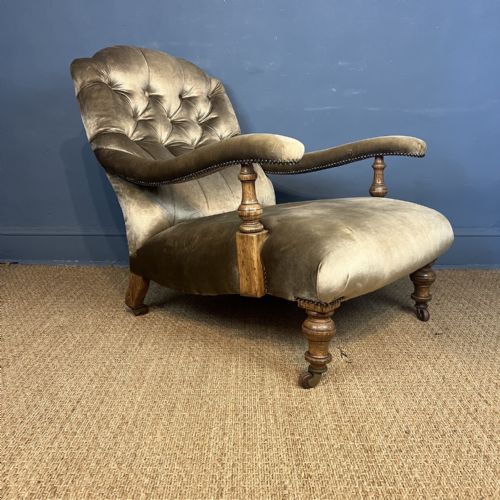
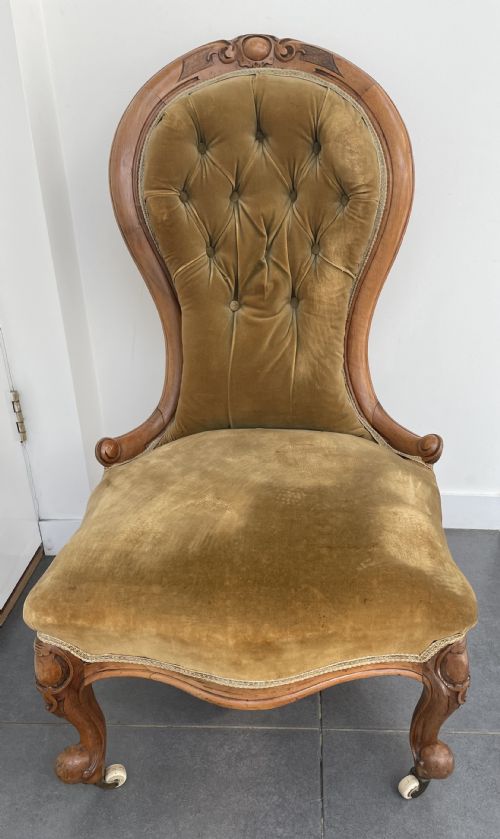
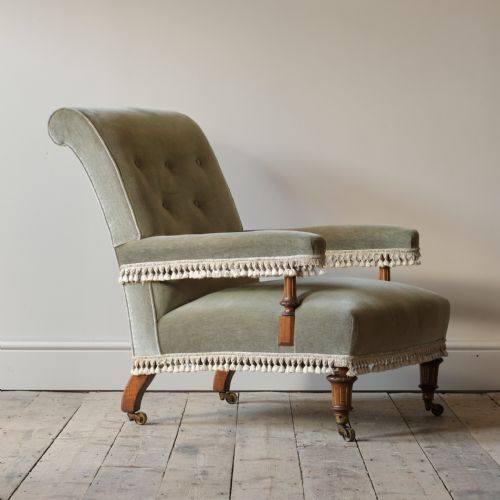
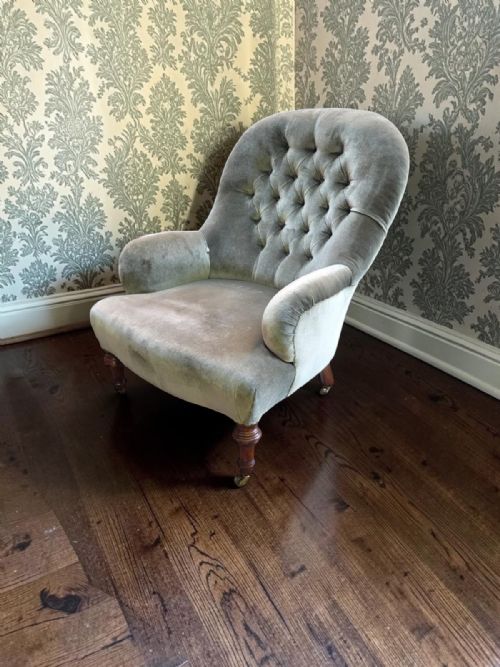
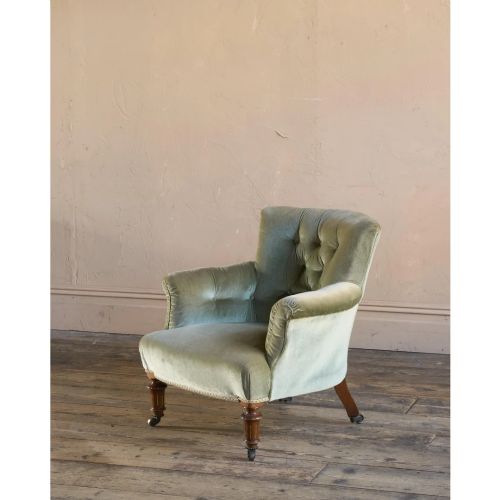
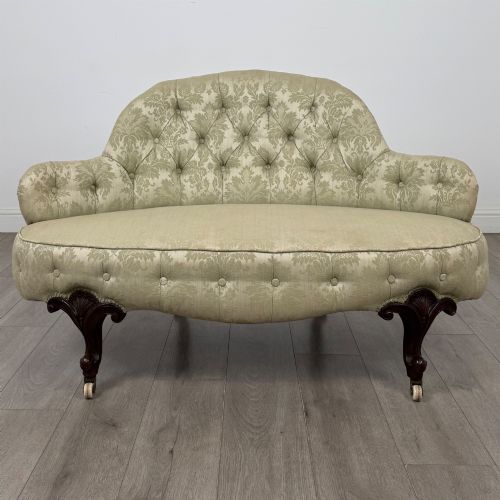
A green button back chair is a staple of traditional seating, taking the form of low nursing chairs, library armchairs, and substantial Chesterfield designs. These pieces appear predominantly in nineteenth century contexts, drawing on Victorian, Regency, and William IV styles.
The version you meet most often on this page is the Victorian upholstered armchair or nursing chair, frequently upholstered in leather, velvet, or fabric. Such seating combines deep buttoning with turned wood frames, rosewood, mahogany, or walnut timbers.
Buyers seek these chairs for studies, bedrooms, and sitting rooms where historic character and practical seating are equally valued. The presence of brass castors and carved details further anchors them in their respective nineteenth century periods.
Materials and Construction
Makers constructed these frames from solid hardwoods like mahogany, walnut, rosewood, and oak, often incorporating turned or carved wooden supports. Brass castors frequently facilitated movement on heavy nineteenth century carpets.
Upholstery relied on traditional stuffing techniques secured by deep tufting and buttoning in leather, velvet, corduroy, or woven fabric. Iron and wood sub-frames provided the structural rigidity necessary to support the tension of the buttoned upholstery.
Listings feature nineteenth century periods from the Regency era through to the late Victorian decades, utilising mahogany, walnut, rosewood, and brass.
Assessing Quality and Craftsmanship
The calibre of a green button back chair rests on the crispness of the timber carving and the architectural balance of the frame. Superior examples display tightly turned legs, robust secondary woods, and harmonious proportions.
Upholstery execution distinguishes workshop output, seen in the regularity of the button tufting and the selection of quality hide, velvet, or fabric. Pieces bearing attribution to established cabinet makers often exhibit superior joinery and refined secondary details.
Gillows·Holland and Sons·Howard and Sons·C Hindley and Sons
The Green Button Back Chair Glossary
- Button back
- A method of upholstery where depressions are formed in the padding by stitches or buttons pulled tight to secure the filling. This technique creates a distinctive diamond pattern across the backrest.
- Bergère
- An enclosed upholstered armchair with wooden framing and cane or upholstered sides. It originated in France and gained popularity in Regency and Victorian British interiors.
- Nursing chair
- A low-seated Victorian chair designed without arms to allow women to nurse infants comfortably in long dresses. They frequently feature padded button backs and turned wooden legs.
- Chesterfield
- A deep-buttoned sofa or armchair characterised by arms and back of the same height. Traditional versions are upholstered in leather and supported by low turned feet.
- Rosewood
- A dense, dark timber with distinct figuring utilised in high-status nineteenth century furniture. It was often polished to a high gloss on chair frames and chaise longues.
Green Button Back Chair: Frequently Asked Questions
What is a green button back chair?
A green button back chair is a nineteenth century upholstered seat, typically Victorian or Regency in origin, featuring deep button tufting and green leather, velvet, or fabric covering.
These pieces encompass low nursing chairs, library armchairs, and Chesterfield designs, combining traditional hardwood frames with durable traditional upholstery techniques.
How do I date these chairs?
Dating relies on examining the timber species, frame style, and turning details alongside the upholstery methods used. Regency and William IV pieces lean towards heavier classical lines, while Victorian examples often incorporate walnut, rosewood, and barley twist supports.
Cabinet maker stamps and specific castors can also help narrow down the decade of manufacture during the nineteenth century.
Where should I place one?
These chairs suit studies, libraries, bedrooms, and sitting rooms where their historic design and rich green upholstery can serve as a focal point. Smaller nursing and slipper chairs fit easily into compact bedroom corners.
Larger library armchairs and Chesterfield styles require more floor space and pair well with traditional wooden desks or fireside settings.
Are they comfortable for daily use?
Most of these chairs offer supportive seating thanks to deep sprung or traditionally stuffed construction. Buttoned backs provide a firm, upright posture rather than a deep slouch.
Historic padding may feel firmer than modern foam, offering a classic sit that supports long periods of reading or conversation.