




Green Bohemian Vases
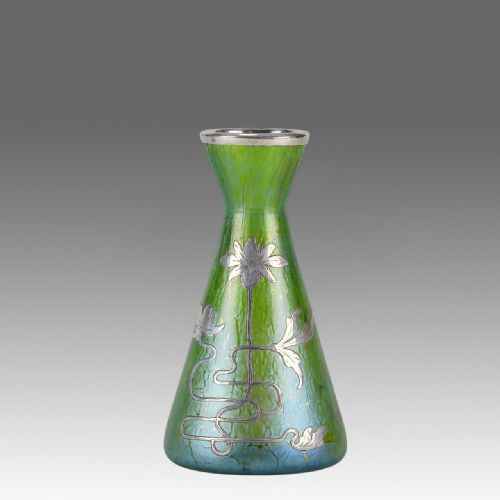
Green bohemian vases bring together deep forest tones and organic forms, catching the light through iridescence, silver overlay and delicate enamel work.
Green Bohemian Vases
Green bohemian vases span the late nineteenth century into the art deco period, taking the form of bulbous mantle lustres, spill vases, and sweeping art nouveau vessels. These pieces emerge primarily from the workshops and glassworks of central Europe, capturing the shifting tastes of the victorian era, jugendstil, and the vienna secession.
The most common vessels met here display the iridescent sheens and organic shapes associated with glassmakers such as loetz and kralik. Alongside these glass forms, buyers encounter earthenware and porcelain ewers and figures bearing the marks of royal dux and ernst wahliss.
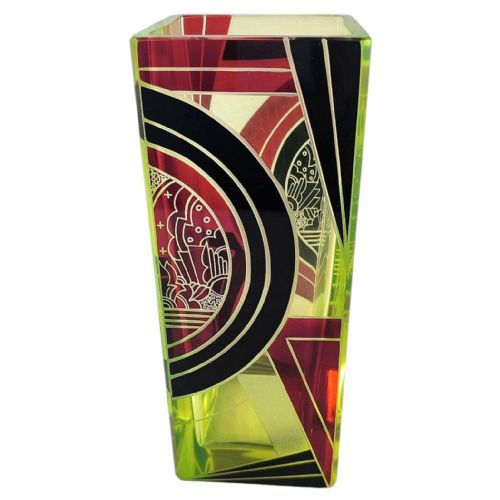
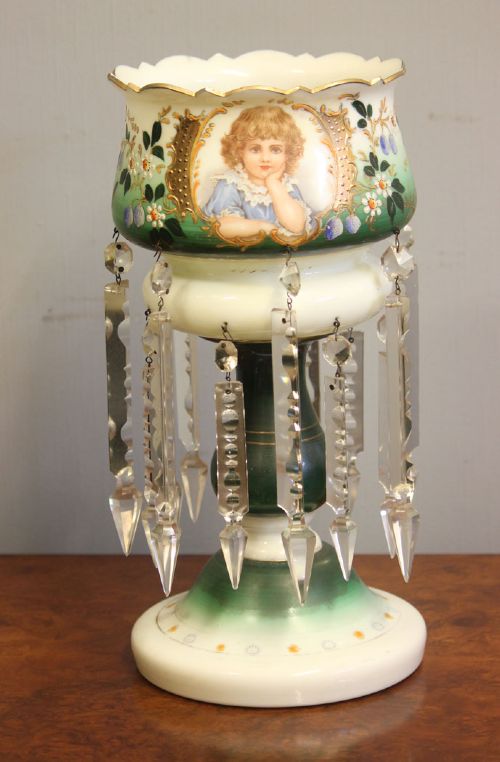
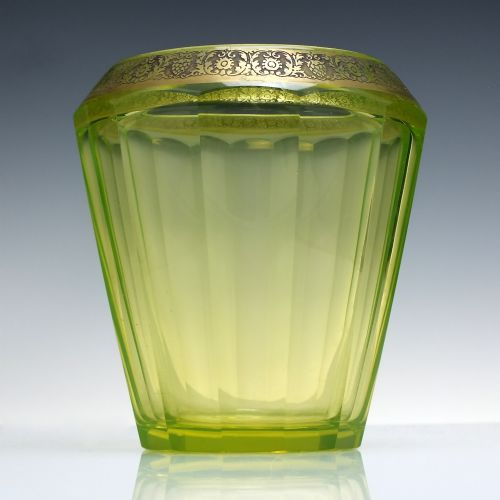
Surviving examples range from small cabinet pieces to large garniture sets and mantle lustres hung with glass drops. The palette shifts from deep forest green to lighter vaseline and uranium glass tones, often enhanced by gilt accents or metallic mounts.
Materials and Techniques
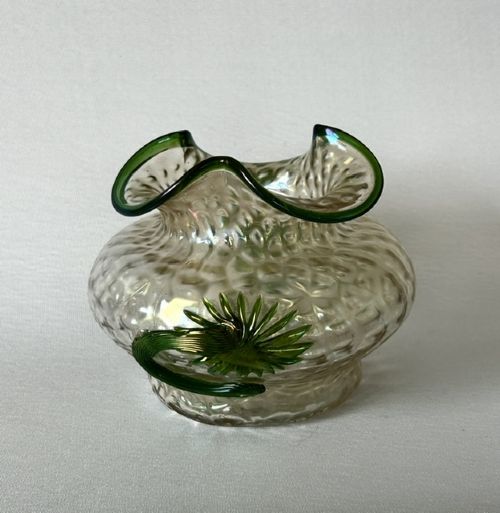
Glassmakers utilised hand-blowing techniques to shape molten material into organic profiles, frequently incorporating chemical treatments to achieve iridescent surfaces like papillon and vesuvian finishes. Molten glass was manipulated while hot to create rippled textures, jack-in-the-pulpit rims, and distinct dimples.
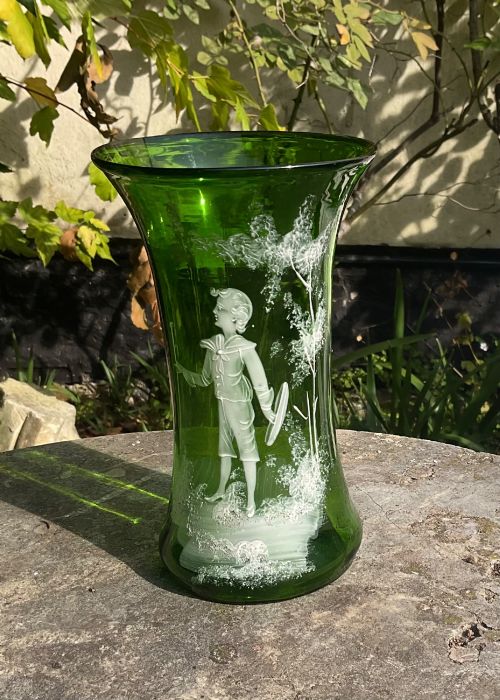
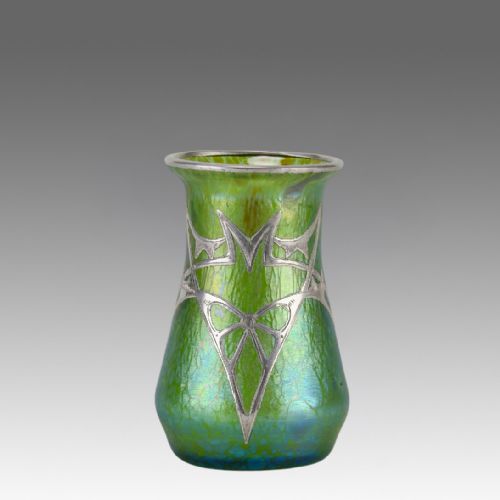
Surface ornamentation relied on manual application, including hand-painted enamel scenes, delicate gilding, and engraved detailing cut directly into the glass wall. Artisans also applied sterling silver overlay and metal mounts, binding the glass bodies into pewter or silver frames.
Ceramic pieces employed porcelain and earthenware bodies, shaped into figural vases and ewers, then glazed and decorated with polychrome enamels. These methods combined sculptural modelling with rich surface colouration characteristic of bohemian kilns.
Green Bohemian Vases Retail Price Guide 2026
Typical asking prices for green bohemian vases among the pieces listed under this phrase on Sellingantiques today, from the lower quarter to the upper quarter. They describe what is for sale here now, not the wider market.
Listings feature items from the victorian era through the art deco period, incorporating iridescent glass, earthenware, and silver overlay.
Judging Quality
Quality rests upon the depth and control of the iridescence, the crispness of the glassblowing, and the finesse of any applied metalwork. Pieces with complex phänomen threads or multi-layered glass effects demonstrate greater technical mastery from the glasshouse.
The precision of the hand-painted enamel and the weight of the silver overlay distinguish finer examples from standard production wares. Intricately modelled figures and mounts cast in pewter or silver add sculptural presence and structural integrity to the vessel.
Johann Loetz·Kralik Glassworks·Royal Dux Bohemia·Ernst Wahliss·Karl Palda
The Green Bohemian Vases Glossary
- Iridescent Glass
- Glass treated with metallic salts while hot to produce a rainbow sheen upon the green body. This optical effect shifts in different lights.
- Silver Overlay
- Sterling silver deposited or mechanically fitted onto the glass surface in intricate botanical or geometric patterns. It provides a striking contrast to the green glass beneath.
- Mantle Lustre
- A decorative vase hung with cut glass prisms designed to catch and refract candle or firelight. Pairs often flanked clocks on nineteenth century mantelpieces.
- Jugendstil
- The continental European counterpart to art nouveau, emphasising flowing lines and natural motifs. It heavily influenced bohemian glass design around nineteen hundred.
- Papillon
- An iridescent glass décor developed by loetz featuring mottled spots resembling butterfly wings. It remains one of the most recognisable finishes from the period.
Green Bohemian Vases: Frequently Asked Questions
What makes green bohemian vases distinctive?
These vases draw attention through rich green glass bodies combined with iridescent finishes, metallic overlays, and organic forms drawn from nature. Their appeal lies in the way glasshouses manipulated colour and light.
They reflect the artistic movements of their time, moving from victorian ornamentation to the sweeping curves of art nouveau and secessionist design.
How do I identify a loetz glass vase?
Loetz pieces typically feature characteristic iridescent glass decors such as papillon, phänomen, or vesuvian finishes. Many retain smooth, polished pontil marks on the base.
While some bear engraved signatures, others rely on distinct colour combinations and signature organic silhouettes to confirm their origin.
Where were these glass pieces made?
Production centred primarily in the Bohemia region of central Europe, an area renowned for its long tradition of glassmaking and skilled artisans. Factories operated in towns surrounded by forests that provided wood for fuel and raw materials for the kilns.
Names like kralik and loetz worked within this dense network of regional expertise.
How should I display mantle lustres?
Mantle lustres work best where natural light can strike the hanging glass prisms and the green body of the vessel. Placing them on a mantelpiece or a high sideboard allows the cut pendants to catch passing light.
Keeping pairs balanced visually enhances their traditional role as decorative garnitures.