



Green Bedroom Dresser
A green bedroom dresser brings colour and substantial storage to a room, offering sturdy pine and timber chests finished in historic painted surfaces.
Green Bedroom Dresser
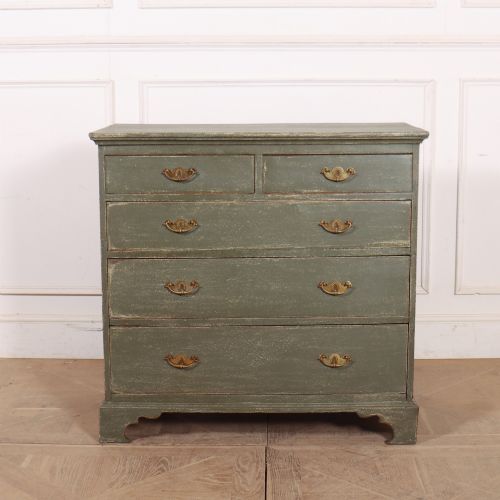
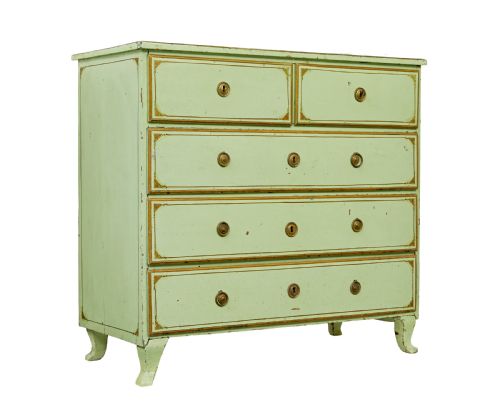
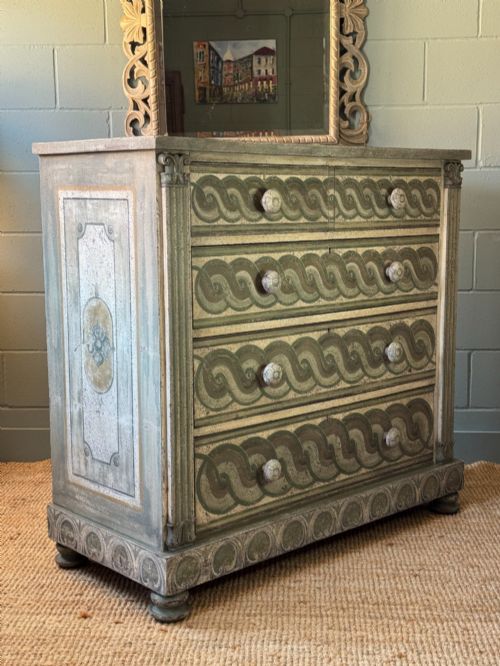
A green bedroom dresser is fundamentally a chest of drawers or commode finished in paint, spanning eras from the eighteenth century through to the early twentieth century. These pieces serve as practical bedroom storage while introducing a painted decorative finish that ranges from simple country surfaces to sophisticated French Empire and Regency designs.
The versions most commonly met on this page are nineteenth-century pine chests of drawers and eighteenth-century English examples, often featuring painted timber or scumble finishes. Buyers encounter everything from bow front and serpentine front configurations to straightforward utilitarian chests built from pine and other woods.
Origins stretch across English, Swedish, and French traditions, reflecting both English country craftsmanship and continental provincial styles. Each piece combines functional drawer space with distinct regional painted aesthetics that have endured for generations.
How they were made
Construction relies primarily on solid timber and pine, shaped into sturdy chests of drawers using traditional joinery appropriate to the eighteenth and nineteenth centuries. Drawers are typically arranged in standard configurations, such as two short drawers over three long ones, housed within rectangular, bow front, or serpentine frames.
Surfaces are finished with paint, including scumble paint techniques, applied over wood to create textured, coloured exteriors that protect the timber while providing decorative appeal. Brass hardware such as handles and escutcheons frequently completes the construction, adding functional detail to the painted timber fronts.
Green Bedroom Dresser Retail Price Guide 2026
Typical asking prices for green bedroom dresser among the pieces listed under this phrase on Sellingantiques today, from the lower quarter to the upper quarter. They describe what is for sale here now, not the wider market.
English country, Swedish country, and French Empire styles appear alongside Georgian and Regency periods.
What varies in quality
Quality rests significantly on the sophistication of the form and the integrity of the original timber construction, distinguishing simpler country pieces from refined Regency and French Empire models. Pieces featuring challenging silhouettes like bow fronts or serpentine fronts demand greater cabinetmaking skill than standard rectangular chests.
The character and preservation of the painted surface dictate much of the visual merit, with historic scumble and painted finishes holding distinct aesthetic value compared to later overpainting. Well-preserved brass fittings and smooth-running drawers further separate the finest examples from heavier, more utilitarian items.
The Green Bedroom Dresser Glossary
- Scumble paint
- A decorative painting technique involving layers of translucent glaze manipulated to create mottled or textured patterns that simulate richer wood grains or aged surfaces.
- Bow front
- A convex, outwardly curving cabinet front that softens the rectilinear lines of a standard chest of drawers.
- Serpentine front
- A cabinet front featuring a central convex curve flanked by two concave curves, requiring advanced woodworking skill.
- Commode
- A low chest of drawers or cabinet, originating from French furniture forms of the eighteenth and nineteenth centuries.
- Regency
- A British design period spanning the early nineteenth century characterised by classical restraint and refined proportions.
Green Bedroom Dresser: Frequently Asked Questions
What periods do these green bedroom dressers come from?
The pieces span several eras, originating mainly from the eighteenth and nineteenth centuries, alongside early twentieth-century examples.
Craftsmanship reflects historical periods including Georgian, Regency, and Victorian reigns, as well as continental styles from Sweden and France.
How were these dressers used historically?
These chests of drawers functioned primarily as bedroom storage for garments, linens, and personal items.
Their substantial drawer arrangements provided practical utility while the painted finishes added decorative warmth to domestic interiors.
What materials make up these chests?
Construction relies heavily on timber and pine, utilised for the main carcase, framing, and drawer boxes.
Surfaces are finished with paint or scumble paint, and pieces frequently incorporate brass hardware for handles and drawer pulls.