





Green Art Nouveau Glass
Green art nouveau glass captures the sinuous floral lines and botanical shades of the turn of the twentieth century in vases, lamps and tablewares.
Green Art Nouveau Glass
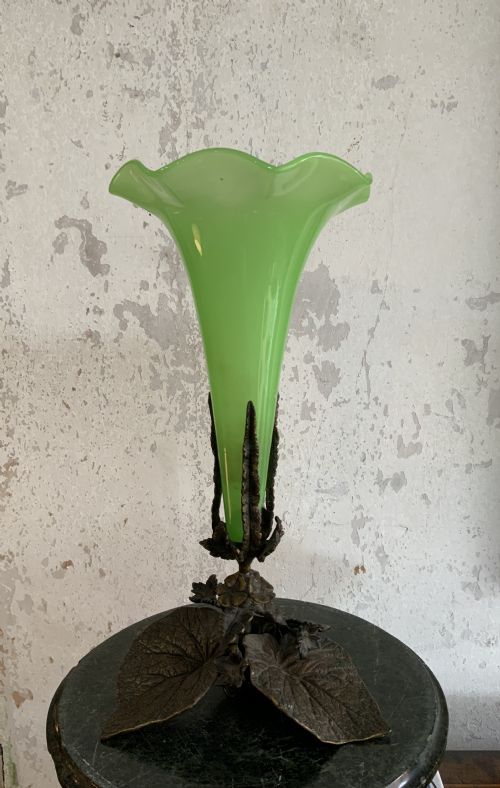
Green art nouveau glass encompasses objects produced during the late nineteenth and early twentieth centuries, spanning periods from Victorian and Edwardian to Jugendstil and the Vienna Secession. Buyers searching this phrase typically encounter vases, decanters, scent bottles and centrepieces that utilise deep olive, vaseline, emerald and pale green tones.
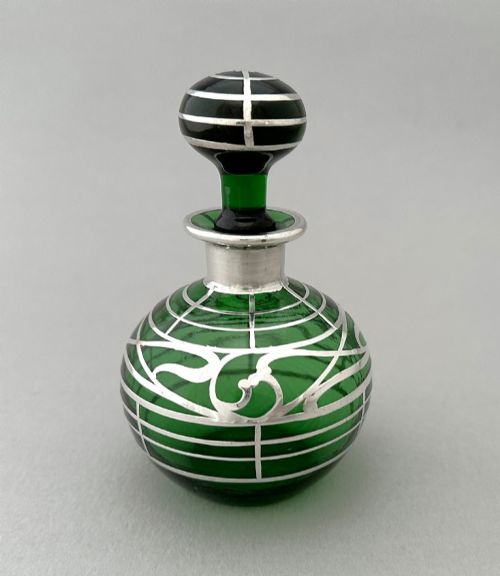
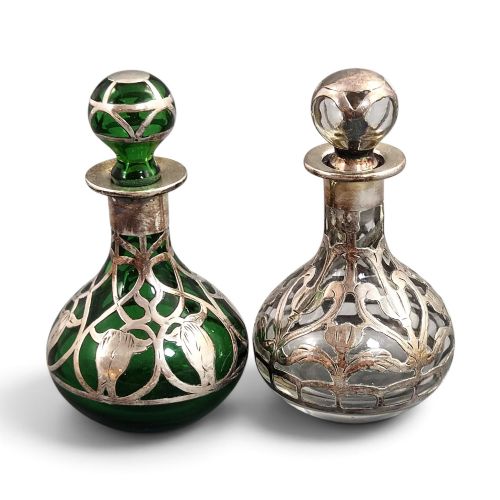
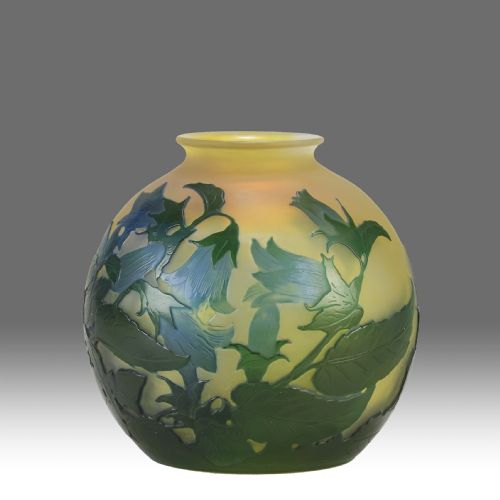
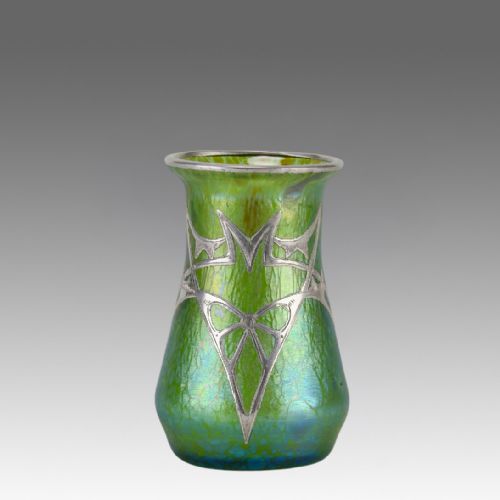
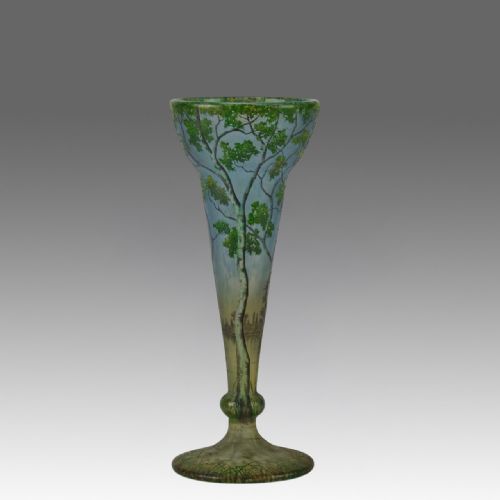
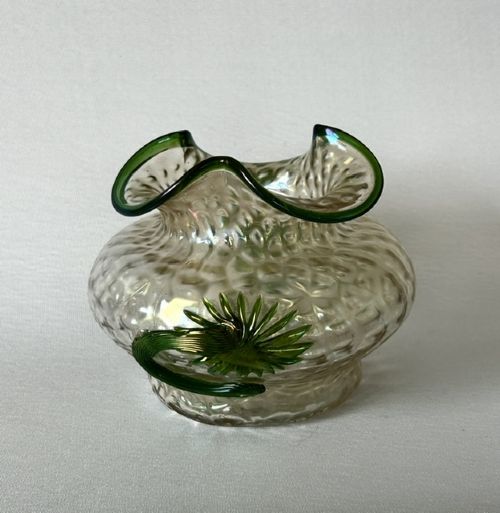
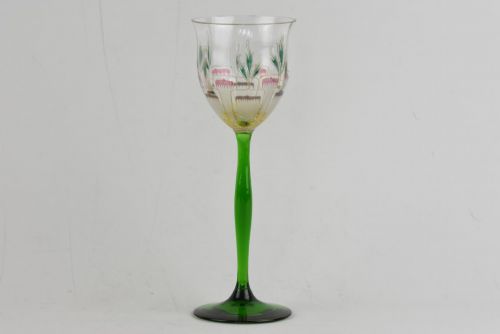
The material manifests in various decorative forms across the inventory, including iridescent finishes, cameo layers, trailed threads and enamel decoration. Vases dominate the selection alongside ceiling lights, wine glasses, trinket boxes and mounted tablewares featuring silver overlay or pewter mounts.
How they were made
Maker glasshouses utilised techniques such as acid-etching for cameo pieces, optical blowing for vessels, and chemical manipulation to achieve iridescent metallic sheens across the surface. Molten glass was shaped by hand, often incorporating trailed glass threads or integrated enamel pigments while hot.
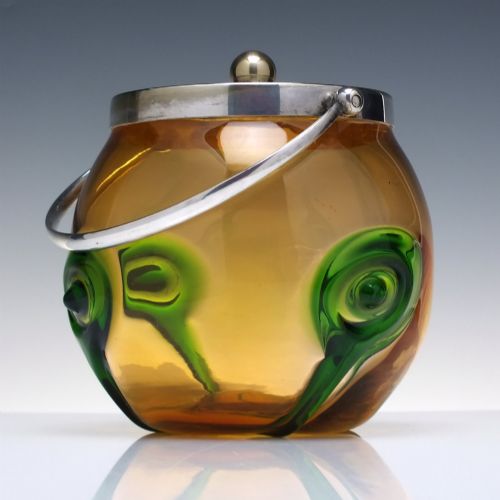
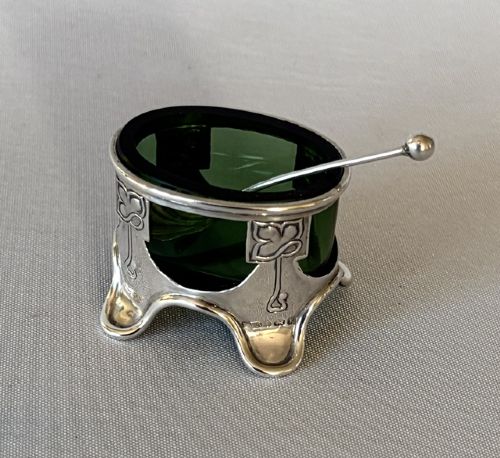
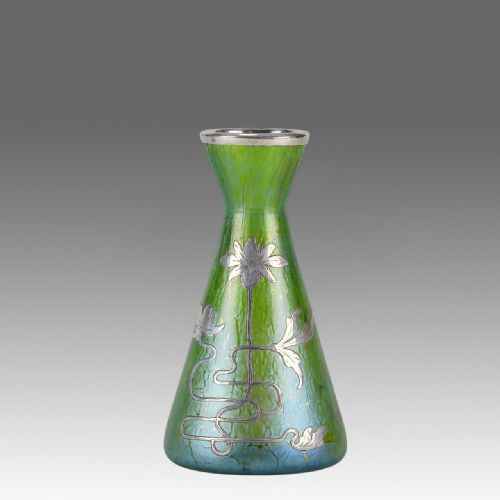
Metalwork mounts in sterling silver, pewter, silver plate and brass were frequently applied to the glass bodies, fixed as collars, handles, swinging frames or decorative overlay pierced in organic botanical patterns.
Green Art Nouveau Glass Retail Price Guide 2026
Typical asking prices for green art nouveau glass among the pieces listed under this phrase on Sellingantiques today, from the lower quarter to the upper quarter. They describe what is for sale here now, not the wider market.
Listings feature green art nouveau glass from Victorian, Edwardian and 1930s periods, incorporating sterling silver, pewter, bronze and brass mounts.
What varies in quality
Quality separates objects by the complexity of the glass body's execution and the precision of surface decoration, distinguishing standard production vessels from works displaying intricate cameo carving, multi-layered chemical iridescence or detailed hand-enamelling.
The integration of metal components dictates overall standard, separating basic plated mounts from heavy cast pewter, sterling silver overlay or hallmarked silver frames designed specifically for the glass liner.
Emile Gallé·Daum Frères·Johann Loetz·Theresienthal·Kralik glassworks·James Powell·Frits Hechert·Moser·Salviati
The Green Art Nouveau Glass Glossary
- Iridescent glass
- Glass treated with metallic salts while hot to create a shimmering, oil-slick surface effect that catches the light. This technique was developed extensively by Bohemian and French makers during the period.
- Cameo glass
- Glass formed with multiple layers of different coloured glass that are carved or acid-etched away to leave a raised design. The method demands considerable skill from the glassmaker to control depth and contrast.
- Vaseline glass
- Uranium glass that absorbs ultraviolet light and glows a vibrant yellow-green in sunlight. It gained popularity for decorative tablewares and small vases throughout the nineteenth and early twentieth centuries.
- Phänomen décor
- A complex glass pattern featuring combed, wavy threads applied to the surface while molten and manipulated into feathered lines. Johann Loetz Witwe patented and produced this distinct style.
- Silver overlay
- Sterling silver pierced and applied directly to the exterior of a glass bottle or vase. The metal grips the vessel tightly as it cools and contracts after application.
Green Art Nouveau Glass: Frequently Asked Questions
How do I clean antique green glass?
Wash the glass gently in lukewarm water using a mild, unperfumed detergent and a soft cloth. Avoid abrasive sponges, chemical solvents or submerging pieces with metal mounts or enamel decoration for extended periods.
Dry the vessel thoroughly with a lint-free cloth to prevent water spots, particularly on pieces with silver overlay or delicate trailed glass threads.
What is the difference between uranium glass and vaseline glass?
Uranium glass contains trace amounts of uranium oxide added to the batch to impart a characteristic yellow-green colour. Vaseline glass is a specific subset of transparent uranium glass that exhibits a distinct greasy or yellow-green hue.
Both types react strongly under ultraviolet light by glowing bright green, but vaseline glass is specifically tied to this distinct translucent yellow-green appearance.
How can I tell Loetz iridescent glass from other makers?
Loetz pieces typically display an intense, metallic iridescence with organic, fluid forms and polished pontil marks on the base. Many examples feature distinctive surface decors such as Papillon or Phänomen patterns.
Examining the base and interior helps confirm the weight and hand-blown characteristics typical of Bohemian production from this era.
Were silver mounts added later to these glass pieces?
Silver mounts and sterling silver overlay were generally applied during the original manufacturing process as an integrated design feature. Makers partnered with metalwork firms to create fitted collars, handles and hinged lids.
Hallmarks on the silver components often provide a reliable date that corresponds with the production period of the glass vessel itself.