

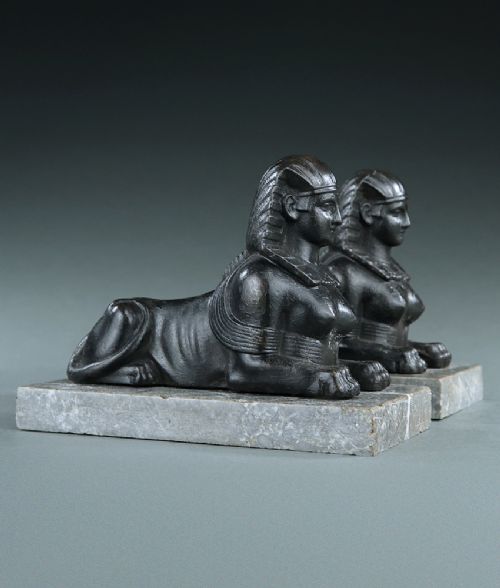
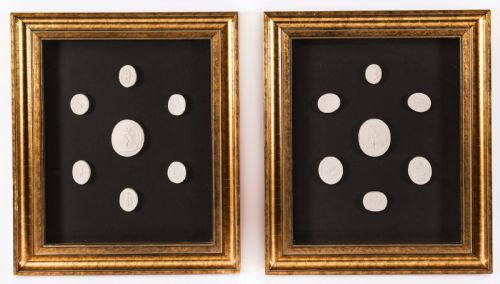

Grand Tour Souvenir Pair
A grand tour souvenir pair brings the classical sculpture, architecture and artistry of Italy and Egypt directly into a nineteenth-century study or drawing room.
Grand Tour Souvenir Pair
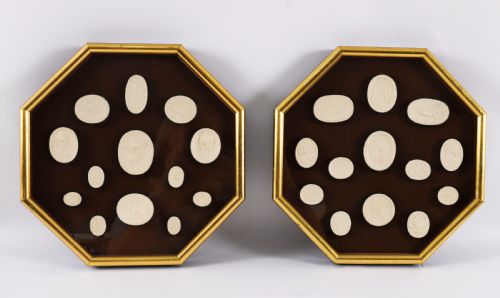
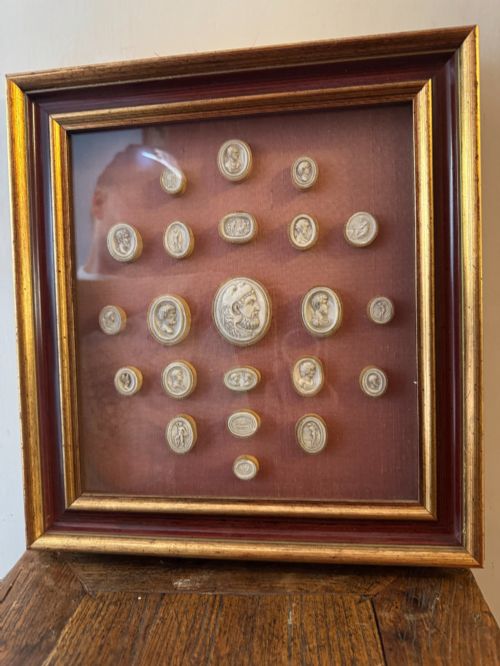
A grand tour souvenir pair comprises matched sculptural objects, architectural models or framed intaglios acquired by wealthy travellers journeying through Europe during the nineteenth century. These symmetrical pieces often replicate famous classical antiquities, Renaissance sculptures or Roman monuments seen by travellers on their travels abroad.
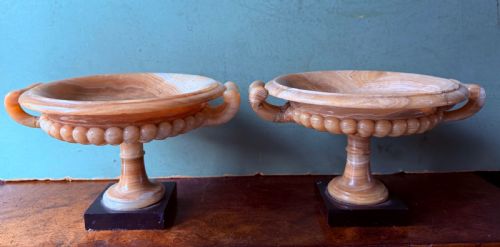
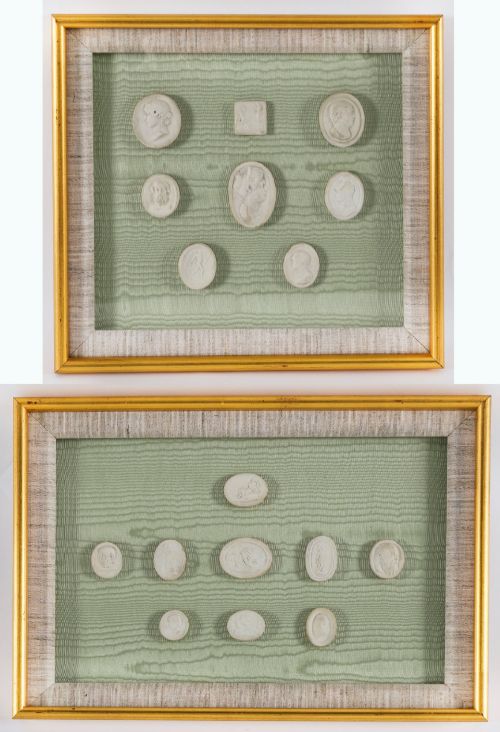
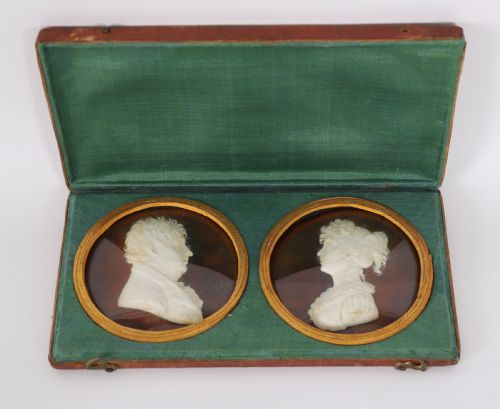
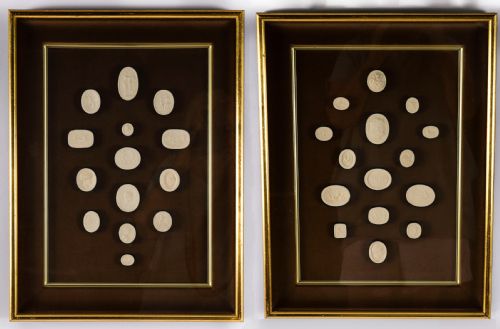
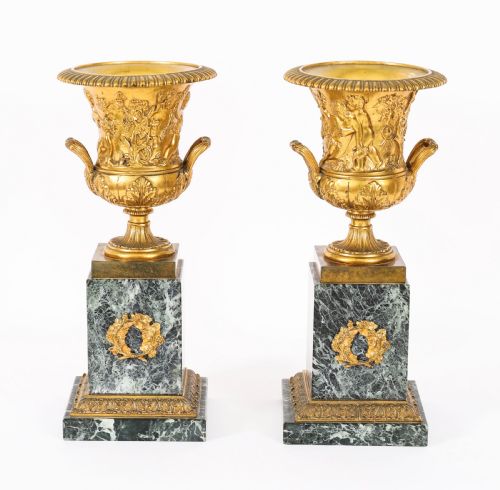
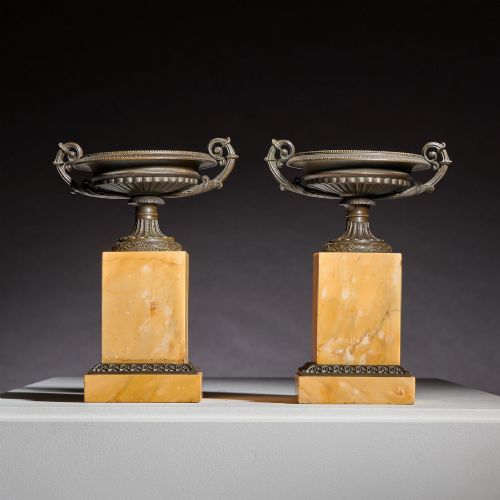
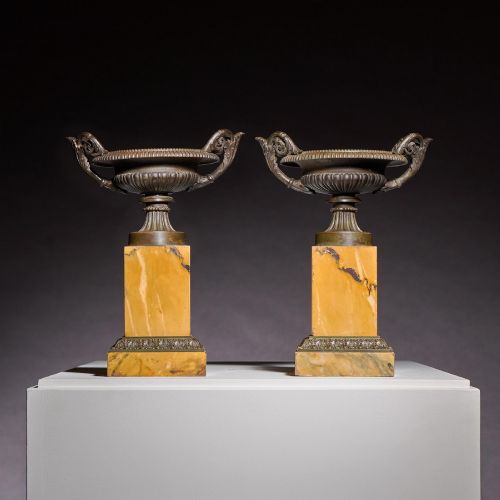
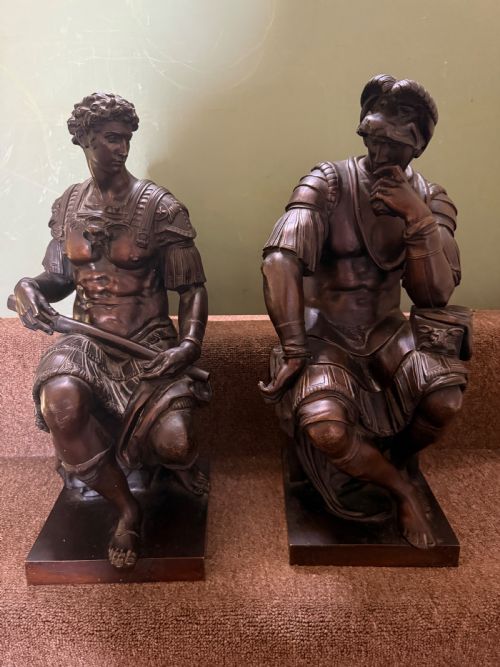
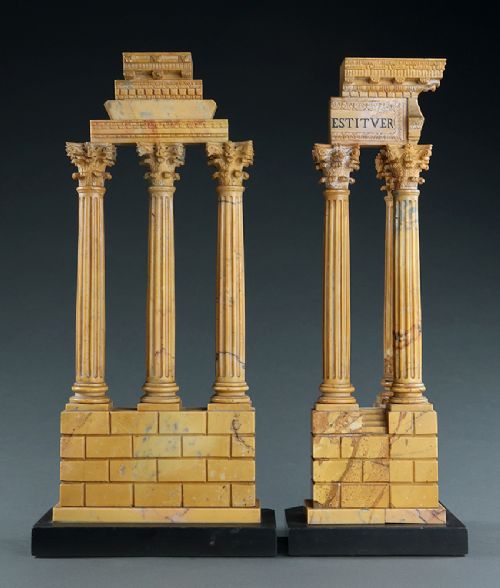
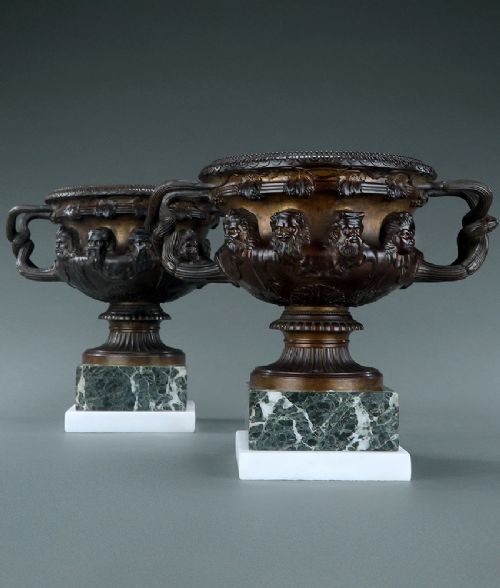
The selections on this page span decorative bronze figures after Canova, carved marble lions, tazzas, and architectural models such as obelisks and forum temples. Framed plaster intaglios, wax relief portraits and gouaches of Naples also appear frequently as companion sets.
Originating predominantly from Italian workshops in Rome and Florence, alongside French interpretive foundries, these matched objects served as tangible proof of classical education and cultural refinement.
How They Were Made
Metal items rely on lost-wax casting and patination, capturing fine anatomical and architectural detail in bronze, brass, or silvered bronze. Gilt bronze and ormolu add contrasting metallic brilliance to structural elements.
Stone pieces utilise hand-carved marble, alabaster, serpentine and limestone, often mounted upon contrasting black marble or Siena marble plinths. Framed works combine moulded plaster, gypsum, wax and glass protection within velvet-lined or giltwood surrounds.
Materials recorded across current and archive items span bronze, Siena marble, alabaster, plaster, and carved serpentine.
What Varies In Quality
The selection of the underlying mineral defines the integrity of stone objects, where richly figured alabaster, Siena marble or serpentine demonstrate superior raw material choice compared to uniform substitutes. Matched symmetry across the pair remains paramount, ensuring equal scale and balanced mineral figuring.
The Grand Tour Souvenir Pair Glossary
- Tazza
- A shallow ornamental cup or vase set upon a pedestal foot. These pieces frequently replicate classical excavated forms in bronze or marble.
- Intaglio
- A gemstone, glass or plaster tablet carved with a sunken design. Collectors mounted these miniature reliefs in framed panel collections.
- Campana Urn
- A bell-shaped classical vessel derived from ancient pottery forms. Italian workshops rendered these in bronze and marble for foreign visitors.
- Serpentine
- A dark green, mottled mineral resembling snake skin utilised for carved models and architectural bases. It was favoured by Italian lapidaries for its distinctive aesthetic.
- Cassolette
- A decorative ornamental vase featuring a pierced lid designed to hold perfumes. They often double as matched garniture elements.
Grand Tour Souvenir Pair: Frequently Asked Questions
How were these objects displayed originally?
Travellers typically arranged matched bronzes and stone urns upon mantelpieces, library tables, and dedicated pedestals. Framed intaglios and gouaches hung upon study walls to demonstrate classical learning.
Their balanced dual presentation suited the formal interior decoration schemes of nineteenth-century drawing rooms.
How do I care for marble and bronze pairs?
Bronze pieces require gentle dusting with a dry, soft cloth to protect the patination from moisture and oils. Avoid abrasive cleaners entirely.
Marble and alabaster objects should be kept away from direct sunlight and damp environments to preserve the natural stone surface.
How can I tell different periods apart?
Nineteenth-century examples frequently exhibit precise sand or lost-wax casting with rich patination and authentic wear on the undersides. Earlier Georgian items show hand-chased surfaces and heavy mineral plinths.
Twentieth-century reproductions often feature lighter construction materials and machine-finished bases without period patination.