

Grand Tour Bronze and Marble
Grand tour bronze and marble pieces bring classical antiquity and Renaissance sculpture into the domestic interior through finely cast metal and heavy stone bases.
Grand Tour Bronze and Marble
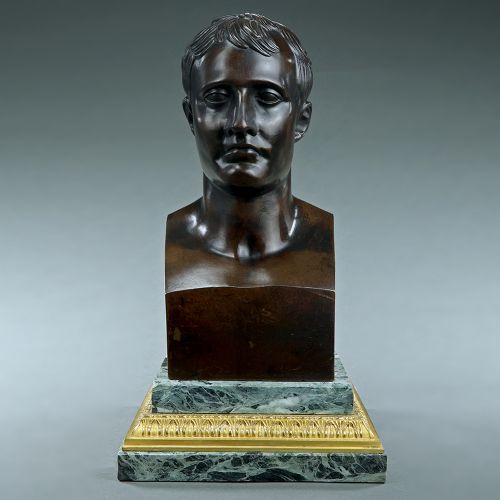
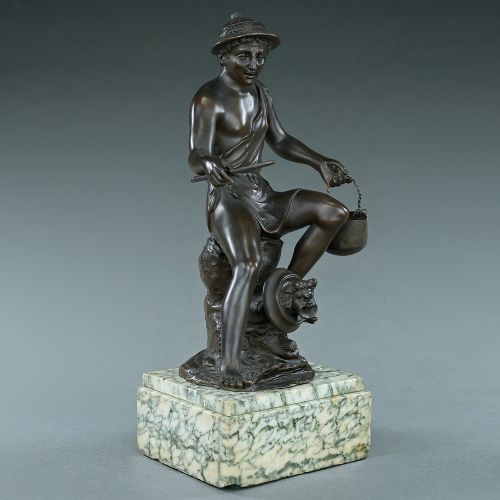
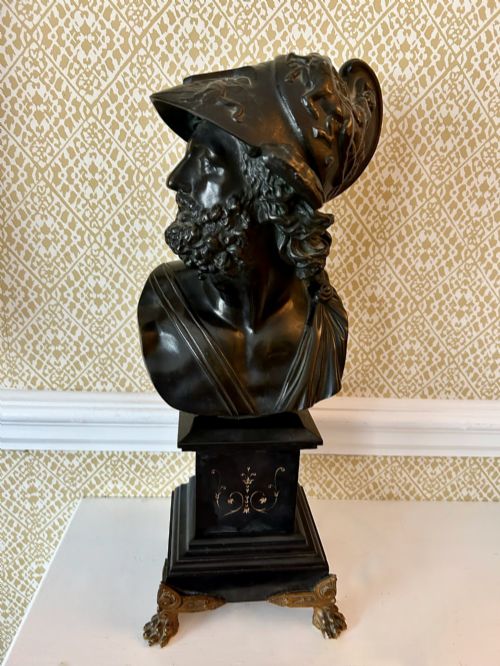
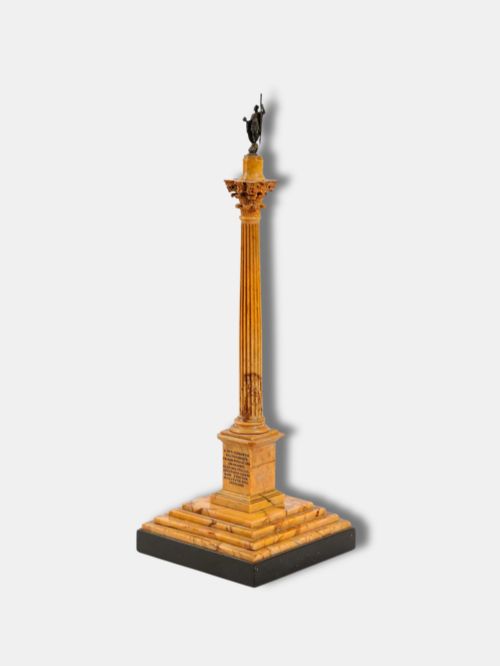
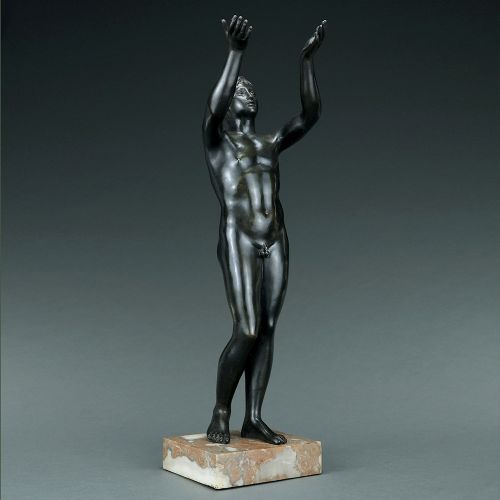
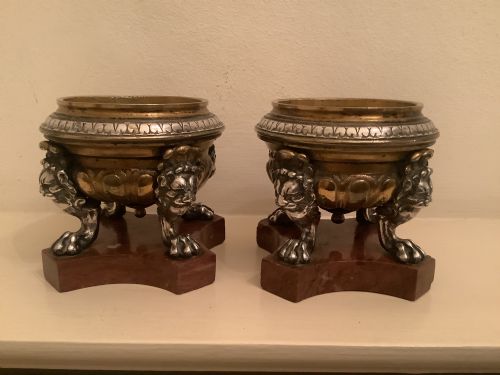
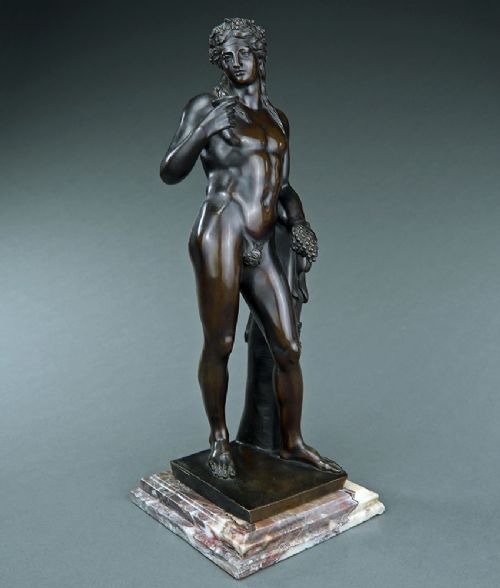
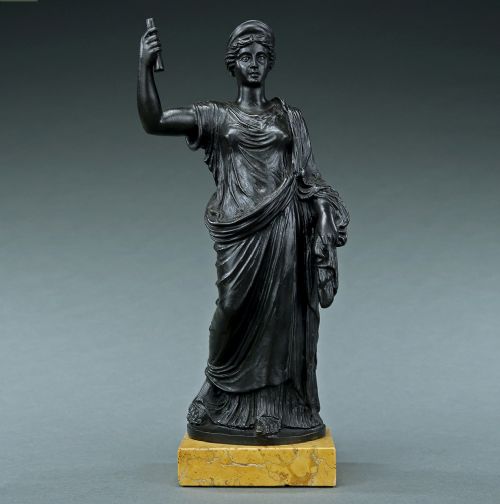
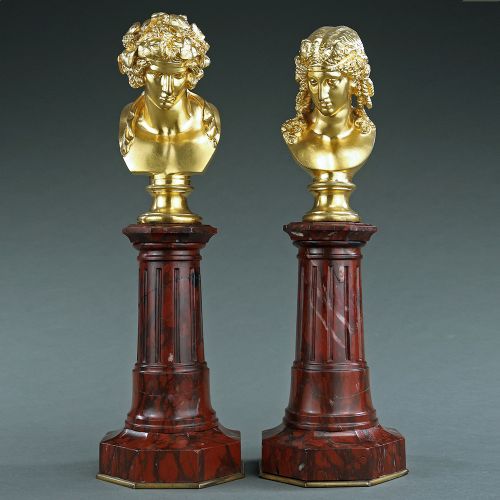
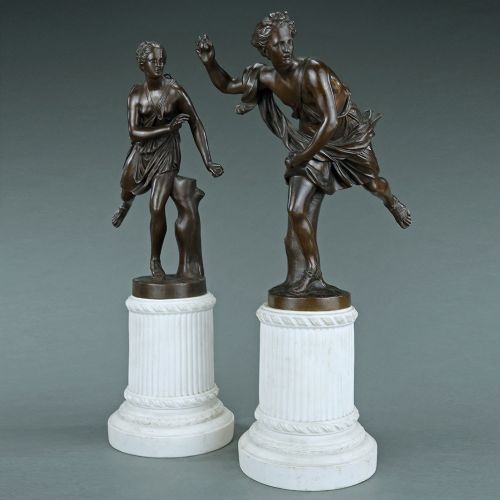
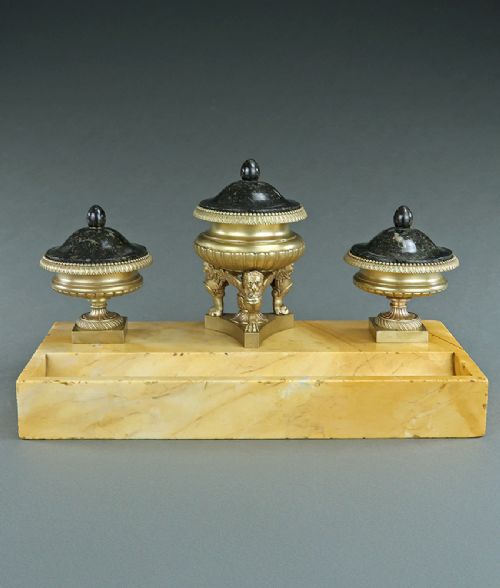
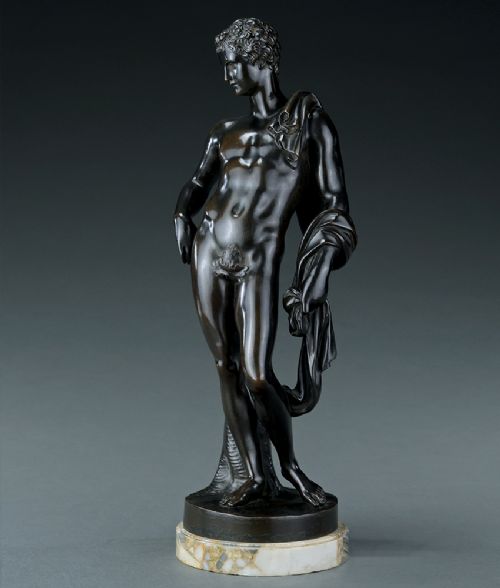
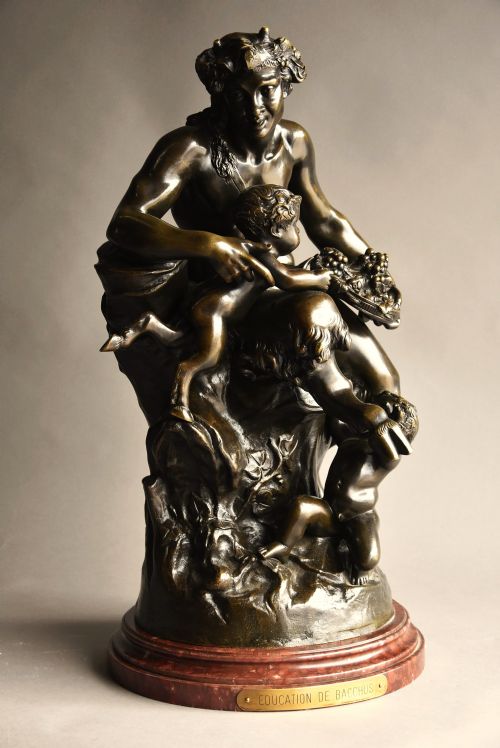
Grand tour bronze and marble pieces capture the sculpture, architecture, and decorative vessels of ancient Rome and Greece as scaled-down souvenirs for nineteenth-century travellers. Buyers encounter library bronzes of mythological figures, reduced reductions of famous vases, and architectural models mounted upon pedestals of coloured stone.
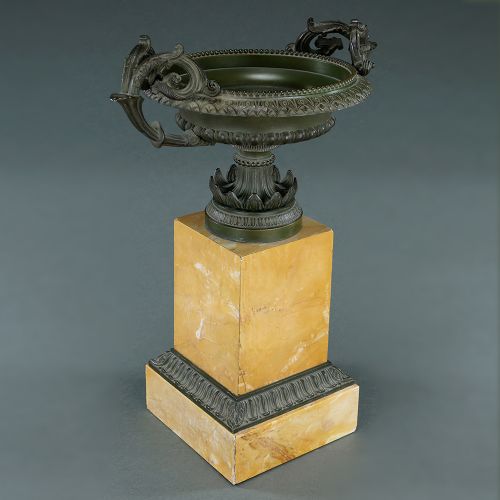
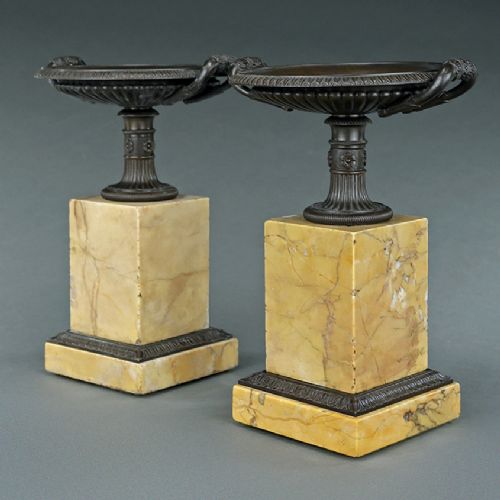
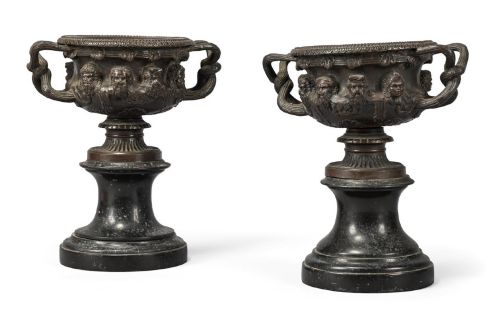
The objects frequently take the form of tazzas, campana urns, portrait busts, and reduction casts of canonical statues like the Borghese Gladiator or the Warwick Vase. These works draw upon Neoclassical and French Empire aesthetics, often pairing dark patinated metal with contrasting plinths of Siena, Giallo Antico, or fossil marble.
Most examples date across the nineteenth century, reflecting the peak of European travel and the demand for portable classical learning. They serve as desktop ornaments, cabinet sculptures, and mantel centrepieces designed to display cultural literacy and refined taste.
How they were made
Foundries utilised the lost-wax casting method or sand casting to reproduce intricate anatomical details and sharp surface ornament from antique prototypes. The resulting metal figures and vessels received careful hand-chasing to refine textures, followed by patination treatments yielding deep brown, black, or bright gilt finishes.
The marble components were quarried, shaped, and polished separately to form solid bases, plinths, and column shafts that anchored the heavier metal castings. Craftsmen turned these stones on lathes or cut them by hand, selecting varieties such as green marble, black marble, and white Carrara to complement the metalwork.
Grand Tour Bronze and Marble Retail Price Guide 2026
Typical asking prices for grand tour bronze and marble among the pieces listed under this phrase on Sellingantiques today, from the lower quarter to the upper quarter. They describe what is for sale here now, not the wider market.
Travellers returning from Italy packed miniature architectural ruins and duelling Renaissance knights into their luggage alongside classical gods and emperors.
What varies in quality
The choice and execution of the stone base further distinguish the tier of the piece. Selected marbles with rich natural veining, neatly bevelled edges, and tight mechanical fixings to the bronze indicate superior workshop production.
Barbedienne·Louis Garnier·Claude Michel Clodian·Jean Antoine Houdon
The Grand Tour Bronze and Marble Glossary
- Tazza
- A shallow cup or bowl mounted on a stem and foot, frequently utilised as a decorative vase or ornamental centrepiece in nineteenth-century collections.
- Patination
- The surface finish applied to bronze through chemical treatment or natural ageing, creating dark brown, black, or greenish tones.
- Ormolu
- Gilded bronze, produced by applying finely ground gold amalgam to a bronze base and heating it to drive off the mercury.
- Siena marble
- A yellow decorative limestone quarried in Italy, featuring deep brownish-red veining highly prized for nineteenth-century architectural bases.
- Reduction
- A small-scale replica of a large public statue or monument, cast down in proportion for private study and display.
Grand Tour Bronze and Marble: Frequently Asked Questions
What are grand tour bronzes?
Grand tour bronzes are small metal sculptures and architectural models bought by travellers visiting European cultural sites during the nineteenth century.
These pieces reproduced famous ancient and Renaissance artworks so collectors could study and display them at home.
How were marble bases used?
Marble bases provided stable plinths and visual contrast for the heavier bronze sculptures, urns, and architectural models mounted upon them.
Different coloured stones like Siena, Giallo Antico, and black marble added richness and framed the patinated metalwork.
How do I identify a reduction?
A reduction is a scaled-down cast of a known full-sized monument or museum sculpture, produced to fit on a library table or mantelpiece.
Foundries used mechanical reducing machines or skilled modelling to replicate famous antique statues with accurate proportions.
Where should I place these objects?
These pieces suit desks, libraries, and mantelpieces where their tactile materials and classical forms can be appreciated up close.
Their balanced scale makes them effective focal points among books, architectural drawings, and traditional room furnishings.