
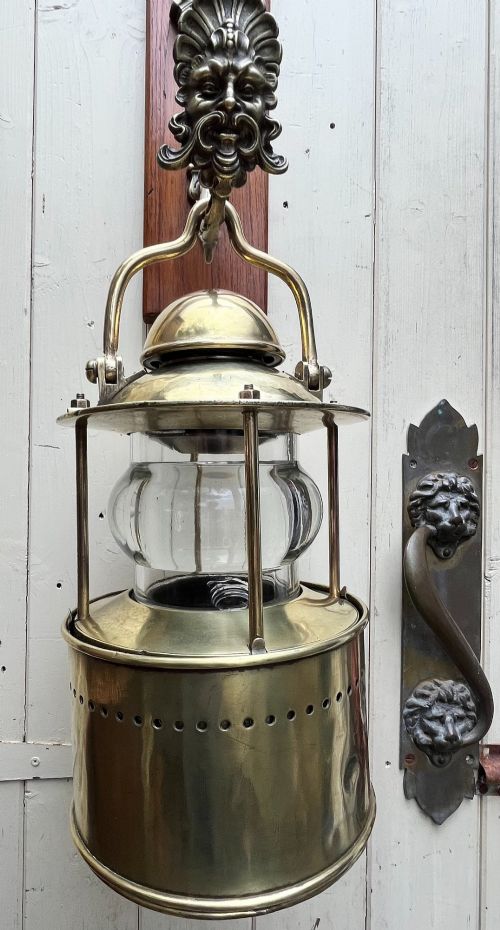
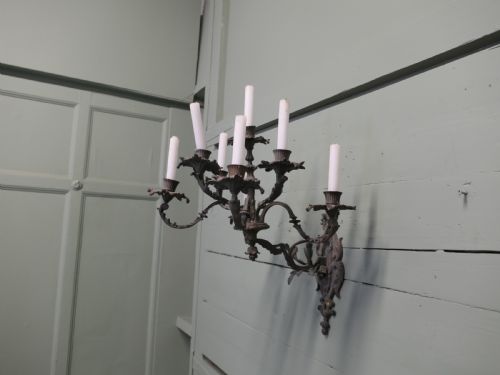


Gothic Wall Light
These gothic wall light fixtures bring a dramatic architectural presence to an interior, shaped by medieval motifs adapted for domestic spaces.
Gothic Wall Light
A gothic wall light draws on medieval ecclesiastical and architectural motifs, spanning centuries from the eighteenth century through to the early twentieth century. You encounter forms ranging from single candle brackets to large multi-armed sconces and iron lanterns designed for interior and entrance spaces.
The aesthetic bridges several periods including the Victorian era, the Arts and Crafts movement, and later French revivals. Most examples on this page date from the nineteenth century and the early decades of the twentieth century, reflecting sustained revivals of medieval taste in domestic lighting.
Materials and construction methods
Makers utilised a range of metals including wrought iron, cast brass, bronze, copper, steel, and pewter to achieve structural integrity and decorative detail. Iron and steel provide a heavy, dark framework often associated with castle and ecclesiastical fixtures, whilst brass and copper offer warmer metallic tones.
Construction techniques combine blacksmithing for ironwork with casting and chasing for brass and bronze components. Frosted and clear glass elements appear in lantern and wall light configurations, sometimes paired with carved oak or wood.
The listings on this site span materials from wrought iron and brass to copper, pewter, frosted glass, and carved oak.
Distinguishing quality in construction
Quality rests upon the crispness of the casting, the weight of the metal used, and the integrity of the joins. Heavier ironwork and finely chased bronze or brass exhibit greater hand-workmanship than lighter, mass-produced alternatives.
The refinement of the decorative motifs, such as quatrefoil patterns or ecclesiastical tracery, marks the difference between standard production and superior examples. Preservation of original surface finishes and patination also contributes to the standing of a piece.
The Gothic Wall Light Glossary
- Gothic Revival
- An architectural and decorative style reviving medieval forms, prevalent across the nineteenth century. It influences the pointed arches and structural heaviness seen in these lights.
- Sconce
- A wall-mounted lighting fixture designed to hold candles or electric lamps. In these listings, they range from single-branch brackets to multi-armed candle holders.
- Quatrefoil
- A decorative four-lobed shape resembling a four-leaf clover, frequently found in medieval architecture. It appears on metalwork and candle holders in this category.
- Pricket
- A sharp spike on a candle holder designed to secure a candle in place. This form relates closely to ecclesiastical lighting traditions.
- Patina
- The surface sheen and colour developed through age, handling, and oxidation on metals like bronze, brass, and copper. It indicates genuine age and use.
Gothic Wall Light: Frequently Asked Questions
How do I wire a antique gothic wall light?
Many older wall lights require professional rewiring to meet modern electrical safety standards before installation in a home.
A qualified electrician can adapt internal fittings while preserving the original metalwork and exterior appearance.
Where should I place a wall lantern indoors?
Entrance halls, stairwells, and dining rooms suit the heavy architectural presence of iron and bronze wall lanterns.
Their substantial weight requires secure anchoring into wall studs or masonry rather than standard drywall fixings.
How do I clean brass wall lights?
Dusting with a dry, soft cloth prevents the accumulation of grime without disturbing the historical surface finish.
Avoid harsh chemical polishes that strip away the aged patination valued by collectors of nineteenth-century metalwork.
What is the difference between iron and brass gothic lights?
Iron and steel variants offer a dark, austere aesthetic associated with ecclesiastical and castle architecture.
Brass and bronze alternatives provide a brighter, more decorative appearance often linked to Victorian domestic interiors and Arts and Crafts design.