
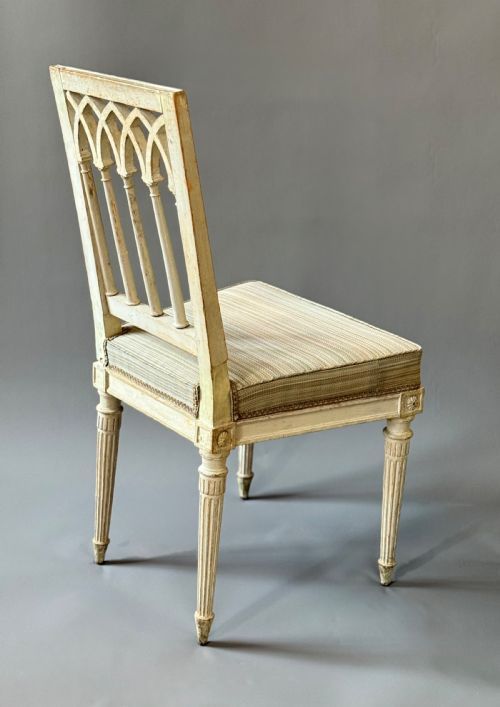
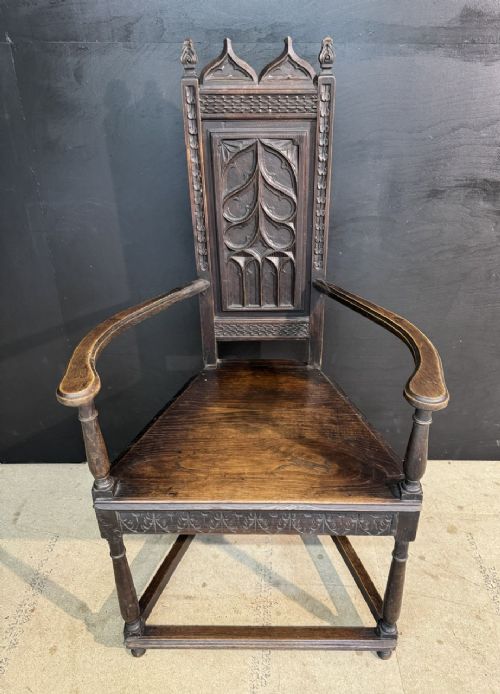
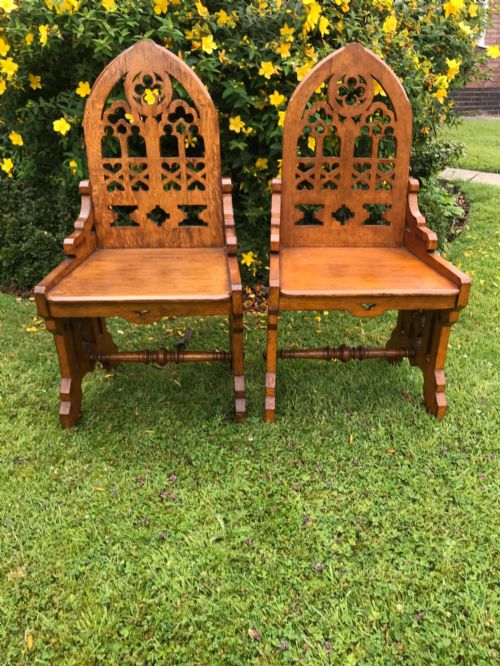
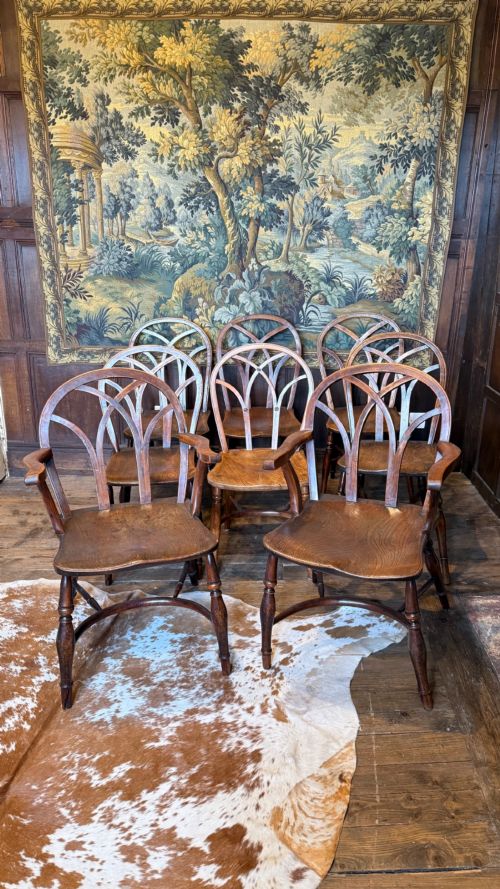




Gothic Tracery Carved Chair
These gothic tracery carved chair pieces combine architectural stone forms with timber seating, bringing medieval presence to a room.
Gothic Tracery Carved Chair
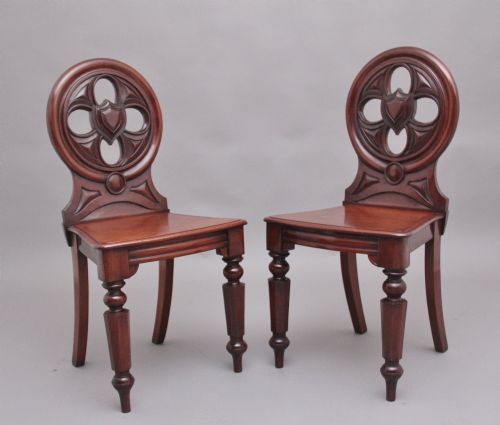
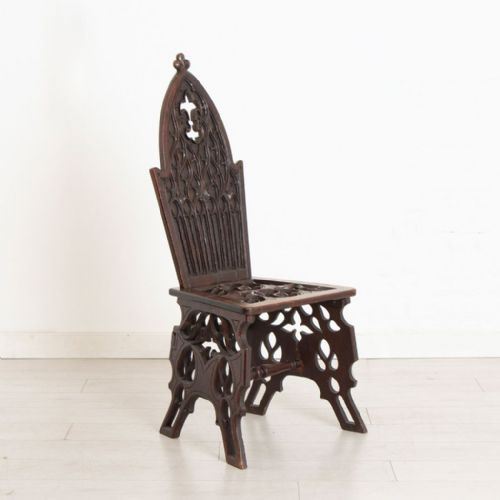
A gothic tracery carved chair brings medieval ecclesiastical design into domestic seating through pointed archways, trefoils, and quatrefoils carved directly into the timber. When you search for this phrase, you find heavy library armchairs, upright hall chairs, and sets of dining seats spanning the eighteenth and nineteenth centuries.
The nineteenth century revival dominates the selection, drawing heavily on Gothic Revival, Arts and Crafts, and Chippendale styles. Oak and mahogany serve as the primary woods, often complemented by leather upholstery or fabric pads.
Forms range from sturdy wainscot armchairs with solid panel backs to elegant side chairs and Windsor variations. These seats function effectively as focal points in studies, hallways, and dining rooms.
How they were made
Cabinetmakers constructed these frames predominantly from solid oak and mahogany, occasionally employing yew, elm, or painted wood. Timber selection dictated the depth and crispness of the architectural carving achieved along the backrests and crest rails.
Joinery methods relied on traditional mortise and tenon construction to support the heavy vertical loads of high backs and substantial armrests. Upholstered variants integrated button leather or durable fabric fixed with brass detailing.
Listings feature oak, mahogany, yew, elm, and painted wood, spanning the eighteenth and nineteenth centuries through various revival styles.
What varies in quality
The depth and precision of the tracery carving separate standard production from superior examples. Crisp undercutting in the oak or mahogany reveals the hand of a skilled carver rather than mechanical replication.
Proportion and structural timber selection dictate overall integrity. Heavy library armchairs require dense, well-seasoned oak or mahogany to support generous proportions without looseness in the joints.
The Gothic Tracery Carved Chair Glossary
- Tracery
- Openwork ornamentation in stone or wood, typically consisting of intersecting ribwork in windows or chair backs. It mimics the stone arches of medieval architecture.
- Wainscot chair
- An early wooden armchair characterised by a solid panel back and heavy turned legs. They offer robust construction and substantial presence.
- Quatrefoil
- A decorative element composed of four partially overlapping circles arranged in a symmetrical shape. It frequently appears within gothic window patterns on chair splats.
- Chippendale style
- Mid-eighteenth-century English furniture design incorporating gothic and Chinese frets alongside rococo curves. Mahogany serves as the primary medium for these pieces.
Gothic Tracery Carved Chair: Frequently Asked Questions
Where should I place a gothic chair?
These chairs suit studies, libraries, and hallways where their architectural lines stand against plain walls. Pair a single library armchair with a reading lamp or use a pair of hall chairs flanking a console.
Avoid crowding them into small spaces, as their high backs and carved crest rails require visual breathing room to display the tracery properly.
Are these chairs comfortable for daily use?
Comfort varies considerably depending on the specific form you choose. Library armchairs with leather upholstery and generous proportions provide supportive seating for reading and extended periods of sitting.
Conversely, solid oak wainscot chairs and timber hall chairs feature upright wooden backs designed for posture rather than lounging, making them better suited for occasional use.
How do I care for antique oak?
Maintain antique oak and mahogany by applying occasional beeswax to nourish the timber and preserve the natural grain. Keep wooden furniture away from direct heat sources and strong sunlight to prevent warping and splitting.
Dust intricate tracery carvings regularly with a soft bristle brush to prevent dirt accumulation in the recessed corners of the design.
How can I tell the period?
Examine the wood species, tool marks, and construction methods to help determine the age of the piece. Eighteenth-century examples often utilise fine mahogany with subtle proportions, while nineteenth-century revival pieces display heavier oak construction and more emphatic gothic motifs.
Hardware such as brass studs and the wear patterns on seat rails also offer clues regarding the manufacturing era.