




Gothic Style Accent Seating
Gothic style accent seating brings architectural presence and heavy timber character into a room through monastic forms and revival detailing.
Gothic Style Accent Seating
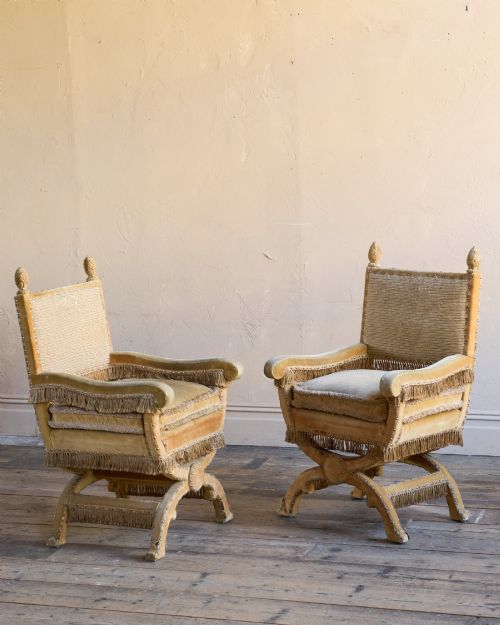
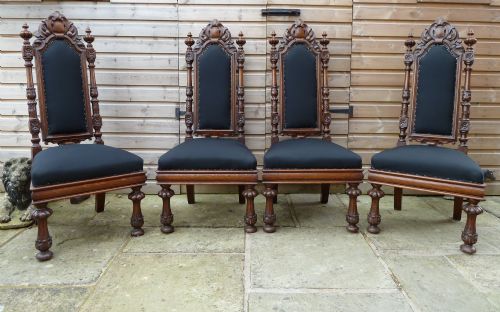
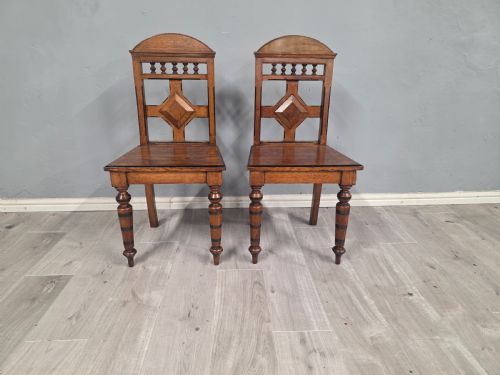
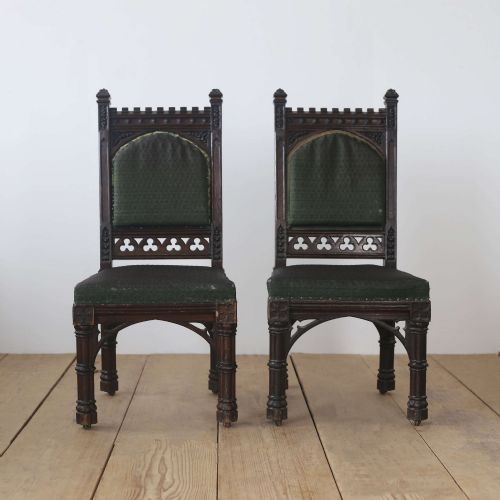
Gothic style accent seating covers architectural forms like armchairs, side chairs, hall chairs, stools, and thrones drawn from medieval revival designs. These pieces often appear in oak, pitch pine, and rosewood, reflecting nineteenth-century revivals through to the early twentieth century.
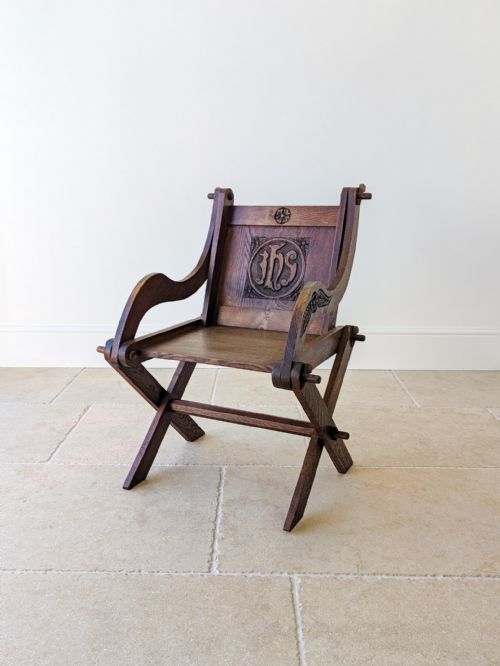
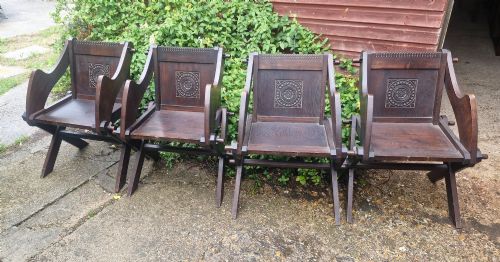
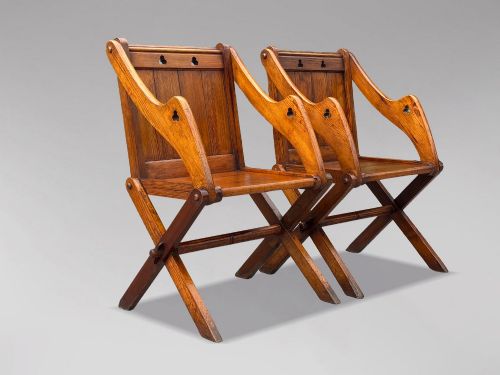
The selection ranges from Glastonbury armchairs and cross-frame Dante chairs to high-back side chairs and low stools. Most examples date from the nineteenth century, including Victorian interpretations and Arts and Crafts adaptations of older vernacular traditions.
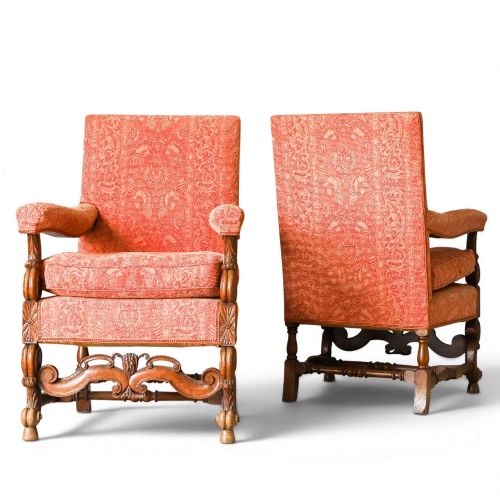
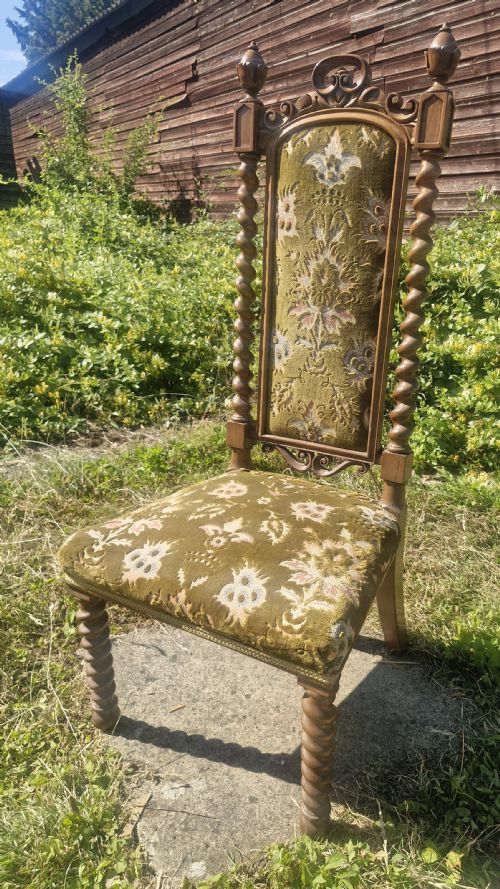
Buyers encounter chairs influenced by French Renaissance Revival, Spanish Revival, and Jacobean Revival movements alongside strict Gothic Revival pieces. Each form borrows structural cues from monastic furniture, utilising heavy frames and upright backs.
Assessing the grade of execution
The standard of a piece rests upon the crispness of its hand-carved ornament and the structural integrity of its joinery. Superior examples demonstrate precise mortise and tenon connections that keep heavy timber frames stable without excessive reinforcement.
Selection of timber grain and the proportional balance of architectural elements dictate the visual weight of the seating. Finer pieces display carefully matched grain patterns on prominent panels and faithful adherence to historical revival proportions.
Gothic Style Accent Seating Retail Price Guide 2026
Typical asking prices for gothic style accent seating among the pieces listed under this phrase on Sellingantiques today, from the lower quarter to the upper quarter. They describe what is for sale here now, not the wider market.
Some nineteenth-century makers fashioned sturdy pitch pine hall chairs specifically to deter lingering visitors in draughty entrance halls.
A.W.N. Pugin
The Gothic Style Accent Seating Glossary
- Glastonbury chair
- A traditional folding armchair with an X-frame base and a sloping panel back, widely reproduced during the Gothic Revival.
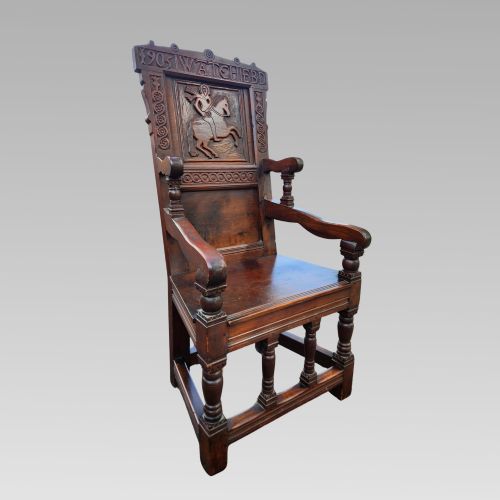
- Wainscot chair
- A heavy wooden armchair with a paneled back and solid seat, originating in the sixteenth and seventeenth centuries and later revived.
- Curule chair
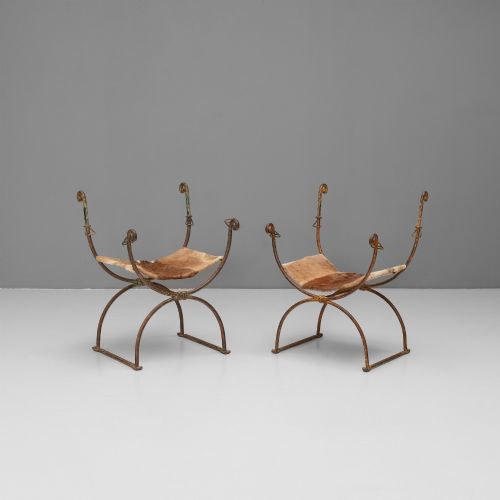
- An ancient Roman stool or chair shape featuring crossed curved legs, adapted into Renaissance Revival and Gothic seating forms.
- Sgabello
- An Italian Renaissance wooden chair with a narrow back and solid trestle supports instead of conventional legs.
- X-frame
- A structural base formed by intersecting diagonal timbers that provide both stability and decorative presence beneath the seat.
Gothic Style Accent Seating: Frequently Asked Questions
What defines gothic style accent seating?
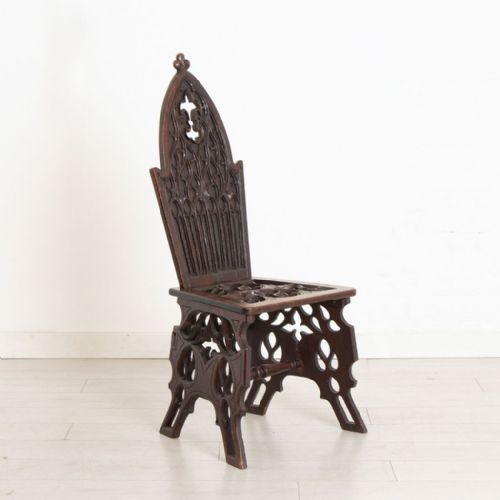
These pieces draw inspiration from medieval architecture and furniture, utilising pointed arches, heavy timber construction, and revival styles.
They function primarily as decorative anchor pieces in domestic interiors rather than everyday lounging chairs.
Where should I place a gothic armchair?
Their architectural weight suits studies, libraries, or hallways where they stand against plain walls to showcase their carved details.
Pairing them with neutral surroundings lets the dark woods and upright proportions dominate the room.
How do I identify a nineteenth-century revival piece?
Look for machine-sawn timber marks, nineteenth-century hardware, and revival stylistic combinations like French Renaissance or Arts and Crafts.
Construction techniques and wood seasoning methods often point clearly to Victorian workshops rather than medieval originals.
What woods were commonly used?
Oak and pitch pine dominate the surviving selection, chosen for their strength and suitability for deep carving.
Rosewood and walnut appear on finer parlour and salon pieces from the middle years of the nineteenth century.